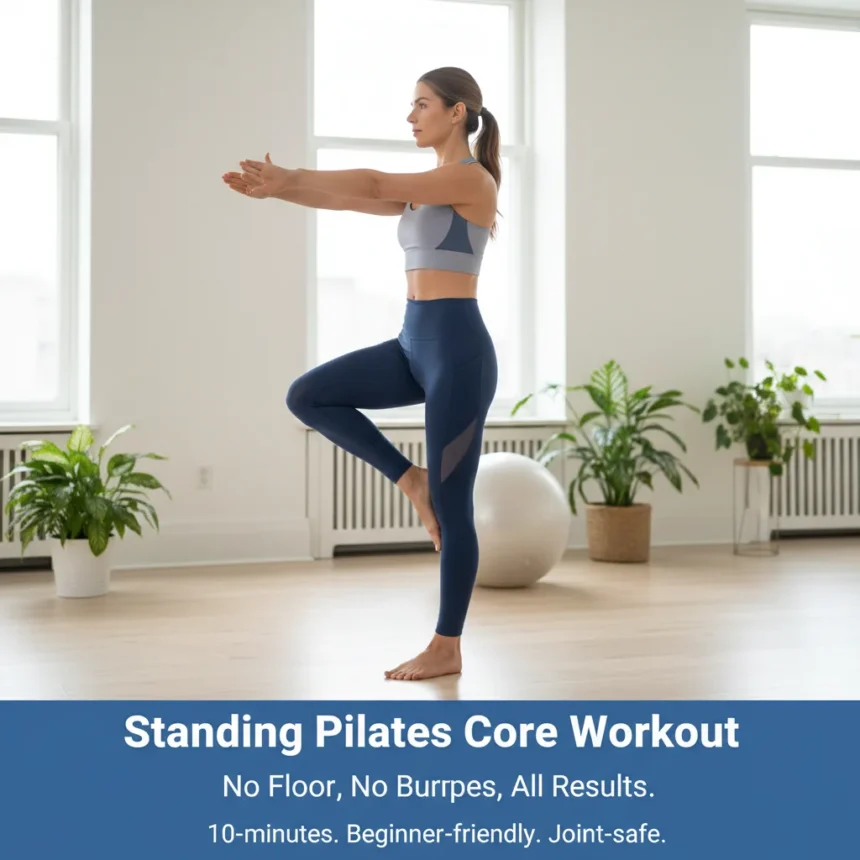
A standing Pilates core workout offers a joint-friendly alternative to traditional floor-based routines like sit-ups, crunches, and burpees. This 10-minute sequence uses no equipment, targets deep core stabilizers, and improves balance through single-leg holds and controlled movements performed at 40-second intervals with 10-second rest periods between exercises.
Key Takeaways
- Standing Pilates core workout lasts 10 minutes with no floor work required.
- Each exercise runs 40 seconds, followed by a 10-second rest before switching sides.
- Targets deep core stabilizers and balance; beginner-friendly and low-impact.
- Modifications available using a chair or table for balance support.
- No equipment needed; optional yoga mat for comfort.
Why Standing Pilates Core Workout Works Better Than Floor Routines
Traditional core work forces you onto your back or stomach. A standing Pilates core workout keeps you upright, engaging stabilizer muscles that floor exercises often miss. This matters because deep core stabilizers—the muscles closest to your spine—control posture and prevent injury far better than surface-level abs. Standing exercises activate these stabilizers while simultaneously challenging your balance, which floor routines cannot do.
Many moves in this standing Pilates core workout require you to balance on one leg or rise onto your tiptoes, forcing your body to recruit smaller stabilizer muscles in your feet, ankles, and hips. This builds a stronger foundation for everyday activities: climbing stairs, carrying groceries, or simply standing without fatigue. For people returning to fitness after injury or managing joint issues, the standing Pilates core workout eliminates impact while maintaining strength gains.
How the Standing Pilates Core Workout Sequence Works
The standing Pilates core workout follows a straightforward interval structure: perform each exercise for 40 seconds, rest for 10 seconds, then move to the next move. When an exercise involves balance on one leg or asymmetrical movement, complete the full 40 seconds on one side, rest, then repeat on the opposite side. This ensures balanced strength development and prevents favoring your dominant side.

The entire circuit takes 10 minutes from start to finish, making it realistic for busy schedules. You need no equipment—just floor space and, optionally, a yoga mat for comfort. If balance feels shaky, position a sturdy chair or table nearby. Holding onto support while performing the movement maintains proper form and prevents falls, which is especially important for beginners or anyone with balance concerns.
Benefits Beyond Core Strength
A standing Pilates core workout builds more than six-pack muscles. It strengthens the foundation for nearly every fitness pursuit: runners benefit from improved stability, older adults gain independence and fall prevention, and anyone starting a strength program gets a safer entry point. The balance challenge embedded in this standing Pilates core workout also improves proprioception—your body’s awareness of itself in space—which declines with age and sedentary habits.



The low-impact nature of standing Pilates means your joints stay safe while your muscles work hard. Unlike burpees or high-impact cardio, this standing Pilates core workout puts minimal stress on knees, hips, and shoulders, making it suitable for people with mild joint concerns or those in early recovery from injury.
Modifications and Safety Considerations
If you are a beginner, returning from injury, pregnant, or postpartum, consult a qualified fitness professional before starting this standing Pilates core workout. Form matters—sloppy movement reduces effectiveness and increases injury risk. If balancing on one leg feels impossible, use a chair for support. If tiptoe work causes foot cramping, keep your full foot on the ground. Modifications exist for every movement; using them is a sign of smart training, not weakness.
Perform this standing Pilates core workout on a non-slip surface and wear supportive shoes if needed. Breathe steadily throughout—holding your breath increases pressure on your core and defeats the purpose. Move with control; Pilates emphasizes quality over speed. If you feel sharp pain (not muscle fatigue), stop and rest.
Comparing Standing Pilates to Other Core Methods
Floor-based core work like planks, crunches, and sit-ups isolates surface muscles but misses balance training. Burpees and high-impact exercises build cardio fitness but stress joints and exclude people with mobility limits. A standing Pilates core workout bridges this gap: it targets stabilizers, improves balance, and remains accessible to nearly all fitness levels. You get functional strength without the floor work or joint pounding.



Related standing Pilates options exist for different goals. A 5-minute deep core routine targets stabilizers more intensely in less time, while longer 30-minute full-body sessions add upper and lower body conditioning. This 10-minute standing Pilates core workout sits in the sweet spot for core focus with time efficiency.
Can a 10-minute standing Pilates core workout actually strengthen your core?
Yes. Pilates emphasizes deep stabilizer activation over high repetitions, so 10 focused minutes of proper form builds real strength. The standing Pilates core workout’s balance challenge forces constant micro-adjustments that traditional floor routines miss, making every second count.
What if I cannot balance on one leg during this standing Pilates core workout?
Use a chair or table for light fingertip support. This keeps you safe while still activating core stabilizers. As balance improves over weeks, reduce reliance on the support until you can perform the standing Pilates core workout unassisted.
How often should I do this standing Pilates core workout?
Three to four times per week allows recovery while building consistent strength. Beginners should start with two sessions weekly to master form before increasing frequency.
A standing Pilates core workout solves a real problem: most people lack time for long routines and fear floor exercises. This 10-minute sequence delivers measurable core strength and balance improvement without burpees, sit-ups, or joint stress. Whether you are busy, injured, or simply bored with traditional core work, this standing Pilates core workout deserves a place in your routine.
Edited by the All Things Geek team.
Source: Tom's Guide