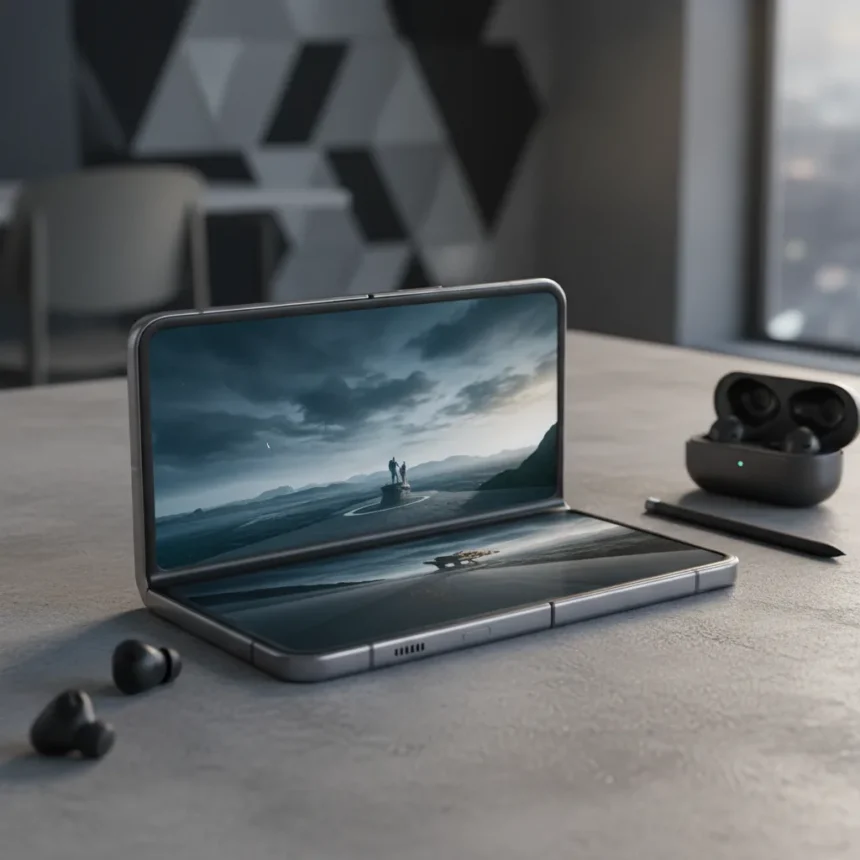
The Galaxy Z Fold 8 Wide is Samsung’s answer to a problem nobody talks about enough: watching video on a nearly-square foldable screen sucks. While the display crease dominates every foldable conversation, the real annoyance for daily users is black bars stretching across the top and bottom of your favorite shows. Samsung is fixing this with a design shift that could reset expectations for book-style foldables.
Key Takeaways
- Galaxy Z Fold 8 Wide features 5.4-inch cover screen and 7.6-inch internal display—both smaller than Z Fold 7
- Widescreen aspect ratio eliminates black bars during video playback on foldable displays
- Standard Z Fold 8 retains 6.5-inch cover and 8-inch main display; only Wide variant gets redesign
- Galaxy Z Fold 8 expected to be thicker than Z Fold 7, potentially enabling S Pen stylus support
- Direct competitor to Apple’s rumored iPhone Fold, which features 4:3 passport-style design
Why the Galaxy Z Fold 8 Wide matters now
The Galaxy Z Fold 8 Wide represents a fundamental rethinking of foldable form factor. Instead of chasing the thinnest possible device, Samsung is prioritizing how users actually consume media on these expensive screens. The widescreen layout addresses a gap that the Galaxy Z Fold 7’s nearly-square 8-inch display created: streaming video, YouTube, and social media content all add substantial black bars, wasting valuable screen real estate. This is not a niche complaint. For a device costing over a thousand dollars, video consumption should not feel like watching through a letterbox.
The Galaxy Z Fold 8 Wide achieves this through a different aspect ratio entirely. The 5.4-inch cover screen and 7.6-inch main internal display are both smaller than their Z Fold 7 counterparts (6.5-inch and 8-inch respectively), but the proportions shift dramatically toward widescreen viewing. This trade-off—losing absolute screen size for better content fit—signals that Samsung believes aspect ratio matters more than raw diagonal inches.
How Galaxy Z Fold 8 Wide compares to Apple’s iPhone Fold
Apple’s rumored iPhone Fold takes a different approach. The device is expected to feature a 4:3 aspect ratio with a 7.8-inch widescreen internal display and 5.5-inch front screen. That passport-style orientation is closer to tablet proportions than Samsung’s current direction. Apple’s strategy appears to be maximizing screen size while maintaining a more traditional aspect ratio for app compatibility. The Galaxy Z Fold 8 Wide sits between Samsung’s current design and Apple’s anticipated model—wider than the Z Fold 7 but not as extreme as the iPhone Fold’s reported dimensions.


This positioning matters because it signals how the foldable market is fragmenting. Samsung is optimizing for media consumption. Apple is reportedly optimizing for productivity and app ecosystems. Google’s approach with the Pixel 10 Pro Fold, noted as among the most durable foldables available, emphasizes longevity over aspect ratio innovation. Each manufacturer is solving different problems for different users.
The thickness question and S Pen return
The Galaxy Z Fold 8 is expected to be slightly thicker than the Z Fold 7, and that extra millimeter could enable the return of S Pen stylus support. Samsung removed the stylus from the Z Fold 7 to achieve a thinner profile—a decision that frustrated productivity-focused users who valued the drawing and note-taking capability. If the Galaxy Z Fold 8 Wide reclaims that thickness, it could restore stylus functionality while maintaining the widescreen aspect ratio advantage. This would position the Wide variant as the premium productivity model within Samsung’s foldable lineup.


The standard Galaxy Z Fold 8 is expected to retain the 6.5-inch cover screen and 8-inch main display from the Z Fold 7, meaning stylus support may only return to the Wide variant. This creates a clear product differentiation: the standard model for users who prioritize thinness, the Wide for those who want widescreen video and stylus tools.
What about the display crease?
Samsung Display is reportedly using laser drilling technology to reduce the crease on future foldables, and the Galaxy Z Fold 8 Wide will benefit from these advances. However, the crease is not the primary innovation here. The widescreen format is. Too much of the foldable conversation fixates on eliminating the crease entirely—a technically difficult problem that may never fully disappear. The Galaxy Z Fold 8 Wide sidesteps this by solving a more practical issue: the aspect ratio mismatch that makes video unwatchable. A perfect crease on a nearly-square screen is still a poor viewing experience. A visible crease on a widescreen that fits your content is a worthwhile trade.
Is the Galaxy Z Fold 8 Wide coming to your market?
Samsung is developing the Wide Fold as a direct competitor to Apple’s iPhone Fold, suggesting the variant will launch as a flagship offering. The Galaxy Z Fold 8 is expected to release later this year, with the Wide variant likely following or launching simultaneously. Exact regional availability has not been confirmed, but Samsung’s global foldable distribution suggests the Wide model will reach major markets where the standard Z Fold launches.
Should I wait for the Galaxy Z Fold 8 Wide?
If you watch a lot of video on your phone and have been frustrated by black bars on current foldables, the Galaxy Z Fold 8 Wide directly addresses your complaint. The widescreen format is a genuine usability improvement, not a gimmick. If you primarily use foldables for productivity and multitasking, and stylus support matters, the potential S Pen return on the Wide variant makes it worth waiting for. If you are happy with the Z Fold 7’s thinness and do not care about aspect ratio, the standard Z Fold 8 will likely serve you just as well.



How does the Galaxy Z Fold 8 Wide’s size compare to the Z Fold 7?
The Galaxy Z Fold 8 Wide has a smaller overall screen footprint—5.4-inch cover and 7.6-inch internal versus the Z Fold 7’s 6.5-inch and 8-inch displays. However, the widescreen aspect ratio means the internal display fits more content horizontally, making video and web content appear less compressed despite the smaller diagonal measurement. It is a different experience, not a downgrade.
Will the Galaxy Z Fold 8 Wide support a stylus?
The Galaxy Z Fold 8 is expected to be thicker than the Z Fold 7, which could allow stylus support to return. However, Samsung has not confirmed whether the stylus will come to the Wide variant specifically or the standard model. The increased thickness suggests it is possible, but it remains unconfirmed.
The Galaxy Z Fold 8 Wide is not revolutionary—it is pragmatic. By shifting to widescreen proportions, Samsung is finally acknowledging that foldables are not just thin phones; they are also media consumption devices. The nearly-square Z Fold 7 proved that raw screen size means nothing if the aspect ratio fights your content. The Wide variant corrects that mistake before the next generation even launches.
Edited by the All Things Geek team.
Source: Tom's Guide