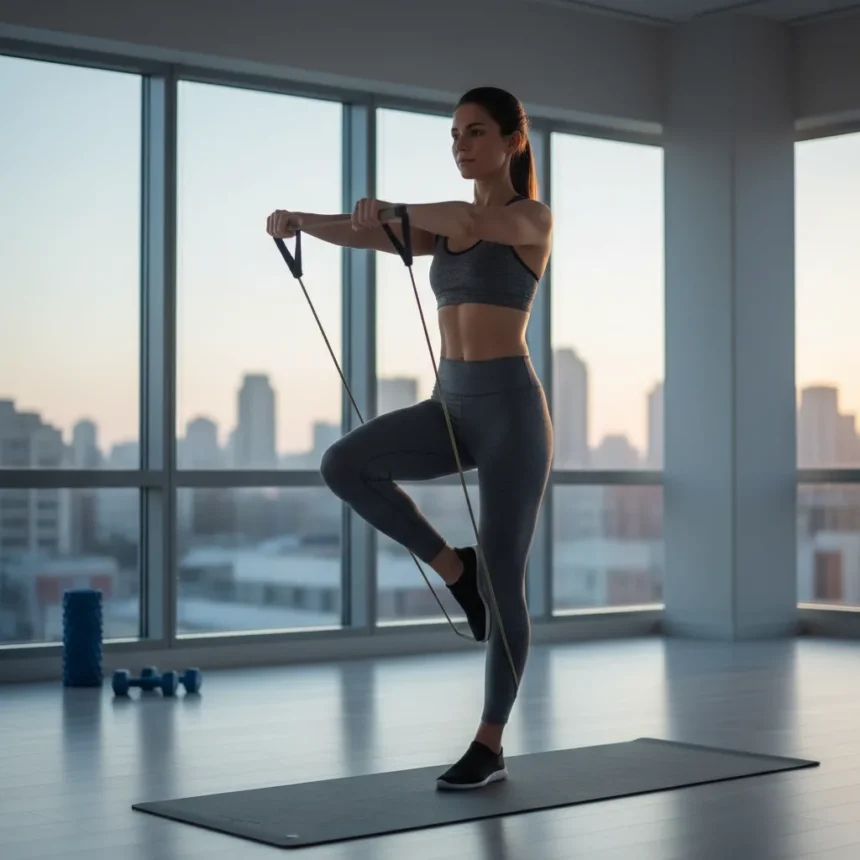
A standing Pilates workout offers a compelling alternative to traditional floor-based core training, delivering core and lower body strength in just 10 minutes without requiring sit-ups, planks, or mat work. This shift matters because many people struggle with floor exercises due to joint sensitivity, mobility limitations, or simple preference for standing movement. The standing Pilates workout approach addresses a real gap in accessible fitness options.
Key Takeaways
- 10-minute standing Pilates workout requires no equipment, only floor space and arm mobility
- Beginner-friendly format uses 40-second work intervals with 10-second rest periods
- Targets core, glutes, and legs while emphasizing balance and stability through one-leg stands
- Low-impact design makes it easier on joints than traditional sit-ups and planks
- Chair or table support available for balance modifications if needed
Why Standing Pilates Beats Floor-Based Core Work
The standing Pilates workout eliminates the barrier that stops many beginners from committing to core training: floor contact. Lying on your back for crunches or holding plank position strains wrists, shoulders, and lower back. Standing variations remove these pressure points while still demanding serious core engagement. The workout forces your body to stabilize through one-leg stands and tiptoe positions, activating stabilizer muscles that traditional sit-ups often miss.
This standing Pilates workout approach also builds functional strength you actually use. Balancing on one leg while moving your upper body mimics real-world movements—reaching for something while standing on one foot, walking on uneven ground, or simply maintaining posture during daily activities. That transfer matters more than a higher crunch count.
How the Standing Pilates Workout Works
The standing Pilates workout runs for 10 minutes total, structured as a series of exercises performed for 40 seconds of work followed by 10 seconds of rest. No equipment is needed—just enough floor space to stand and extend your arms and legs comfortably. The workout emphasizes controlled, precise movements over speed or rep counts, which is why form matters more than how many repetitions you complete.

Trainer Monika Larssen of MonikaFit leads the standing Pilates workout through a video format. The sequence incorporates standing on one leg or tiptoes while performing movements like lifting the opposite leg, engaging both your core and lower body simultaneously. If balance feels shaky, you can modify by using a chair or table for light support, making the standing Pilates workout accessible even if your stability is limited.
The standing Pilates workout demands intentional core and glute engagement throughout each movement. You should feel the effort building by the end of each 40-second interval. This isn’t about going through motions—it’s about creating tension in the muscles you’re targeting.



Standing Pilates Workout vs. Other Core Options
Compared to traditional sit-ups and planks, the standing Pilates workout removes floor contact entirely, which appeals to people with wrist, shoulder, or back sensitivity. Traditional planks compress your lower spine and load your wrists heavily. The standing Pilates workout redistributes that load through your legs and core without the joint stress.
Other standing alternatives exist in the fitness space. Rachel Lawrence offers a 10-minute standing Pilates routine emphasizing glutes, core, and balance through one-leg and split-stance positions. Move With Nicole provides a 10-minute Pilates option targeting core and glutes, though it requires mat space. For those wanting more volume, 30-minute standing Pilates progressions exist using bodyweight movements like knee raises and torso twists. The standing Pilates workout sits at the sweet spot for beginners—short enough to fit any schedule, long enough to create meaningful stimulus.
Who Should Try This Standing Pilates Workout
The standing Pilates workout is built for beginners and anyone avoiding floor exercises. If you have wrist pain, shoulder issues, or lower back sensitivity that makes planks uncomfortable, this workout removes those barriers. If you’ve never done Pilates, the low-impact, slow-paced nature makes it approachable without overwhelming your nervous system.
The standing Pilates workout also suits people who travel, have limited space, or prefer standing movement. No mat, no dumbbells, no special setup required. A hotel room, small apartment, or office space works fine. The workout is globally available as a free YouTube video with no purchase required.



Building Consistency With Your Standing Pilates Workout
Performing the standing Pilates workout two to three times per week targets improvements in core strength, glute activation, mobility, and stability. Consistency matters more than intensity at this stage. Doing the 10-minute standing Pilates workout three times weekly beats sporadic longer sessions. Your body adapts faster to regular stimulus than occasional bursts of effort.
Track how your balance improves over weeks. Can you hold a one-leg stand longer without wobbling? Do movements feel more controlled by week three? These qualitative wins matter more than any number. The standing Pilates workout rewards patience and repetition.
Safety Note
If you are a beginner, returning from injury, or have any joint concerns, consult a qualified fitness professional or physician before starting this or any new exercise program. Modify by using a chair or table for balance support as needed. Stop immediately if you experience sharp pain—muscle fatigue is normal, but pain is a signal to stop.
Is the standing Pilates workout suitable for complete beginners?
Yes. The standing Pilates workout is explicitly beginner-friendly and low-impact. The 40-second work intervals allow you to build intensity gradually, and modifications using a chair for balance support make it accessible even if your stability is limited.
How often should I do the standing Pilates workout to see results?
Performing the standing Pilates workout two to three times per week supports improvements in core strength, glute activation, mobility, and stability. Consistency beats sporadic intensity—three 10-minute sessions weekly outperforms occasional longer workouts.
Can I do the standing Pilates workout if I have joint pain?
The standing Pilates workout is low-impact and removes floor contact, making it gentler on wrists, shoulders, and lower back than sit-ups or planks. However, if you have specific joint concerns, modify using a chair for balance support and consult a qualified professional before starting.
The standing Pilates workout represents a genuine shift in how beginners can approach core and lower body training. It removes the intimidation factor of floor exercises, eliminates joint stress, and delivers real strength gains in minimal time. If traditional sit-ups and planks have kept you sidelined, this standing Pilates workout deserves your attention—not as a gimmick, but as a legitimate, accessible path to core strength.
Edited by the All Things Geek team.
Source: Tom's Guide