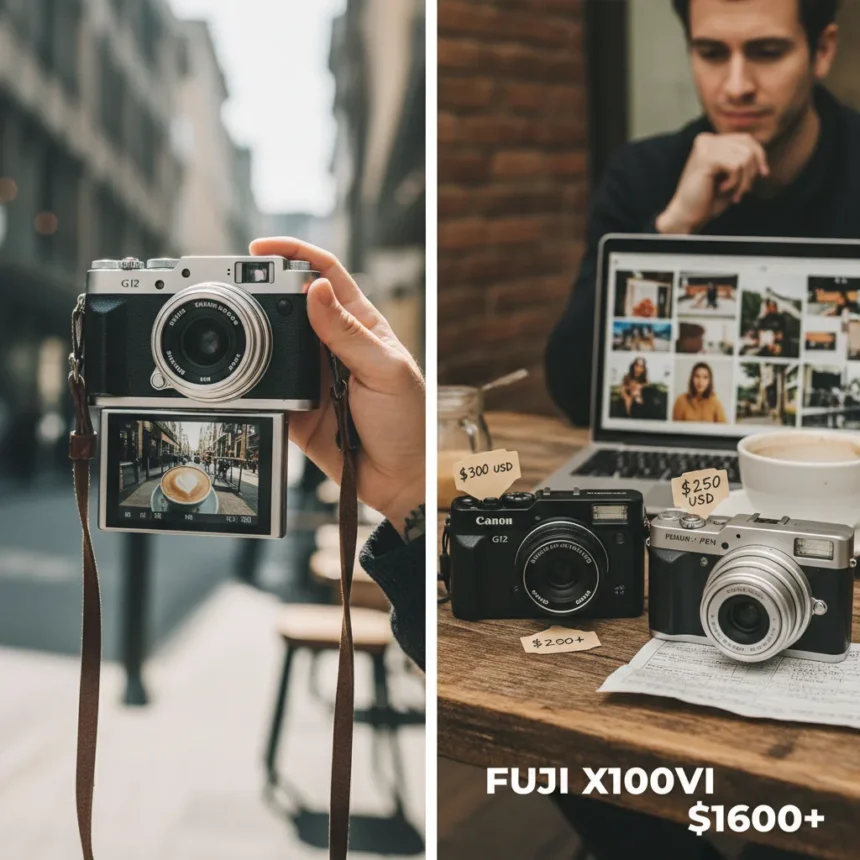
The Fujifilm X100VI is a masterclass in manufactured scarcity. Launched in February 2024, this retro-styled compact with a 40MP APS-C sensor became a TikTok sensation, and two years later it remains backordered—the silver model showing April 2026 availability at major retailers. Meanwhile, cheap used cameras from a decade ago sit gathering dust at a fraction of the price, delivering nearly identical results without the viral tax.
Key Takeaways
- Two 10-year-old compact cameras cost less than half a Fujifilm X100VI’s retail price.
- Fuji X100VI remains backordered into 2026 despite launching in February 2024.
- TikTok virality inflates demand for trendy cameras while used alternatives offer similar retro aesthetics.
- A Kodak Charmera keychain camera trends at just $35, showing budget retro compacts dominate B&H sales lists.
- Rumored cheaper Fuji alternative would cost $700-800 with a smaller sensor, not APS-C.
The TikTok Tax on Camera Gear
Social media has weaponized camera trends. The Fujifilm X100VI sits on bestseller lists not because it is the only capable compact, but because it is the camera TikTok decided everyone needs. The result: genuine scarcity, inflated resale prices, and frustrated photographers waiting until 2026 for stock. This is not a supply chain issue—it is manufactured demand colliding with limited production, and it works perfectly.
The cost of following trends is brutal. The X100VI retails around $1,600 new, yet the author of the original article bypassed this entirely by purchasing two 10-year-old compact cameras for less than half that total price. Those cameras—specific models unnamed in the source but likely used-market finds from eBay or KEH—deliver retro aesthetics, solid optics, and zero waiting lists. They lack the latest sensor technology and hybrid viewfinder, but for casual photography and social media content, they perform identically to their hyped successor.
Why Cheap Used Cameras Actually Win
Cheap used cameras solve a problem the X100VI creates: they are available now. A photographer hunting for retro styling and manual controls does not need a 2024 sensor to produce compelling images. The 10-year-old compact market is flooded with capable options—Canon PowerShot models, early Sony RX100 series, Ricoh GR predecessors—all priced under $400 combined for multiple bodies. Buy two, keep one as backup, still spend under $800 total.

The rumored Fujifilm X-Half, allegedly launching under $1,000 with a smaller 1-inch sensor and optical-only viewfinder, signals that even Fujifilm recognizes the X100VI’s price point excludes most creators. Yet this cheaper alternative still costs more than two solid used compacts and sacrifices the APS-C sensor that justifies the X100VI’s premium. The math does not favor new gear when the used market offers proven reliability at throwaway prices.
Trending cameras like the Kodak Charmera—a $35 keychain digital retro compact now hard to find due to viral demand—prove that aesthetic appeal matters more than specs to most users. If a 35-dollar plastic camera can trend on B&H’s bestseller lists, a pair of quality 10-year-old compacts clearly outperform the value proposition of any $1,600 new body.



The Real Cost of Ignoring Trends
Ignoring TikTok trends saves money, but it also saves something less tangible: freedom from the upgrade treadmill. Photographers who chase viral gear spend not just cash but mental energy justifying purchases, hunting for stock, and feeling behind when the next trend launches. Buying used eliminates this entirely. A 10-year-old camera cannot become obsolete because it never competed on hype—it competes on results.
The Fujifilm X100VI is a fine camera. Its APS-C sensor and hybrid viewfinder justify the premium for professionals and enthusiasts who need those specific features. For TikTok creators, Instagram photographers, and hobbyists? The gap between a modern compact and a decade-old alternative shrinks to irrelevance once you account for actual output quality. The sensor tech improves incrementally, not transformatively, across a decade of compact evolution.
Will Cheaper Alternatives Finally Break the X100VI Spell?
Fujifilm’s rumored X-Half, priced under $1,000 with a 1-inch vertical sensor designed for vertical content creators, may dent the X100VI’s dominance. But it still costs more than two used compacts and targets the same TikTok audience that made the X100VI a phenomenon. The real disruption comes not from new products but from photographers realizing they already own—or can buy for next to nothing—a camera that does the job.
The lesson is simple: trends are expensive. The Fujifilm X100VI’s scarcity is not a feature; it is a bug that social media has repackaged as desirability. Two 10-year-old compacts, purchased for under $800 combined, eliminate the wait, the frustration, and the sense that you are missing out. They shoot photos. They look retro. They cost less than half a hyped alternative. In a market drowning in trend-chasing, that is the most radical choice you can make.



Are old compact cameras still good for photography?
Yes. A 10-year-old compact camera produces images indistinguishable from modern compacts for everyday use, social media, and casual photography. The sensor technology has improved, but the difference is incremental—better low-light performance, slightly faster autofocus—not transformative. For retro aesthetics and manual control, older compacts often excel.
What is the Fujifilm X100VI and why is it so hard to find?
The Fujifilm X100VI is a retro-styled compact with a 40MP APS-C sensor launched in February 2024. TikTok virality drove demand so high that it remains backordered into 2026, despite being nearly two years old. Scarcity has made it a status symbol rather than a camera chosen purely on merit.
Can I get a similar camera for less money?
Absolutely. Used compact cameras from 10 years ago cost a fraction of the X100VI’s price and deliver similar retro styling and usability. A pair of quality used compacts purchased for under $800 total offer comparable everyday performance without the wait or the viral markup.
The camera industry thrives on hype, but photography does not. A cheap used camera from the past decade is not a compromise—it is a smarter choice. Skip the TikTok trends, buy used, and shoot better photos because you are not waiting for stock or justifying an inflated price tag.
Where to Buy
Canon PowerShot Elph 360 HS A: | Wandrd D1 crossbody sling
Edited by the All Things Geek team.
Source: Tom's Guide