





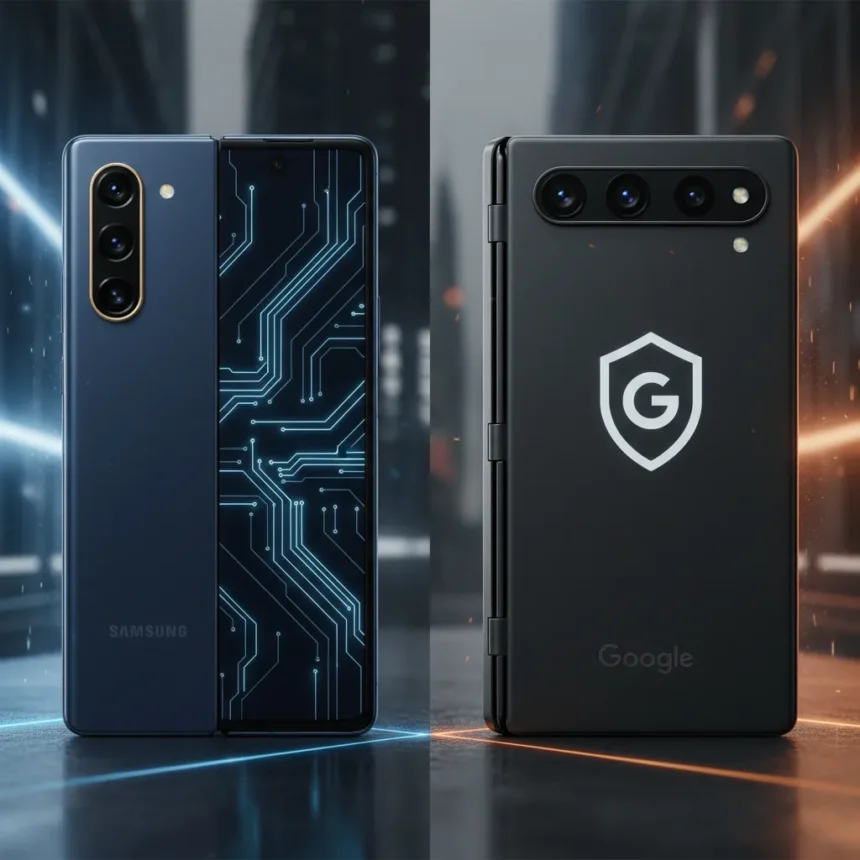
The Galaxy Z Fold 8 vs. Pixel 10 Pro Fold showdown is shaping up to be the foldable battle that matters. Samsung’s next flagship foldable is still months away, but leaks already reveal a device betting on internal refinement rather than revolutionary design. Meanwhile, Google’s Pixel 10 Pro Fold has just arrived with bigger screens, a more durable frame, and a charging feature no other foldable has managed yet.
Key Takeaways
- Pixel 10 Pro Fold features Tensor G5 processor, IP68 rating, and magnetic Qi2 charging—a first for foldables
- Galaxy Z Fold 8 rumored to keep M13 display material for stability but add bigger 5000mAh battery and 45W charging
- Pixel 10 Pro Fold has larger screens (8-inch inner, 6.4-inch cover) with higher brightness at 3000 nits
- Galaxy Z Fold 7 remains thinner and lighter but trails in battery life and camera versatility versus Chinese competitors
- Pixel 10 Pro Fold discounted to $1499 on Amazon, making value proposition stronger at launch
Screen Size and Display Technology: Pixel’s Bigger Canvas
The Pixel 10 Pro Fold swings for size with an 8-inch main display and 6.4-inch cover screen, both OLED with LTPO technology supporting 1-120Hz refresh rates. Samsung’s Galaxy Z Fold 7 uses an 8-inch Dynamic AMOLED 2X inner screen and a narrower 6.5-inch cover, both delivering solid performance but with different aspect ratios. Pixel’s cover screen is noticeably wider, making everyday tasks more pleasant before you unfold. Both hit 3000 nits peak brightness, so outdoor visibility is equally strong. The real difference? Pixel’s LTPO 1-120Hz on both panels means smoother scrolling across the board, while the Galaxy Z Fold 7 settles for a more traditional approach.
Samsung’s rumored Galaxy Z Fold 8 will likely stick with the same M13 display material it has used for the past couple of years, prioritizing cost and proven stability over chasing the latest tech. That is a pragmatic choice—if it works, why reinvent it? But it also signals Samsung is not pushing screen innovation as aggressively as Google, which is positioning itself as the foldable that finally feels premium across every interaction.
Performance and Processing Power: Tensor G5 Takes the Crown
Google’s Pixel 10 Pro Fold runs the Tensor G5 processor, built on a 3nm process and paired with 16GB of RAM. This is a significant leap for Google’s in-house chip, finally delivering the kind of grunt that makes a foldable feel snappy rather than compromised. The Galaxy Z Fold 7 uses Snapdragon 8 Elite for Galaxy with 12GB RAM, which is no slouch, but the 4GB RAM gap and architectural differences give Pixel a real advantage in sustained performance.


The Galaxy Z Fold 8 will likely continue with Snapdragon 8 Elite for Galaxy or a successor variant. Leaks do not suggest a processor swap, meaning Samsung is betting that its existing chipset stack plus internal optimizations (better battery, faster charging) will be enough to compete. For most users, both chips handle daily tasks without complaint. But if you are pushing video editing, gaming, or heavy multitasking, Pixel’s extra RAM and newer architecture give it breathing room.
Battery and Charging: Where Samsung Needs to Catch Up
The Pixel 10 Pro Fold packs a 5015mAh battery, and while that sounds modest on paper, it is paired with the Tensor G5’s efficiency and magnetic Qi2 charging—a first for any foldable. Wireless charging on a foldable is no gimmick; it eliminates the wear cycle on the hinge connector and feels genuinely premium. Samsung’s Galaxy Z Fold 7 lags behind in real-world battery life compared to Chinese rivals like the Vivo X Fold 5, which offers 6000mAh. Rumors suggest the Galaxy Z Fold 8 will jump to a bigger 5000mAh battery with 45W wired charging, finally addressing one of Samsung’s most glaring weaknesses. That is a meaningful upgrade, but it still does not solve the wireless charging gap or match the battery capacity of competitors outside the US.



Pixel’s decision to add Qi2 is clever. It is not about raw capacity; it is about ecosystem integration and reducing friction. Samsung has traditionally relied on wired charging dominance, but foldables demand a different philosophy—less stress on moving parts, more stress on longevity.
Cameras: A Complicated Picture
The Pixel 10 Pro Fold features a 48MP main camera, 10.5MP ultrawide, and 10.8MP telephoto with 5x optical zoom. Those specs sound respectable until you compare them to the Galaxy Z Fold 7’s 200MP main sensor. Pixel’s camera system is not even mid-range level by current foldable standards, and it is a surprising weakness for a phone that otherwise feels thoughtfully engineered. Samsung’s telephoto and ultrawide capabilities, inherited from the Galaxy S lineup, give it a real advantage here. The Galaxy Z Fold 8 is rumored to retain similar camera hardware, which means Samsung will likely keep its edge in zoom and wide-angle work.
Both phones have 10MP front cameras on the main and cover screens, and both let you use the rear cameras for selfies via the cover display—a smart design choice that neither company invented but both have perfected. For casual photography and social media, Pixel is fine. For serious work? Samsung still owns this category.
Design and Durability: Pixel Raises the Bar
The Pixel 10 Pro Fold weighs 258g and carries IP68 certification, making it the first foldable to achieve that durability standard. That is a big deal. IP68 means dust resistance and water resistance up to 1.5 meters for 30 minutes—real protection, not marketing theater. The Galaxy Z Fold 7 remains the thinnest and lightest foldable in North America, a genuine engineering feat. But thinness and lightness do not matter if you are afraid to use the phone near water.



The Galaxy Z Fold 8 is rumored to keep a similar profile to the Z Fold 7, leaning on the same design language with internal upgrades. That is a missed opportunity. Samsung has the engineering talent to add durability without sacrificing thinness—the fact that Google did it first with the Pixel 10 Pro Fold is a wake-up call. If the Z Fold 8 ships without IP68 or equivalent protection, it will feel like Samsung is choosing style over substance.
Software and Ecosystem
Both phones run Android 16, but in different flavors. Pixel 10 Pro Fold runs stock Android with Google’s optimizations, while the Galaxy Z Fold 8 will ship with One UI 8. Neither is objectively better—it comes down to preference. Stock Android feels cleaner and faster to many users; One UI offers deeper customization and tighter Samsung hardware integration. For foldables, software optimization matters more than usual. Pixel’s stock approach means fewer compromises between the main and cover screens. Samsung’s One UI is built with foldable-first thinking but adds bloatware and unnecessary customization layers that some users love and others despise.
Is the Galaxy Z Fold 8 Worth Waiting For?
If you are considering a foldable right now, the Pixel 10 Pro Fold is the safer choice. It is here, it is discounted to $1499 on Amazon, and it delivers a cohesive experience with durability, charging innovation, and stock Android simplicity. The Galaxy Z Fold 8 is months away and promises internal upgrades—a bigger battery, faster charging, possibly S Pen support—but no confirmed design revolution. Samsung is playing it safe, betting that refinement beats reinvention.
The risk? By the time the Z Fold 8 launches, the Pixel 10 Pro Fold will have set the standard. Samsung will need to do more than match it; it will need to exceed it. Thinner and lighter is not enough anymore. Durability, wireless charging, and camera quality matter more than ever.
How does the Galaxy Z Fold 8 battery compare to the Z Fold 7?
Rumors suggest the Galaxy Z Fold 8 will feature a bigger 5000mAh battery compared to the Z Fold 7, addressing one of Samsung’s biggest weaknesses in battery life. This would match or exceed the Pixel 10 Pro Fold’s 5015mAh capacity. However, without official confirmation, these remain leaks rather than guarantees.
Does the Pixel 10 Pro Fold have wireless charging?
Yes. The Pixel 10 Pro Fold includes magnetic Qi2 charging, making it the first foldable to offer this feature. This is a major advantage for durability, as it eliminates repeated stress on the hinge connector from wired charging.
Is the Galaxy Z Fold 8 thinner than the Pixel 10 Pro Fold?
Leaks suggest the Galaxy Z Fold 8 will maintain a similar profile to the Z Fold 7, which remains the thinnest foldable in North America. However, the Pixel 10 Pro Fold prioritizes durability with IP68 certification, a trade-off Samsung has not yet matched. Thinness without protection may not be the winning strategy anymore.
The Galaxy Z Fold 8 vs. Pixel 10 Pro Fold choice ultimately depends on what you value: Samsung’s thinness and camera prowess, or Google’s durability and charging innovation. If you can wait and Samsung delivers on battery and S Pen rumors, the Z Fold 8 could be compelling. If you need a foldable now, Pixel 10 Pro Fold is the more complete phone. Neither is perfect, but both represent the foldable category finally growing up.
Where to Buy
Edited by the All Things Geek team.
Source: Android Central




