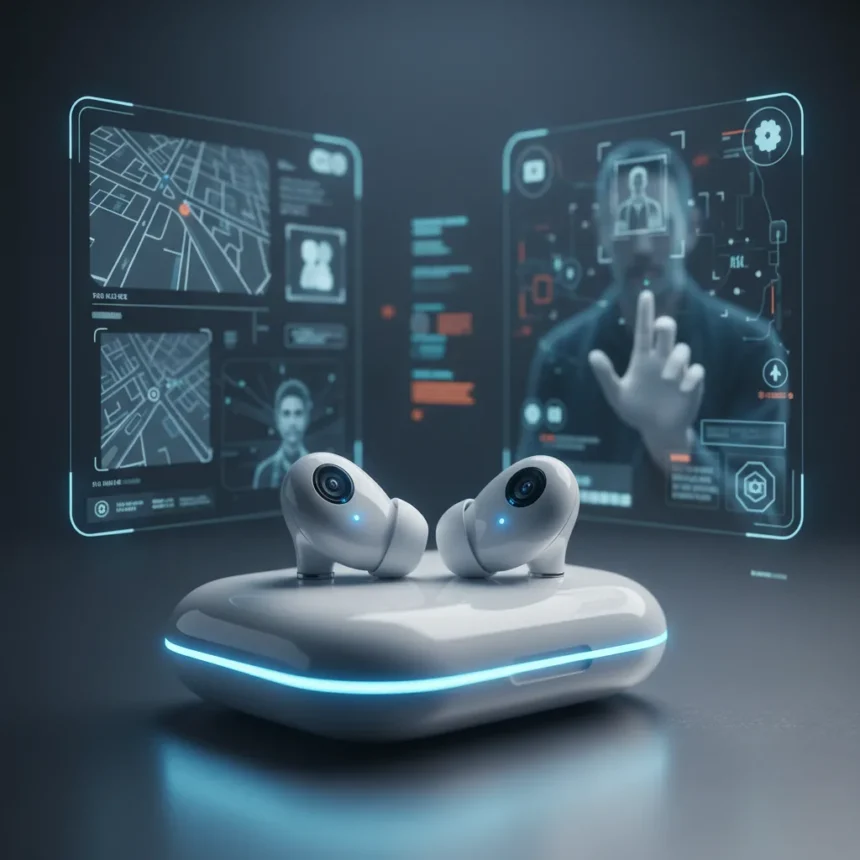
AirPods camera technology represents a significant shift in how wearable devices could function, moving beyond audio-only accessories toward multimodal sensors that see and hear simultaneously. Apple is reportedly exploring this capability, according to reports from technology publications, signaling a new direction for one of the world’s most popular earbud lines.
Key Takeaways
- Apple is developing camera technology for future AirPods models to enable visual awareness.
- This technology could transform AirPods from audio-only devices into multimodal wearables.
- Visual capabilities in earbuds could unlock new use cases in navigation, accessibility, and real-world awareness.
- The integration raises questions about privacy and how users will interact with visual data on wearables.
- This represents a broader trend of Apple embedding health and sensing features into AirPods.
Why AirPods camera technology matters right now
Adding cameras to AirPods makes sense because earbuds occupy a unique position in personal technology—they’re already worn close to the head and eyes, they have consistent power, and they maintain constant connection to a user’s iPhone or other Apple devices. A camera in this location could capture what a wearer sees without requiring them to hold or position a separate device. This proximity creates natural advantages for computer vision tasks that benefit from the wearer’s perspective.
Apple has already demonstrated interest in health-focused features for AirPods, including hearing aid functionality and body temperature monitoring capabilities being explored by the company. Adding visual sensing to this ecosystem represents the next logical step—transforming AirPods from single-function audio devices into comprehensive sensor hubs that monitor multiple dimensions of a user’s environment and wellbeing.
What AirPods camera technology could enable
Visual awareness in AirPods opens possibilities that audio alone cannot address. Navigation could become more intuitive—imagine real-time visual guidance overlaid with audio cues, helping users navigate unfamiliar spaces without constantly checking their phones. Accessibility features could improve dramatically; users with vision impairments could receive detailed visual descriptions of their surroundings processed through on-device AI.


The technology could also enhance augmented reality experiences. Current AR on iPhones requires holding the device up; embedding cameras in AirPods would make AR interactions more natural and persistent. Real-world awareness features—identifying objects, reading text, detecting hazards—become possible when a wearable device can see what the user sees.
Beyond consumer applications, AirPods camera technology could power workplace safety, retail analytics, and hands-free documentation tasks. The form factor advantage is substantial: a worker could capture images and video without setting down tools or interrupting their workflow.



Privacy and practical challenges ahead
The obvious friction point is privacy. Cameras in earbuds that users wear constantly raise legitimate concerns about recording in public spaces, consent from bystanders, and data security. Apple would need to implement clear visual indicators when cameras are active, robust encryption for any captured data, and strict privacy controls—standards the company has already established with other hardware, but which become more complex with wearables that might record continuously.
Technical challenges also remain. Miniaturizing camera sensors small enough for earbuds while maintaining image quality requires advances in optical engineering. Power consumption is another constraint; adding cameras to devices that already struggle with all-day battery life demands either larger batteries (which conflicts with the earbud form factor) or dramatic improvements in sensor efficiency.
Apple’s broader investment in health features for AirPods suggests the company is willing to solve these problems incrementally. The hearing aid functionality and temperature sensing capabilities already in development indicate Apple’s strategy: add sensing features gradually, build user trust through privacy-first implementation, and let the ecosystem mature before pursuing more ambitious applications.
How this fits into Apple’s wearables strategy
AirPods camera technology doesn’t exist in isolation—it’s part of a larger vision where Apple’s wearables become increasingly intelligent and interconnected. The company has spent years embedding sensors into watches, rings, and earbuds, creating a network of devices that collectively understand the user’s health, location, and context. Adding visual input to AirPods completes a more comprehensive picture of the wearer’s world.


This approach contrasts with competitors who focus on single-function wearables or rely on phones as the primary sensor hub. By distributing sensing across form factors, Apple reduces dependency on any single device and creates stickier ecosystem lock-in—users with AirPods, Apple Watch, and iPhone benefit from seamless integration that standalone devices cannot match.
When might we actually see AirPods with cameras?
Apple typically moves cautiously with new form factors. The company spent years refining AirPods Pro before introducing major feature additions. AirPods camera technology is still in exploration stages; there’s no indication of imminent release. Expect a multi-year development cycle, likely involving multiple prototype iterations, regulatory approval for any recording capabilities, and extensive privacy testing before any product reaches consumers.
When cameras do arrive in AirPods, they’ll likely debut in a premium tier first—perhaps AirPods Pro Max or a new flagship model—before trickling down to standard AirPods. This allows Apple to establish user trust and refine the technology in a smaller market before broader rollout.
Could AirPods camera technology actually work as a product?
The technical feasibility is less in question than the practical utility and user acceptance. Yes, cameras can be miniaturized enough for earbuds. The real question is whether people want their earbuds recording their surroundings constantly, and whether the privacy and social friction outweighs the convenience gains. Early adopters and accessibility-focused users will likely embrace the feature; mainstream adoption depends entirely on Apple’s ability to make privacy feel genuine, not like a marketing checkbox.
What happens to audio quality if cameras are added?
Adding cameras to AirPods doesn’t inherently compromise audio performance—the components occupy different physical spaces and use different power budgets. However, the trade-off lies in total power consumption and thermal management. Cramming more electronics into the same small form factor generates more heat and drains batteries faster. Apple would need to either increase earbud size slightly, improve battery capacity, or optimize power consumption dramatically to maintain the all-day battery life users expect.
How does this compare to other wearable camera solutions?
Wearable cameras aren’t new—action cameras, smart glasses, and body cameras exist. What makes AirPods camera technology different is the integration with Apple’s ecosystem and the form factor advantage. Smart glasses from competitors like Meta and Ray-Ban offer visual capabilities but require users to wear an additional device on their face. Embedding cameras in earbuds that most iPhone users already wear eliminates that friction, though it introduces the privacy concerns glasses-mounted cameras have faced.
The advantage over smartphone cameras is context and convenience. You don’t need to pull out your phone; the camera is already positioned at eye level and connected to your device ecosystem. The disadvantage compared to a dedicated camera or glasses is image quality and field of view—earbud-mounted cameras will necessarily be smaller and capture a narrower perspective than alternatives.
AirPods camera technology, if executed thoughtfully, could redefine how wearables function. The capability to see as well as hear transforms earbuds from audio accessories into genuine computing devices. Whether users embrace this vision depends entirely on Apple’s ability to make the technology feel essential rather than intrusive, and to build genuine privacy protections rather than performative ones. The company has demonstrated this capability with other sensitive features; AirPods cameras will be the test of whether that trust extends to visual sensing in our most intimate wearables.
Where to Buy
Apple AirPods 4 | Apple AirPods Pro 3 | Samsung Galaxy Buds 3 Pro | Nothing Ear (a)
Edited by the All Things Geek team.
Source: T3