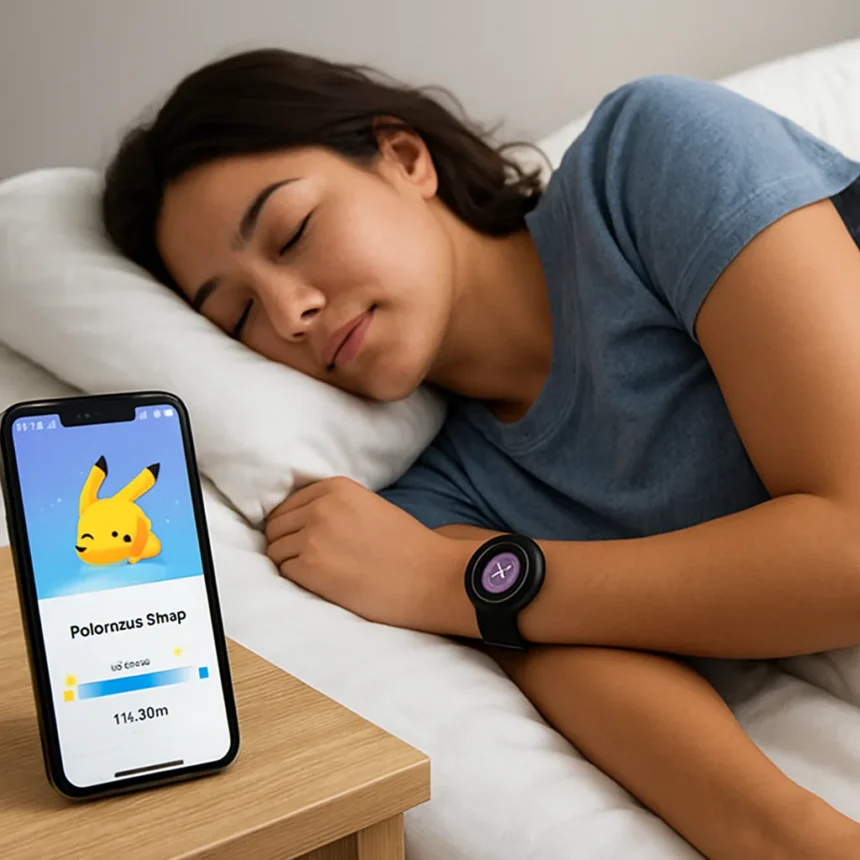
The Garmin Pokémon Sleep integration is a collaboration between Garmin and The Pokémon Company, launched on March 13, 2026, that connects compatible Garmin smartwatches to the Pokémon Sleep app for gamified sleep tracking — and it’s free to use. It sounds like a novelty. It probably shouldn’t work. And yet, as TechRadar’s writer put it, it’s “like a Tamagotchi for adults” that “emotionally blackmailed” them into a better bedtime routine. That description is more accurate than it has any right to be.
TL;DR: Garmin’s Pokémon Sleep integration, live since March 13, 2026, lets compatible Garmin smartwatches share sleep data with the Pokémon Sleep app. Two free watch faces with dynamic Pokémon poses tied to Body Battery levels make going to bed feel oddly urgent — and surprisingly effective.
What the Garmin Pokémon Sleep integration actually does
The Garmin Pokémon Sleep integration works by syncing sleep data recorded on a compatible Garmin device directly with the Pokémon Sleep app, allowing that data to contribute to in-game Pokémon sleep style research. Any Garmin smartwatch with an optical heart rate sensor qualifies, which covers a wide range of the current lineup. The integration also brings two free watch faces to the Connect IQ Store: “Pokémon Sleep: Snorlax & Friends” and “Pokémon Sleep: I Choose You,” the latter letting you pick from 48 different Pokémon.
Those watch faces aren’t just cosmetic. The Pokémon displayed on them change their poses dynamically throughout the day based on your Body Battery energy level — Garmin’s metric for tracking physical readiness. Low Body Battery, drowsy-looking Pokémon. High Body Battery, active ones. It’s a surprisingly elegant way to make an abstract health metric feel personal and immediate.


The watch faces are available for fēnix, Forerunner, Venu, and vívoactive series devices, and they include a night mode that activates automatically 1.5 hours before your scheduled sleep time as set in the Garmin Connect app. That automatic transition is the key detail — it’s not just a skin, it’s a behavioural nudge baked into the hardware layer.
Why the guilt-trip mechanic is more effective than it sounds
The “emotionally blackmailed” framing isn’t just a clever headline. The integration essentially turns your wrist into a tiny accountability partner. When your watch face switches to night mode and a sleepy Snorlax stares back at you, the implicit message is clear: it’s time to wind down. Miss your bedtime and you’re not just letting yourself down — you’re neglecting a Pokémon.



This is the Tamagotchi comparison made explicit. The original Tamagotchi, the handheld virtual pet from the late 1990s, worked because players felt genuine emotional responsibility for a digital creature. The Garmin integration borrows exactly that psychology, applying it to adult sleep hygiene rather than a toy. It’s a small but meaningful design insight: abstract health goals are hard to act on, but disappointing a cartoon character feels weirdly concrete.
Whether you’d describe this as “Super Effective” — as TechRadar’s writer did, in an obvious Pokémon reference — depends on how susceptible you are to that kind of gentle social pressure. But the fact that the mechanic works at all on adults is genuinely interesting. Sleep apps that show you graphs and scores haven’t solved the bedtime problem. A sleepy Pikachu on your wrist might actually do more.
Which Garmin devices support Pokémon Sleep?
Compatibility covers all Garmin smartwatches with an optical heart rate sensor, which is the majority of Garmin’s current wearable range. The two free Pokémon-themed watch faces specifically support fēnix, Forerunner, Venu, and vívoactive devices. If your Garmin model falls outside those series, you can still share sleep data with the Pokémon Sleep app — you just won’t get the dynamic watch face features. The watch faces are available now in the Connect IQ Store at no cost.
There are some exclusions to full compatibility, though the specific excluded models weren’t detailed in Garmin’s launch materials. If you’re unsure whether your device qualifies, Garmin’s support pages carry the definitive list. The integration works globally for compatible devices via the Pokémon Sleep app and Garmin Connect.



How does this compare to other gamified sleep trackers?
The Pokémon Sleep app already existed before this integration, working with the Pokémon GO Plus+ accessory as its primary hardware companion. The Garmin partnership expands that ecosystem significantly, bringing in users who already wear a Garmin daily and don’t want a second device on their wrist. That’s a smart move — the biggest barrier to any sleep tracker is getting people to actually wear it. Garmin users are already wearing theirs.
Compared to pure sleep-tracking wearables that focus on data dashboards and clinical-looking scores, the Pokémon Sleep approach sacrifices depth for engagement. You won’t get the granular REM staging breakdowns that dedicated sleep trackers prioritise. What you get instead is a reason to care about going to bed at a consistent time — which, for most people, is probably the more pressing problem anyway.
Is the Pokémon Sleep Garmin integration worth trying?
Yes, especially because it costs nothing. The watch faces are free, the app connection is free, and if your Garmin already has an optical heart rate sensor, you’re already compatible. The downside risk is essentially zero. The upside is a genuinely novel sleep motivation mechanic that at least one writer found more effective than years of conventional sleep hygiene advice.
Does Pokémon Sleep work with all Garmin watches?
The Pokémon Sleep integration works with all Garmin smartwatches that include an optical heart rate sensor. The dynamic Pokémon watch faces are specifically available for fēnix, Forerunner, Venu, and vívoactive series devices via the Connect IQ Store. Some models are excluded — check Garmin’s support pages for the full compatibility list.
What is Body Battery on Garmin and how does it connect to Pokémon Sleep?
Body Battery is Garmin’s energy tracking metric, calculated using heart rate variability, stress, and activity data to estimate your physical readiness on a scale throughout the day. In the Pokémon Sleep watch faces, the Pokémon’s pose changes based on your current Body Battery level, giving you an at-a-glance visual cue for how recovered you are. It’s one of the more creative uses of the metric since Garmin introduced it.
The Garmin Pokémon Sleep integration won’t replace a serious sleep clinic, and it’s not trying to. What it does — quietly, cheaply, and with a surprising amount of psychological savvy — is make going to bed on time feel like something worth doing. For a free update to a device you’re already wearing, that’s a better return than most paid sleep apps deliver.
Edited by the All Things Geek team.
Source: TechRadar