





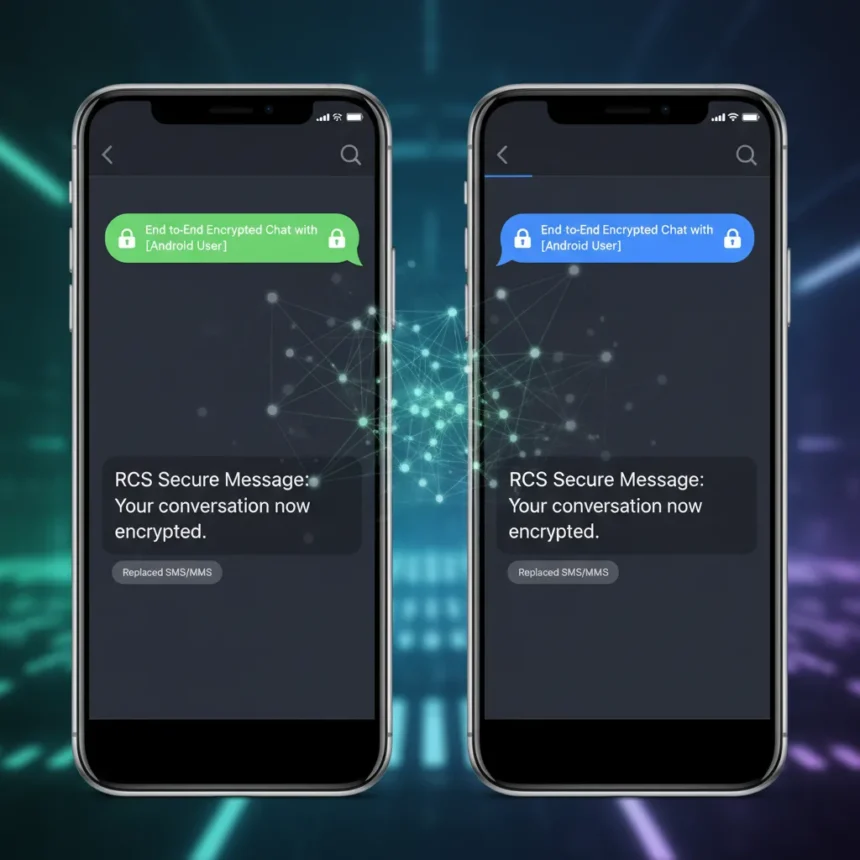
iPhone encrypted RCS messaging represents a fundamental shift in how iOS and Android users communicate. Apple’s Messages app now uses RCS as the default protocol between iPhones and Android devices, replacing the outdated SMS standard with end-to-end encryption. This closes a security gap that has frustrated users for years: texting an Android friend meant losing the encryption protections that iPhone-to-iPhone conversations enjoy.
Key Takeaways
- iPhone encrypted RCS messaging replaces SMS with end-to-end encryption for Android conversations
- Apple’s Messages app defaults to RCS protocol between iOS and Android devices
- The rollout began in iOS 18.4 beta 2 and continues through iOS 18.5 implementations
- RCS closes the security gap that previously made cross-platform texting vulnerable
- Android users benefit from the same encryption protections iPhone users already expect
Why iPhone Encrypted RCS Messaging Matters Now
For over a decade, iPhone users messaging Android contacts faced a security compromise. SMS lacks encryption entirely, leaving conversations visible to network operators and potential attackers. iPhone-to-iPhone messages use end-to-end encryption by default through iMessage, creating a stark disparity. iPhone encrypted RCS messaging eliminates this two-tier system, extending encryption protections to the largest cross-platform communication channel. The timing reflects growing pressure on Apple to match Android’s security standards and address user frustration with unencrypted fallback messaging.
The shift also reflects broader industry movement toward RCS adoption. Google Messages has been pushing encrypted RCS for Android users, and Apple’s integration signals the messaging protocol has matured enough to replace SMS at scale. This is not a cosmetic update—it is a fundamental change to how billions of cross-platform messages are protected.
How iPhone Encrypted RCS Messaging Works
iPhone encrypted RCS messaging operates transparently. When an iPhone user texts an Android contact, the Messages app automatically detects RCS capability and switches from SMS to RCS protocol. The encryption happens end-to-end, meaning Apple and the carrier cannot read message content. Users see no difference in the interface—the upgrade happens silently in the background.


The rollout occurred in phases. iOS 18.4 beta 2 introduced the feature, with continued refinement through iOS 18.5 implementations. Apple did not announce a specific global launch date, instead rolling the feature out gradually to ensure compatibility across different carrier networks and Android devices. This phased approach reflects the technical complexity of coordinating encryption standards across competing platforms and carriers.
The Security Advantage Over SMS
SMS offers zero encryption. Messages travel unencrypted across carrier networks, exposing content to interception. RCS replaces this vulnerability with end-to-end encryption, meaning only sender and recipient can read the message. For iPhone encrypted RCS messaging, this represents parity with iMessage security. Users no longer face a choice between convenience and security when texting Android contacts.



The encryption standard matters. RCS uses established cryptographic protocols designed to prevent man-in-the-middle attacks and message tampering. Unlike SMS, which carriers can log and store, encrypted RCS conversations leave no plaintext record on network infrastructure. For users sending sensitive information—financial details, health data, personal conversations—this shift from SMS to iPhone encrypted RCS messaging eliminates a major vulnerability.
What This Means for Android Users
Android users gain the same encryption protections iPhone users have enjoyed through iMessage. Previously, texting an iPhone user meant accepting SMS limitations if the iPhone fell back to SMS. Now, iPhone encrypted RCS messaging ensures Android contacts receive encrypted messages by default. This removes the asymmetry that made cross-platform texting feel like a security downgrade.
Google Messages already supported encrypted RCS, so Android users see no new interface changes. The benefit comes from knowing that incoming messages from iPhone users are now encrypted end-to-end. For Android users in regions where SMS remains common, this shift represents a meaningful security upgrade without requiring app changes or manual configuration.
Carrier and Compatibility Challenges
RCS adoption depends on carrier support. Not all carriers worldwide have enabled RCS infrastructure, meaning some users may not see iPhone encrypted RCS messaging available immediately. Apple’s rollout strategy accounts for this by detecting carrier capabilities and falling back to SMS where RCS is unavailable. The transition is not instantaneous globally—it depends on carrier infrastructure maturity in each region.



Older Android devices may also lack RCS support. While modern Android phones support RCS, legacy devices running older software versions cannot receive encrypted RCS messages. In these cases, iPhone encrypted RCS messaging falls back to SMS, preserving compatibility but losing encryption. Users texting older devices will see an SMS indicator in the Messages app, making the fallback transparent.
FAQ
Does iPhone encrypted RCS messaging work with all Android phones?
iPhone encrypted RCS messaging works with Android devices that support RCS and are connected to carriers with RCS infrastructure. Older Android phones or carriers without RCS support will receive SMS messages instead, which are not encrypted. The Messages app indicates whether a message is encrypted or sent via SMS.
Is iPhone encrypted RCS messaging the same as iMessage?
No. iMessage is Apple‘s proprietary encryption standard for iPhone-to-iPhone communication. iPhone encrypted RCS messaging uses RCS protocol with end-to-end encryption, which is different from iMessage but provides equivalent security. Both encrypt messages end-to-end, but they use different underlying standards.
Can I turn off iPhone encrypted RCS messaging?
iPhone encrypted RCS messaging is the default behavior when texting Android contacts with RCS capability. Users cannot manually disable it. If a user prefers SMS for a specific contact, they would need to contact Apple Support, as no standard toggle exists in the Messages app settings.
iPhone encrypted RCS messaging marks a watershed moment in cross-platform security. For years, texting between iOS and Android meant accepting a security compromise. Now, Apple has aligned itself with the industry standard, removing SMS as the default fallback and ensuring that conversations between iPhone and Android users are protected by encryption. The rollout may be gradual and carrier-dependent, but the direction is clear: unencrypted SMS is becoming obsolete. Users who have long felt frustrated by the security gap between iMessage and Android texting finally have reason to expect parity.
Where to Buy
Edited by the All Things Geek team.
Source: T3




