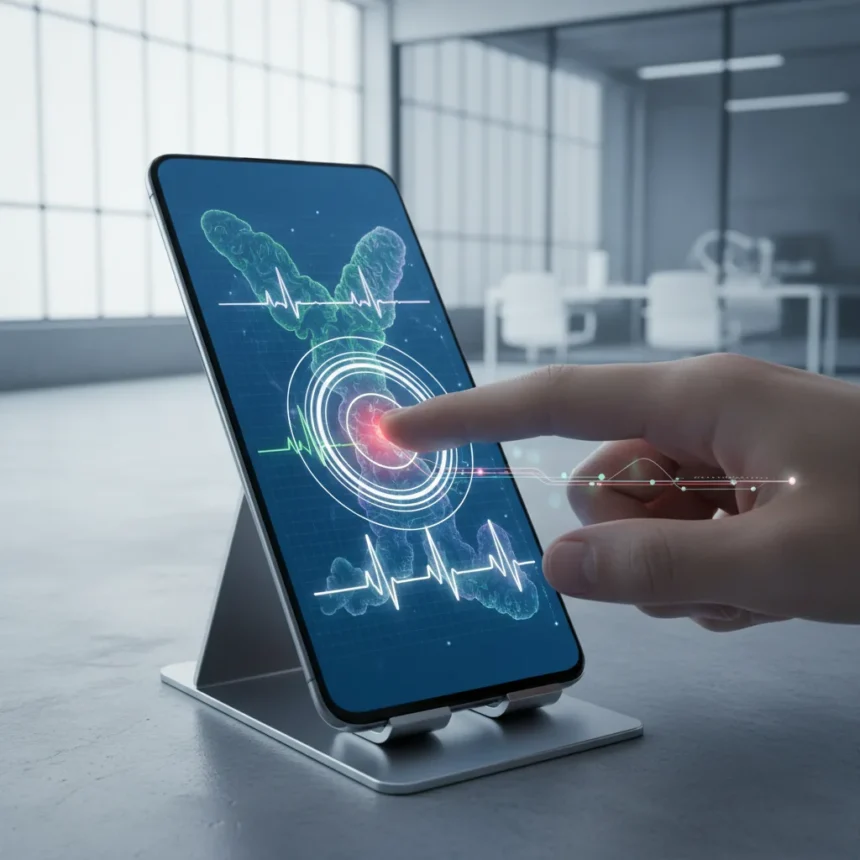
Samsung OLED displays with health sensors represent a fundamental shift in how phones measure biometric data. Rather than relying on separate wearables or rear-mounted sensors, Samsung is embedding health monitoring directly into the display panel itself, creating a unified screen that serves both visual and medical purposes.
Key Takeaways
- Samsung demonstrated OLED displays with integrated health sensors at a recent showcase
- Health sensors are built directly into the display panel, eliminating separate components
- The technology enables real-time biometric monitoring through the phone screen
- This represents a departure from traditional external sensor placement on phones
- Samsung is advancing display innovation beyond color and brightness specifications
What Samsung’s new OLED displays with health sensors actually do
Samsung’s approach embeds biometric sensors directly into the OLED panel architecture rather than mounting them separately on the device frame or back. This integration allows the screen itself to capture health data while simultaneously displaying content. The display acts as both interface and measurement instrument, creating a more seamless user experience than current phones where health sensors sit isolated on the device body. By moving sensors into the panel, Samsung reduces component count and simplifies phone design while maintaining measurement accuracy.
The embedded sensor approach differs markedly from competitors’ strategies. Most phones today use isolated sensors positioned around the frame—typically on the rear for camera-based heart rate monitoring or on the edges for pulse detection. Samsung’s method consolidates this functionality into the display itself, which users interact with constantly throughout the day. This constant contact creates more opportunities for continuous health monitoring without requiring dedicated wearables or specific sensor placement.
Why display-integrated health sensors matter for the future
Embedding health sensors into OLED displays opens possibilities for continuous, passive biometric tracking that current phone designs cannot easily achieve. Users would not need to position their finger on a specific rear sensor or wear a separate device—simply holding the phone naturally could enable heart rate, blood oxygen, or stress level monitoring. This seamless integration could transform how people interact with health data on their phones, making monitoring a byproduct of normal usage rather than a deliberate action.


The technical challenge lies in maintaining display quality while integrating sensor components. OLED panels require precise light emission across millions of pixels, and adding sensor elements beneath or within the panel architecture risks compromising brightness, color accuracy, or responsiveness. Samsung’s demonstration suggests the company has solved these engineering hurdles, though the company has not disclosed specific technical details about sensor accuracy or refresh rate impacts.
Samsung OLED displays with health sensors versus current phone health monitoring
Today’s flagship phones rely on external sensors for health data. The Samsung Galaxy Ring prototype, which Samsung showcased separately, uses dedicated biometric sensors built into a wearable band rather than the phone itself. This approach requires users to wear an additional device and manually sync data with their phone. By contrast, Samsung’s display-integrated sensors would capture health metrics directly from the phone screen during normal use, eliminating the need for a companion wearable for basic monitoring.



Traditional phone sensors also occupy valuable real estate on the device frame. Removing this constraint allows designers more flexibility in phone dimensions and weight distribution. The display-integrated approach also means health data collection could happen more frequently and consistently, since users interact with their phone screens constantly throughout the day. This continuous access to biometric data could provide more accurate health trends compared to periodic wearable measurements.
When will Samsung OLED displays with health sensors reach consumers?
Samsung has demonstrated the technology but has not announced a launch timeline or which specific phone models will feature display-integrated health sensors. The company typically showcases experimental display technology years before integration into consumer devices. This demonstration represents Samsung’s research direction rather than an imminent product release. Consumers interested in Samsung health monitoring today have the Galaxy Ring prototype as an alternative, though that device remains in early stages.
The path from laboratory demonstration to mass production involves significant hurdles. Manufacturing at scale requires new production processes, quality control standards for sensor accuracy, and regulatory approval for medical-grade health monitoring. Samsung will need to validate that display-integrated sensors meet health data accuracy standards before marketing them as reliable health tools. These certification processes typically extend timelines considerably.
Can display sensors replace dedicated health wearables?
Display-integrated sensors could reduce reliance on separate health wearables for basic metrics like heart rate and blood oxygen, but they cannot fully replace specialized devices. Wearables offer advantages phones cannot match—they provide continuous monitoring during sleep, exercise, and activities where you are not holding the phone. A smartwatch or fitness band captures health data 24/7, while a phone sensor only works during active screen time. Samsung’s technology complements rather than replaces the wearable ecosystem.



What other innovations did Samsung show off at this display showcase?
Samsung demonstrated multiple OLED display advancements beyond health sensors. The company showcased its latest flagship phones including the Galaxy S25 Ultra and S25 Edge, which feature refined display technology and improved brightness. Samsung also revealed its ambient sensing capabilities through SmartThings AI features, expanding how phones and connected devices interact with their environment. Additionally, Samsung has been developing tri-fold display technology, pushing the boundaries of foldable phone screens. These demonstrations collectively show Samsung’s commitment to advancing display technology as a core competitive advantage in the smartphone market.
FAQ
Are Samsung OLED displays with health sensors available now?
No. Samsung has demonstrated the technology but has not announced a consumer release date or which phone models will include display-integrated health sensors. The company typically showcases experimental display technology well before commercial availability.
How accurate are sensors embedded in phone displays?
Samsung has not disclosed specific accuracy metrics for display-integrated health sensors. The company would need to validate sensor performance against medical standards before marketing them as reliable health monitoring tools, a process that typically takes considerable time.
Will display sensors work through phone cases or screen protectors?
Samsung has not detailed how display-integrated sensors interact with protective accessories. Most biometric sensors require direct contact with skin, so cases or thick screen protectors could potentially interfere with readings, though Samsung may have engineered solutions to this challenge.
Samsung’s display-integrated health sensors represent an ambitious next step in smartphone design, moving beyond the traditional separation of display and sensing functions. While the technology remains in demonstration phase, it signals Samsung’s strategy to make health monitoring as seamless and integrated as the phones themselves. For now, consumers seeking Samsung health tracking should look to the Galaxy Ring prototype and existing phone sensors, but this display innovation could reshape how future phones approach biometric monitoring.
Where to Buy
Google Pixel 10 Pro | Samsung Galaxy S26 Ultra
Edited by the All Things Geek team.
Source: TechRadar