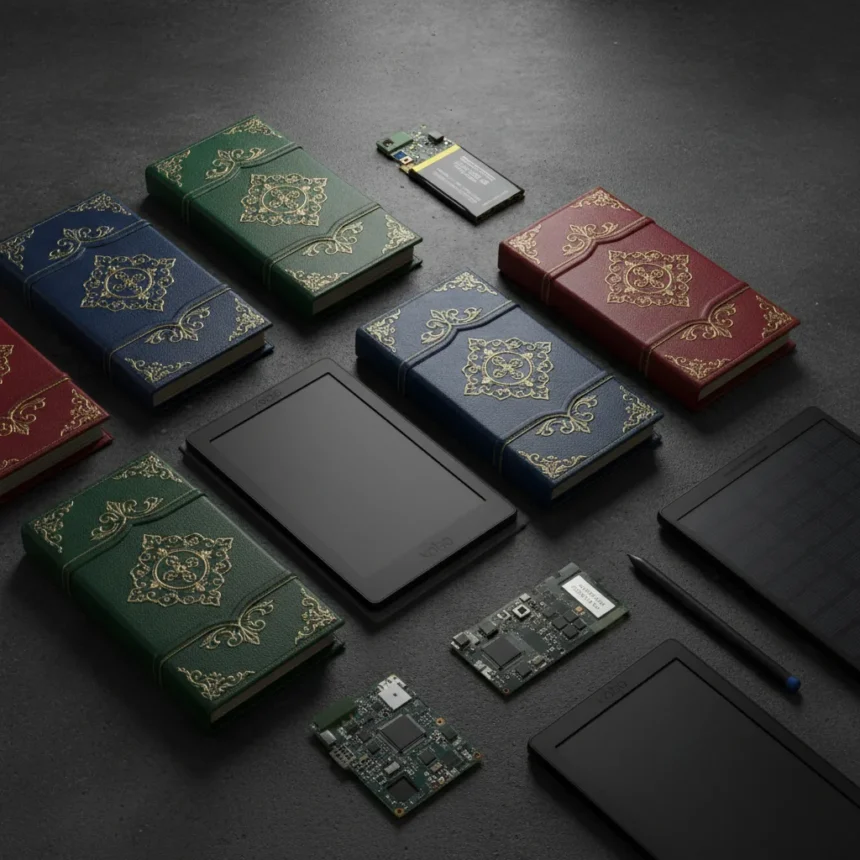
Kobo’s announcement of new limited-edition collector cases at BookCon 2026 is a perfect encapsulation of the brand’s current problem: it is betting on aesthetics when readers are hungry for Kobo ereader hardware innovation. The Japanese-Canadian company, owned by Rakuten, unveiled these whimsical cases as collector items, but the lack of actual new ereader devices alongside them tells a troubling story about where the brand’s priorities lie.
Key Takeaways
- Kobo announced limited-edition collector cases at BookCon 2026, not new ereader hardware.
- The brand has yet to release new Kobo ereader hardware in 2026, disappointing fans waiting for innovation.
- Competitors like Onyx Boox and Amazon Kindle are advancing color displays and features while Kobo focuses on accessories.
- Collector cases are gorgeous but cannot substitute for the hardware upgrades readers actually want.
- Kobo’s strategy reveals a gap between what the brand is shipping and what the market demands.
Why Kobo’s Case Strategy Signals a Bigger Problem
Limited-edition collector cases are a safe play. They generate buzz, appeal to fans who want to personalize their devices, and require minimal R&D investment. But they are also a symptom of a brand treading water. When a company launches accessories at a major book industry event instead of new hardware, it suggests one of two things: either the hardware pipeline is empty, or the brand lacks confidence in what it has planned. Either scenario is bad news for Kobo loyalists.
The timing matters. BookCon 2026 is a venue where Kobo should be announcing the next generation of ereaders, not wrapping existing ones in prettier cases. Readers come to these events hoping to see what is coming next, not to admire what already exists. The cases may be gorgeous, but they are not the answer to the question everyone is actually asking: when will Kobo release a truly competitive new ereader?
The Kobo ereader hardware gap is widening
While Kobo focuses on case design, competitors are shipping meaningful innovations. The Onyx Boox Note Air, for example, delivers a 10.3-inch E Ink Carta display with Android 10 and minimal bezels, giving users a tablet-like experience that Kobo has not matched in its current lineup. Meanwhile, Amazon’s Kindle Colorsoft, announced with a $279.99 price tag and 32GB storage, represents the kind of hardware push that defines market momentum. These are not incremental updates; they are statements of intent.


Kobo’s silence on new ereader hardware this year stands in sharp contrast. The brand has built a loyal following by offering alternatives to Amazon’s dominance, but loyalty only stretches so far. Without new Kobo ereader hardware to compete, the company risks ceding ground to faster-moving rivals. A beautiful case cannot compensate for a product line that feels stagnant.
What collectors actually want from Kobo
There is a difference between what makes a nice accessory and what makes a compelling product. Collector cases appeal to a specific audience: existing Kobo owners who want to express their loyalty through design. That is a real market, but it is also a limited one. What Kobo needs is to win new customers and keep existing ones from switching to competitors. That requires new Kobo ereader hardware with meaningful upgrades, not just new ways to dress up old devices.



The question facing Kobo is whether it believes in its position as an ereader innovator or whether it has accepted a role as a niche player content to serve existing fans with cosmetic updates. Collector cases suggest the latter. A brand confident in its future would be showing off new screen technology, faster processors, or software innovations that justify an upgrade. Instead, Kobo is hoping fans will buy cases for devices they already own.
Is Kobo preparing a hardware surprise later in 2026?
It is possible that Kobo is holding back a major ereader announcement for a later event. Perhaps there is new Kobo ereader hardware coming in the second half of 2026 that will vindicate this case-first strategy. But that is speculation, and readers should not have to speculate. If the hardware is coming, why not hint at it? Why not create momentum by showing off a prototype or teasing a release window? Silence on new Kobo ereader hardware, especially when competitors are moving fast, reads like a brand that does not have much to say.
Will Kobo’s collector cases appeal to ereader fans?
The cases are described as whimsical and gorgeous, which suggests they have aesthetic appeal. For existing Kobo owners who love their devices and want to protect them in style, these cases may be worth buying. But appeal and necessity are different things. A case is a nice-to-have; a new ereader is a want-to-have. Kobo is betting on the former when it should be focused on the latter.
What should Kobo announce next to win back momentum?
New Kobo ereader hardware with a color E Ink display would be a start. A larger screen option to compete with Onyx Boox. Faster performance. Better software integration. Any of these would signal that Kobo is serious about competing in 2026. Collector cases are fine as a secondary product, but they cannot be the main event. Kobo’s reputation as an innovator is on the line, and cases alone will not save it.



The real story here is not about how pretty the new cases are. It is about what their prominence reveals: a brand that has lost sight of what matters most to its customers. Until Kobo announces new Kobo ereader hardware that matches or exceeds what competitors are shipping, these cases are just a distraction from a much larger problem.
Where to Buy
Amazon Kindle Scribe (2024) | Kobo Elipsa 2E
Edited by the All Things Geek team.
Source: TechRadar