



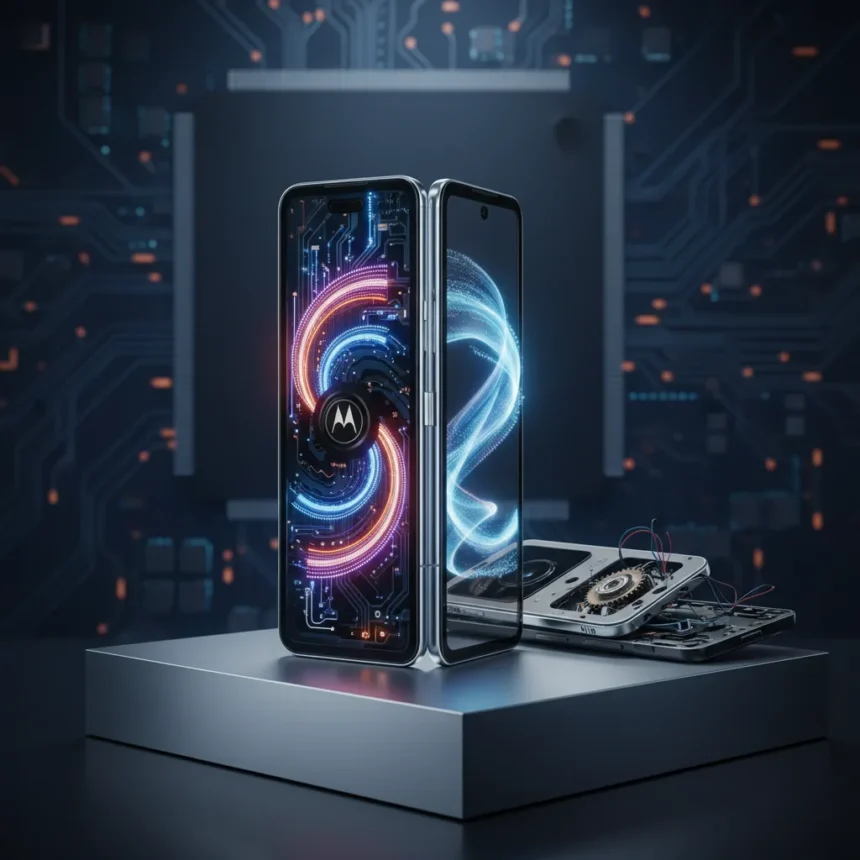
The Motorola Razr 2027 will arrive in a market saturated with incremental foldable upgrades, where price increases no longer guarantee meaningful improvements. The 2026 lineup already signals the problem: retained design from 2025, older chipsets in premium models, and price hikes that consumers are beginning to question. If Motorola wants the Razr 2027 to matter, it needs to stop iterating and start innovating.
Key Takeaways
- The 2026 Razr series faced criticism for incremental upgrades despite higher pricing
- Motorola kept the same design across consecutive generations, limiting differentiation
- Premium Razr models used older chipsets, undercutting their value proposition
- Foldable phones must deliver genuine hardware or software breakthroughs to justify premium costs
- The Razr 2027 needs architectural innovation, not just cosmetic refinement
The Design Stagnation Problem Facing Motorola Razr 2027
Motorola has leaned on the iconic flip form factor as a substitute for genuine design evolution. The 2026 Razr series inherited the same folding mechanism and overall silhouette from 2025, a choice that felt safe but commercially risky. Consumers upgrading from a 2025 model see no visual or tactile reason to buy a 2026 version—and the Motorola Razr 2027 faces the same trap unless Motorola commits to meaningful hardware redesign.
True design innovation for the Motorola Razr 2027 means rethinking the hinge, reducing crease visibility, or reimagining the outer display’s utility. Samsung and other competitors are exploring larger outer screens and thinner form factors. If the Razr 2027 arrives with the same external design as its predecessors, it will feel like a spec bump masquerading as a new phone.
Chipset Strategy Must Match Premium Pricing for Motorola Razr 2027
The 2026 lineup made a critical error: pairing premium pricing with older silicon. The Razr Plus and Razr Ultra carried higher price tags while using chipsets that were not flagship-tier, creating a credibility gap between cost and performance. This strategy backfired because buyers at that price point expect latest processing power, not last-generation components dressed up in new packaging.


The Motorola Razr 2027 cannot repeat this mistake. Every model in the lineup must ship with current-generation or flagship processors that justify the investment. If Motorola positions the Razr 2027 as a premium device, it must deliver the internal specifications to back that claim. Anything less signals that the company is banking on brand nostalgia rather than genuine technological advancement.
What the Motorola Razr 2027 Needs to Compete
Foldable phones are no longer novelties—they are maturing products competing on real merits. The Motorola Razr 2027 must address three concrete areas: durability improvements (stronger hinges, tougher screens), software optimization (multitasking features tailored to the form factor), and battery efficiency (foldables drain power faster than traditional phones, and users expect solutions, not excuses).



Beyond hardware, Motorola should explore exclusive software features that leverage the flip form factor in ways competitors cannot replicate. Gesture controls, quick-access widgets on the outer display, and AI-driven multitasking could differentiate the Razr 2027 in a crowded market. Generic Android with a folding screen is no longer enough.
Why the Motorola Razr 2027 Matters Now
The foldable market is at an inflection point. Early adopters have moved on, and mass-market buyers demand proof that foldables solve real problems—not just novelty appeal. The 2026 Razr series failed to make that case convincingly, and momentum is fragile. If the Motorola Razr 2027 repeats the same formula, the brand risks becoming a niche product for nostalgia seekers rather than a genuine competitor in the smartphone market.
Motorola has one more cycle to prove that the Razr can evolve beyond its iconic silhouette. The Motorola Razr 2027 must deliver innovation that justifies premium pricing, or it will fade into irrelevance as competitors push foldable technology forward.
What specific design changes should the Motorola Razr 2027 make?
The Motorola Razr 2027 should prioritize a visibly smaller crease, a larger and more functional outer display, and a thinner overall profile when folded. These changes would address the most common user complaints about current foldables and signal genuine hardware evolution rather than incremental refinement.



Will the Motorola Razr 2027 support AI features?
AI integration is now table stakes for flagship phones. The Motorola Razr 2027 should include AI-powered multitasking, on-device processing for privacy, and intelligent software optimizations that take advantage of the folding form factor—not generic AI features that any phone can replicate.
How much will the Motorola Razr 2027 cost?
Motorola has not announced pricing for the Motorola Razr 2027, but if the pattern from 2026 continues, expect premium positioning above traditional flagship phones. The challenge is justifying that premium through genuine innovation rather than brand heritage alone.
The Motorola Razr 2027 has the potential to reclaim leadership in the foldable market, but only if Motorola abandons incremental thinking. Design stagnation, outdated chipsets, and generic software will not cut it anymore. The next generation must innovate boldly, or risk becoming a relic of a brand that once defined mobile phones but lost its way chasing nostalgia.
Where to Buy
available for just $699 on Amazon right now | $699.99 at Amazon
This article was written with AI assistance and editorially reviewed.
Source: Android Central