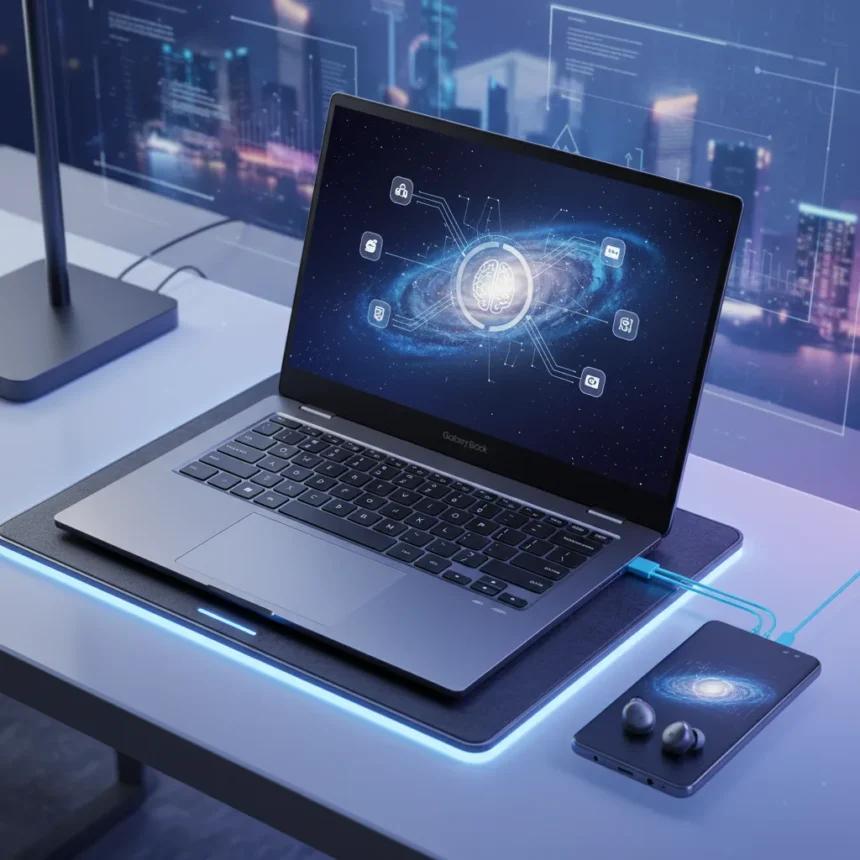
Samsung is reportedly developing an Android Galaxy Book laptop that could fundamentally reshape how the company approaches portable computing. Rather than relying on Windows or Chrome OS, this unconfirmed venture would run native Android with a Chrome OS-inspired interface layer, designed to deliver a laptop-like experience on larger screens without forcing oversized phone apps onto 16-inch displays.
Key Takeaways
- Samsung is exploring an Android-based Galaxy Book laptop to replace Windows or Chrome OS
- The device would feature AI capabilities including real-time video call translation and email summarization
- A Chrome OS-style interface layer would prevent the “squished phone apps” problem on large screens
- Enhanced Dex mode would turn Galaxy phones into second screens with AI-powered cross-device suggestions
- Samsung’s Galaxy Book ecosystem already rivals Apple’s in integration, scoring 9 out of 10 compared to Apple’s 10
Why Samsung Might Abandon Windows for Android
Samsung’s ecosystem strategy has shifted dramatically. The Galaxy Book4 series already demonstrates tighter Android integration, allowing phones to function as webcams and bridging notification gaps through features like CoPilot for messaging. If Samsung commits to native Android on laptops, it could unify its hardware stack in ways Windows never permitted. The company would control both the operating system and the hardware, enabling AI features that feel genuinely integrated rather than bolted on.
The proposed Android Galaxy Book would reportedly include real-time translation during video calls, AI that summarizes emails as they arrive, and code snippet generation within note-taking apps. These are not mere gimmicks—they represent productivity features that native OS integration makes possible. A third-party Windows app cannot access your email stream and summarize it in real-time the way an OS-level service can.
This move reflects a broader industry trend. Book-style foldables like the Galaxy Z Fold7 are emerging as a primary growth engine for Samsung and competitors, with analysts projecting 2026 as a pivotal year for book-format devices. An Android laptop would extend that momentum into traditional computing, blurring the line between phone, tablet, and laptop.


The Ecosystem Advantage Android Could Unlock
Samsung’s real strength lies not in individual products but in how they talk to each other. An Android Galaxy Book would enable what the company is calling “Dex mode on steroids”—turning your Galaxy phone into a second screen, with AI learning your habits across devices to suggest playlists during work or surface relevant contacts during calls. This level of cross-device intelligence is difficult to achieve on Windows, where the phone remains a separate ecosystem.
The laptop would support Google apps natively, Microsoft Office through the web, and ported versions of Adobe Creative Suite. Rather than forcing users into a single ecosystem, Samsung appears to be building a bridge between Android, web standards, and traditional desktop software. That pragmatism could be the key to actual adoption.



Samsung’s Galaxy Book4 already scores a 9 out of 10 in ecosystem integration compared to Apple’s 10, closing a gap that seemed insurmountable two years ago. An Android-based successor could narrow that margin further by eliminating the friction of Windows—a third-party OS that Samsung cannot optimize for Galaxy hardware the way Apple optimizes macOS for its devices.
The Risk: Execution and Developer Support
None of this is confirmed. These are early-stage rumors with no official Samsung announcement. The company has explored radical laptop concepts before, only to abandon them. An Android laptop faces a genuine challenge: software. Windows dominates because decades of developers built productivity tools for it. Adobe, Microsoft, JetBrains, and countless others optimized their applications for Windows. An Android laptop would need those same tools, either ported or available through the web.
Samsung’s approach—a Chrome OS-inspired interface on top of native Android—suggests the company is aware of this risk. Mimicking Chrome OS’s design language could help developers and users transition more smoothly. But if the interface feels like a compromise between phone and desktop, adoption will stall.
The Galaxy Book6, Samsung’s current flagship, incorporates Galaxy AI for on-device and cloud processing to maintain speed and optimize apps. These foundations matter. An Android laptop would need similar AI-driven optimization to avoid the sluggish, bloated feel that plagued early Android tablets.



How This Compares to Windows and Chrome OS
Windows remains the productivity standard, but it is also bloated, security-heavy, and increasingly tied to Microsoft’s cloud services. Chrome OS dominates education and budget segments because it is lightweight and web-focused, though it struggles with offline work. An Android Galaxy Book would occupy a middle ground: lightweight like Chrome OS, capable like Windows, and deeply integrated with Samsung’s hardware ecosystem in ways neither competitor can match.
If executed well, Samsung could genuinely compete with Windows on productivity. The key is whether developers will build for it and whether the interface feels natural on a 16-inch screen. A failed launch would be embarrassing. A successful one could reshape the laptop market.
What happens to Windows Galaxy Books?
Samsung will likely continue selling Windows-based Galaxy Books for years. The company has never abandoned a product line overnight. The Android variant, if it arrives, would probably start as a premium option targeting power users and Samsung ecosystem loyalists, with Windows models remaining the default for mainstream consumers.
Could this Android Galaxy Book actually replace your laptop?
For web work, email, video calls, and light creative tasks, absolutely. For specialized software—professional video editing, 3D modeling, enterprise applications—Windows still dominates. Samsung’s Android Galaxy Book would excel for the 60% of users who primarily browse, communicate, and create documents. Whether that is enough to justify abandoning Windows compatibility remains an open question.
When might an Android Galaxy Book actually launch?
There is no confirmed timeline. These are rumors and speculation based on Samsung’s ecosystem investments and the 2026 foldables boom. If Samsung is serious, expect an announcement sometime in 2026 or 2027, with availability following months later. Until Samsung officially confirms the project, treat this as an interesting possibility rather than a done deal.
Samsung’s Android Galaxy Book laptop remains speculative, but the logic is sound. The company has spent years closing the ecosystem gap with Apple and building AI features that work best with hardware control. An Android laptop would be the logical next step. Whether it actually happens depends on Samsung’s willingness to bet against Windows—a gamble the company has not yet publicly taken.
Edited by the All Things Geek team.
Source: Android Central