





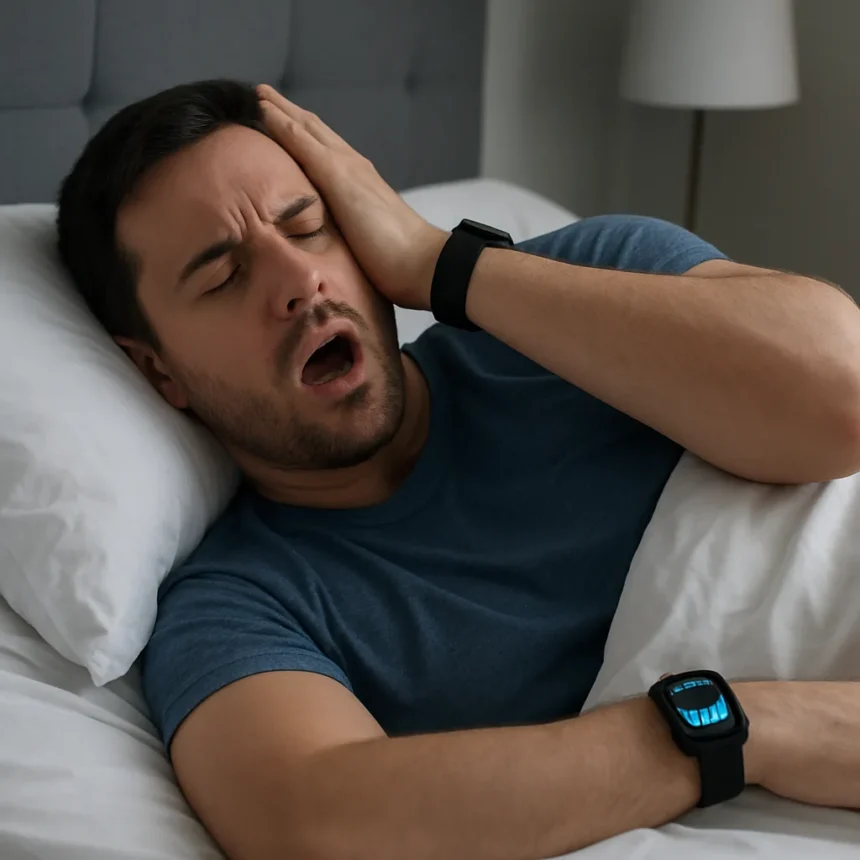
Undiagnosed sleep apnea is one of the most pervasive and overlooked health problems in the world today, with research consistently showing that around 80% of people who have the condition have no idea they do. Sleep apnea is a disorder in which breathing repeatedly stops and starts during sleep, disrupting rest and placing serious strain on the cardiovascular system. The scale of the problem is staggering — and the gap between how common it is and how rarely it gets caught is what makes it genuinely dangerous.
Why undiagnosed sleep apnea is so hard to catch
The cruel irony of sleep apnea is that its most telling moments happen while you are unconscious. You cannot observe your own breathing interruptions, and a partner who might notice your snoring or gasping is not always present. This is why the condition remains so dramatically underdiagnosed — nearly 80% of adults cannot even accurately define what sleep apnea is, let alone recognise it in themselves.
The signs that do show up during waking hours are easy to dismiss. Persistent daytime fatigue is perhaps the most common, but it is also one of the most generic symptoms imaginable — it gets blamed on stress, diet, overwork, or simply modern life. Loud or chronic snoring is another major indicator, as are morning headaches, difficulty concentrating, and waking up feeling unrefreshed despite a full night in bed. None of these individually scream sleep disorder, which is exactly why so many cases go undetected for years.
The warning signs of sleep apnea you should not ignore
Breathing interruptions during sleep are the defining feature of the condition, but since you cannot self-monitor those, the daytime symptoms become your primary early warning system. Excessive sleepiness during the day — the kind that makes you drowsy in meetings or behind the wheel — is a red flag that warrants investigation rather than another coffee. Waking repeatedly during the night, even if you do not consciously register why, is another sign worth tracking. So is waking with a dry mouth or sore throat, which can indicate that your airway has been partially obstructed.


The condition is not distributed evenly across the population. Certain risk factors significantly raise the likelihood of having sleep apnea, including excess weight, a larger neck circumference, being male, and being over the age of 40. However, it is critical to understand that sleep apnea affects people across all demographics — it is not exclusively a condition of older or overweight men, and dismissing symptoms on that basis is a mistake that delays diagnosis.
How sleep trackers are changing the detection of undiagnosed sleep apnea
Consumer sleep tracking technology has reached a point where it can surface meaningful data about nighttime breathing patterns, heart rate variability, and blood oxygen levels — all of which are relevant to sleep apnea detection. Devices from Samsung and others now offer features specifically designed to flag potential breathing disturbances during sleep, bringing a layer of passive monitoring that simply did not exist for most people a decade ago.


The metrics worth paying attention to on any capable sleep tracker include blood oxygen saturation (SpO2) dips during the night, elevated resting heart rate, and fragmented sleep architecture — meaning an unusual amount of time spent in light sleep rather than deeper, restorative stages. A tracker that consistently shows your blood oxygen dropping or your sleep being heavily disrupted is not a diagnosis, but it is a compelling reason to speak to a doctor. Compared to doing nothing, using a wearable to generate a baseline picture of your sleep health is a meaningful step forward, particularly for people who would otherwise have no data to bring to a clinical conversation.
It is worth noting that no consumer sleep tracker replaces a formal sleep study, known as polysomnography. That remains the gold standard for diagnosing sleep apnea, and a tracker reading should be treated as a prompt to seek evaluation, not as a verdict. The value of these devices lies in lowering the barrier to that first conversation with a healthcare provider.
Is sleep apnea more common than people realise?
Yes, significantly so. Medical literature and public health organisations consistently report that the vast majority of people living with sleep apnea have never been diagnosed. The condition is widespread across global populations, not limited to any single country or demographic, and its health consequences — which include elevated risk of cardiovascular disease, hypertension, and metabolic disorders — make early detection a genuine public health priority.
Can a smartwatch or fitness tracker actually detect sleep apnea?
Consumer wearables cannot diagnose sleep apnea, but they can detect patterns associated with it, such as nighttime blood oxygen dips and disrupted sleep stages. These readings are best used as a reason to consult a doctor rather than as a clinical conclusion. A formal sleep study remains the only way to receive an actual diagnosis.


What should you do if you suspect you have sleep apnea?
Start by noting your symptoms — daytime fatigue, snoring, morning headaches, and unrefreshing sleep are all worth documenting. If you use a sleep tracker, review your SpO2 and sleep stage data for patterns. Then bring that information to a GP or sleep specialist who can refer you for a proper sleep study. Acting on suspicion is far better than waiting for certainty that may never come on its own.
The fact that undiagnosed sleep apnea affects such a large proportion of sufferers is not just a medical statistic — it is a call to take your sleep quality seriously. The tools to flag potential problems are more accessible than ever, the symptoms are identifiable once you know what to look for, and the health consequences of leaving the condition untreated are serious enough to justify acting on even a mild suspicion. If something feels wrong with your sleep, that instinct is worth following up.
Where to Buy
Samsung Galaxy Watch 8 | Withings Sleep Analyzer | Apple Watch 11 | Oura Ring 4
Edited by the All Things Geek team.
Source: Tom's Guide




