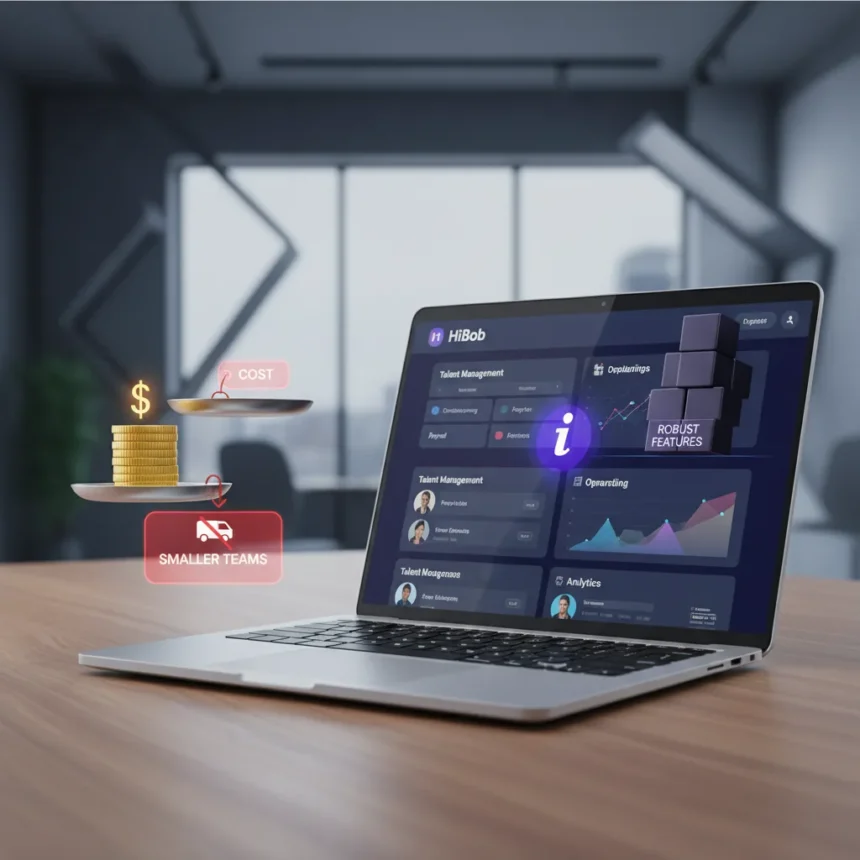
HiBob HR software is a cloud-based human resources platform designed to manage talent, payroll, and employee data across organizations of varying sizes, with a focus on mid-market and enterprise clients. The platform combines recruitment, onboarding, performance management, and analytics in a single system, though its pricing structure and feature depth make it most suitable for companies with dedicated HR teams rather than startups or very small operations.
Key Takeaways
- HiBob consolidates recruitment, onboarding, performance management, and analytics in one platform
- Strong customer satisfaction ratings across G2, Capterra, and other review platforms
- Feature-rich but steeper learning curve compared to simpler HR tools
- Pricing scales with company size, making it expensive for teams under 50 employees
- Best suited for mid-market companies with dedicated HR resources
What HiBob HR software Does Well
HiBob HR software excels at consolidating multiple HR functions into a unified interface. Rather than juggling separate tools for recruitment, onboarding, performance reviews, and reporting, teams can manage the entire employee lifecycle within one platform. The system’s analytics capabilities stand out—it provides real-time dashboards and custom reporting that help HR teams make data-driven decisions about headcount, retention, and compensation trends. This integration reduces administrative friction and creates a single source of truth for employee information.
Customer satisfaction reflects this strength. HiBob maintains solid ratings across major review platforms, with users consistently praising the depth of functionality and the ability to customize workflows to match specific organizational needs. The platform’s approach to employee data management is particularly valued by larger teams that need granular control over permissions, audit trails, and compliance documentation.
Where HiBob HR software Falls Short
The platform’s complexity is both a feature and a liability. New users often report a steep learning curve—HiBob requires time to configure properly, and teams without dedicated HR technology expertise may struggle with initial setup. Unlike simpler competitors that prioritize ease of use, HiBob assumes you want deep functionality, not simplicity. This makes it a poor fit for very small businesses or those seeking a lightweight alternative.


Pricing is another significant barrier. HiBob’s cost structure scales with headcount and feature selection, making it prohibitively expensive for teams under 50 employees. Small startups comparing HiBob to budget-friendly alternatives will find the per-employee cost difficult to justify, particularly if they only need basic HR capabilities like time tracking and document storage. The platform demands investment in both money and internal resources to maximize its value.
HiBob HR software vs. Competitor Platforms
HiBob occupies the mid-to-enterprise segment of the HR software market, competing against platforms like Workday, BambooHR, and Guidepoint. Unlike BambooHR, which prioritizes simplicity and affordability for small-to-medium businesses, HiBob targets organizations that need comprehensive feature sets and are willing to invest in implementation. Workday serves primarily large enterprises with complex global operations, while HiBob positions itself as more accessible than Workday but more feature-rich than lightweight alternatives. The tradeoff is clear: choose HiBob if you need depth and integration, but expect steeper costs and onboarding complexity than simpler tools.



Should You Buy HiBob HR software?
HiBob is the right choice if your organization has 100+ employees, a dedicated HR team, and complex talent management needs spanning recruitment through retirement. The platform’s unified approach to employee data, strong analytics, and customization options justify the investment for mid-market companies managing sophisticated workflows. If you’re a startup or small business seeking basic HR functionality at low cost, look elsewhere—the expense and complexity will outweigh the benefits. For growing companies at the inflection point (50-150 employees), HiBob merits serious evaluation, but only after testing the platform against simpler alternatives to ensure the feature depth justifies the price premium.
Is HiBob HR software worth the cost?
HiBob’s value depends entirely on your organization’s size and complexity. For mid-market companies with 100+ employees and dedicated HR staff, the unified platform, analytics, and customization options deliver genuine ROI by reducing tool sprawl and improving HR efficiency. For smaller teams, the per-employee cost and implementation burden make it difficult to justify compared to cheaper, simpler platforms. Evaluate HiBob only if your team is large enough to benefit from enterprise-grade features and has the resources to implement and manage the system properly.
What are the main features of HiBob HR software?
HiBob combines recruitment and applicant tracking, employee onboarding workflows, performance management and review cycles, compensation and benefits administration, time and attendance tracking, and advanced reporting and analytics dashboards. The platform allows deep customization of workflows, permissions, and data fields, making it adaptable to organizations with non-standard HR processes. However, this flexibility requires configuration expertise—out-of-the-box setup is minimal.
HiBob HR software delivers genuine power for organizations large enough to leverage it. Mid-market companies with complex talent management needs will find the unified platform, strong analytics, and customization options worth the investment. Smaller teams should evaluate whether the cost and complexity align with their actual requirements before committing.



Edited by the All Things Geek team.
Source: TechRadar