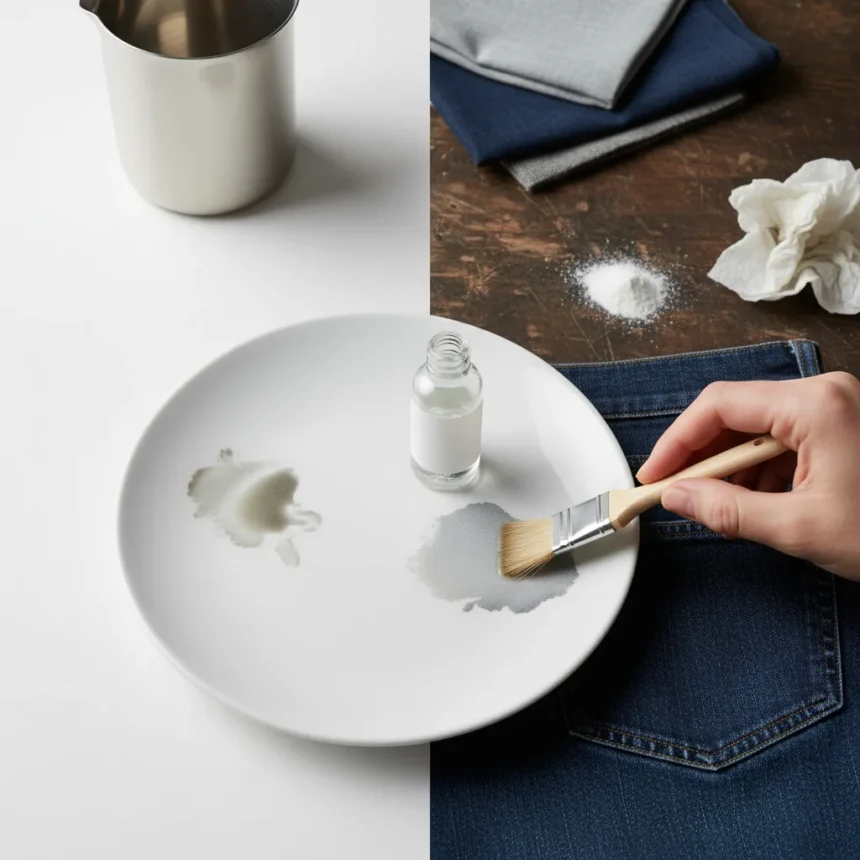
The no wash method for grease stains has exploded across social media as a water-saving, energy-efficient alternative to traditional laundering. The technique involves sprinkling baking soda or cornstarch directly onto an oily mark, letting it sit for 30 minutes to overnight, then brushing it away. Real-world testing shows the method works—but only under specific conditions, and not as a complete replacement for washing.
Key Takeaways
- The no wash method removes roughly 80% of fresh grease stains from cotton in 30 minutes using baking soda or cornstarch.
- Set-in stains show only 50% improvement even after overnight treatment, requiring additional cleaning steps.
- The method is safest on cotton and denim but should be tested on delicate fabrics like silk before use.
- Fresh stains respond in minutes; stubborn marks may need repeat applications or supplementary treatments.
- Baking soda and cornstarch cost $1–3 per box and are available globally at any grocery store.
How the No Wash Method Works
The no wash method for grease stains operates on a simple principle: absorbent powders draw oil out of fabric fibers over time without requiring water or detergent. The process begins by blotting excess grease with a paper towel or cloth—dabbing, never rubbing, to avoid pushing the stain deeper into the weave. Once surface grease is removed, a thick layer of baking soda, cornstarch, or talcum powder (roughly 1/4 inch) is applied directly to the stain. The powder then sits undisturbed. For fresh stains, 30 minutes suffices. For marks that have set into the fabric over days or weeks, overnight treatment becomes necessary. During this waiting period, the powder absorbs oil and often clumps visibly—a sign the method is working. Finally, a soft brush or spoon edge removes the powder, and the stain is inspected. If residue remains, the powder can be reapplied.
What makes this approach appealing is its simplicity and resource efficiency. No washing machine cycle. No hot water. No detergent. For households conscious of water usage or energy costs, the method offers a quick fix for minor spills without triggering a full laundry load.
Real Testing: Fresh Stains vs. Set-In Marks
Testing the no wash method for grease stains on actual garments reveals a stark divide between fresh and old stains. On a 100% cotton t-shirt stained with cooking oil, the method achieved approximately 80% removal after just 30 minutes of powder sitting time. The baking soda visibly darkened as it absorbed the oil, and brushing it away left only a faint shadow of the original mark. This result surprised testers—the method worked faster and more thoroughly on fresh damage than expected.


Denim jeans stained with motor oil told a different story. After 24 hours of overnight treatment with baking soda, the stain improved by roughly 50%, but a noticeable oily patch remained. The fabric’s tight weave and the stain’s age meant the powder could not penetrate deeply enough to remove all residue. Similarly, a polyester blouse marked with food grease showed partial success; the powder lightened the stain but did not eliminate it entirely. These results suggest the no wash method for grease stains works best as a first-response tactic for fresh spills on natural fabrics, not as a universal solution.
Comparison to Other Grease-Removal Methods
The no wash method for grease stains occupies a specific niche in the stain-removal landscape. Dish soap like Dawn, applied directly to fresh grease and worked in gently, removes oil in 5–10 minutes by breaking down the stain’s molecular structure—faster than powder absorption. However, dish soap requires rinsing and often a full wash cycle to prevent residue. Aloe vera gel offers a gentler alternative for delicate fabrics, with soak-and-brush techniques taking 10–15 minutes. For set-in stains that have already survived a wash cycle, a baking soda paste mixed with water applied post-wash outperforms the dry powder method. Professional cleaning services follow a blot-absorb-degreaser-wash sequence that consistently outperforms the no-wash approach on stubborn marks.



The trade-off is clear: the no wash method for grease stains sacrifices maximum effectiveness for convenience and water savings on fresh damage. It is a supplement to traditional laundering, not a replacement.
Which Fabrics Are Safe?
Testing revealed no fabric damage from the no wash method for grease stains on cotton, denim, or polyester blends. The dry powder does not bleach, shrink, or weaken fibers when used correctly. However, delicate fabrics like silk or satin should be tested on a hidden seam first; the abrasive nature of brushing off powder risks pilling or surface damage on fragile weaves. Similarly, white residue from baking soda can occasionally cling to dark dyes if not fully brushed away, so a patch test on inconspicuous areas is wise before treating visible garments.
Cost and Availability
Baking soda costs $1–2 per box globally, while cornstarch runs $2–3. Both are stocked at virtually every grocery store worldwide, making the no wash method for grease stains one of the cheapest stain treatments available. No special products, subscriptions, or equipment are required—most households already have these powders on hand.
When to Skip the No-Wash Method
The no wash method for grease stains is not a catch-all. If a stain has already been through a hot dryer, heat has set the oil into the fibers, and powder alone will not extract it. Machine washing with hot water and detergent becomes necessary. Similarly, on silk, linen, or other delicate fabrics, the risk of damage from brushing off powder may outweigh the water savings. For serious grease marks—automotive grease, heavy cooking oil—a quick application of dish soap followed by a wash cycle remains faster and more reliable.



Does the no wash method for grease stains actually save water?
Yes, if used for minor fresh stains that would otherwise trigger a full wash cycle. A single application avoids running a washing machine, saving roughly 15–40 gallons of water per load depending on the machine. However, for set-in stains requiring repeat applications or eventual washing anyway, the water savings are negligible.
Can you use salt instead of baking soda for the no wash method?
Salt and cornstarch work similarly to baking soda as absorbents, requiring 10 or more minutes of sit time. Salt may be slightly less effective on heavier oils but costs even less and is universally available. The principle is the same: let the powder sit, then brush away.
How long does the no wash method for grease stains take?
Fresh stains can be treated in 30 minutes of active sitting time, plus a few minutes to brush off powder. Set-in stains benefit from overnight treatment (up to 24 hours passive time) before brushing and assessment. If the stain persists, the entire process can be repeated.
The no wash method for grease stains is a legitimate shortcut for fresh spills on everyday fabrics—a way to extend the life of a garment and delay washing without sacrificing cleanliness entirely. But it is not magic. Testers found it works best as a first response, not a final solution, especially on older stains or delicate materials. For households aiming to reduce water usage, it is worth keeping baking soda or cornstarch on hand for quick stain emergencies. Just do not expect it to replace a proper wash on stubborn marks.
Where to Buy
7% OFFMR.SIGAMicrofiber Cleaning Clothes, 12-pack$13.99$14.99shop now | 20% OFFBamllumRubber Kitchen Dishwashing Gloves, 4 Pairs $7.99$9.99shop now | SwifferDuster Kit With 3 Ft Extendable Handle$9.84shop now | 25% OFFScotch-BriteZero Scratch Scrub Sponge, 6-pack$5.97$7.99shop now
Edited by the All Things Geek team.
Source: Tom's Guide