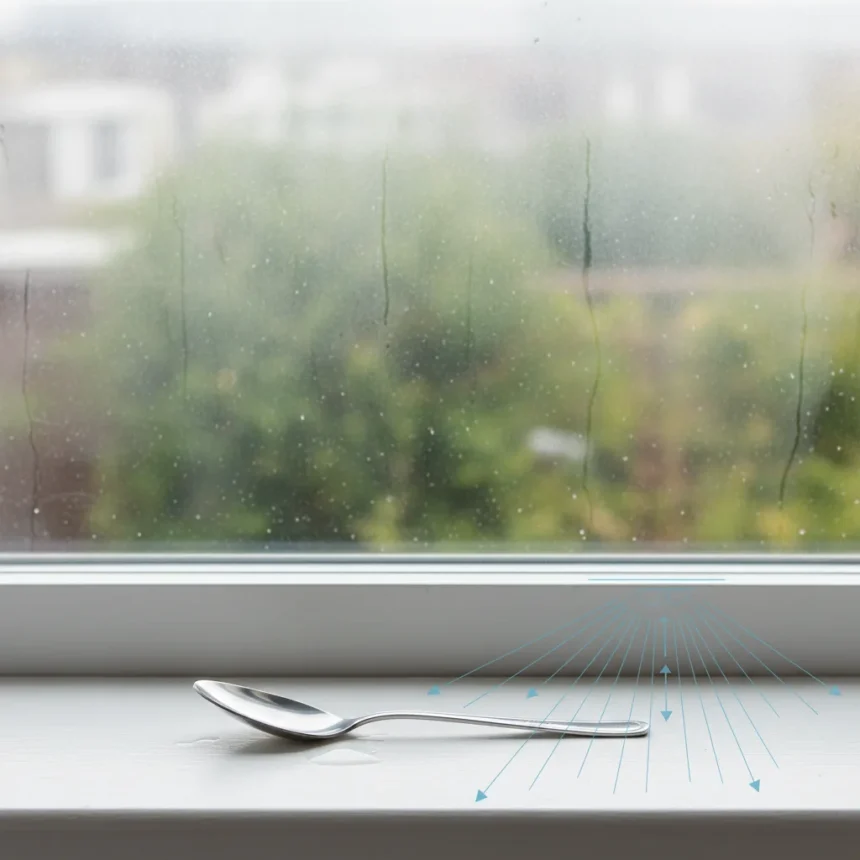
The windowsill spoon hack has exploded across TikTok with over 500,000 views, and homeowners swear it solves one of winter’s most persistent problems: window condensation. The method is absurdly simple—place a metal spoon on your windowsill and let it absorb excess moisture before it turns into mold and mildew. But does it actually work, or is this just another viral fad with no real benefit?
Key Takeaways
- A stainless steel spoon placed on the windowsill absorbs moisture through thermal conductivity, reducing condensation buildup.
- The hack costs around $1 and requires no chemicals, making it accessible for renters and homeowners alike.
- Works best on single-pane or poorly insulated windows where condensation is most common.
- Requires daily wiping and replacement every 1-2 weeks if rust appears.
- Most effective when combined with dehumidifiers or silica gel packets for enhanced moisture control.
How the Windowsill Spoon Hack Actually Works
The windowsill spoon hack exploits a simple principle: metal conducts cold exceptionally well. When you place a stainless steel spoon horizontally on your windowsill with the bowl end touching the glass, the metal draws heat away from the surrounding air. This temperature drop causes humid air near the window to release its moisture, which condenses on the spoon’s surface instead of fogging the glass or pooling on the sill. The spoon essentially becomes a moisture magnet, absorbing water that would otherwise encourage mold growth.
The trick works particularly well during temperature swings—winter mornings when your heating kicks on, or summer nights when air conditioning cools the glass dramatically. These transitions create the perfect conditions for condensation, and that’s exactly when the spoon’s thermal properties shine. Home expert Lucy Lord notes that this $1 hack is a significant shift for anyone battling window condensation, offering a chemical-free solution that actually delivers results.
The mechanism is most effective on single-pane windows or older double-glazed units with poor insulation, where temperature differentials between inside and outside air are greatest. Modern triple-glazed windows experience less condensation overall, so the spoon becomes less critical on newer construction.


Step-by-Step: How to Use the Windowsill Spoon Hack
Start with a clean, dry stainless steel spoon—avoid plastic or coated metal, which won’t conduct heat effectively. Place the spoon horizontally on the windowsill so the bowl end touches the window glass directly. This contact is crucial; it maximizes the spoon’s ability to draw moisture from the air. Leave it in place overnight or during high-humidity periods, particularly after cold nights when condensation peaks. Each morning, wipe the spoon dry to remove collected moisture, then return it to the windowsill. Inspect the spoon weekly; if pitting or rust appears, replace it with a fresh one. Monitor your windows for reduced fogging and repeat the process on multiple windows as needed.
The daily wiping step is non-negotiable. A wet spoon sitting on your sill defeats the purpose and can damage wooden windowsills if moisture pools beneath it. The maintenance burden is minimal—a quick wipe takes seconds—but skipping it will reduce effectiveness and risk surface damage.



Windowsill Spoon Hack vs. Other Condensation Solutions
The spoon method is cheap and chemical-free, but it’s not a complete replacement for other moisture-control strategies. Silica gel packets absorb more moisture overall and work passively without daily maintenance, though they require regular replacement and cost slightly more per unit. Hygroscopic salt bowls absorb even greater volumes of moisture but can be messy and require careful handling. Vinegar wipes offer a natural cleaning solution but demand daily application and don’t prevent condensation from forming in the first place.
Commercial dehumidifier rods cost $10-20 and provide more robust moisture control across an entire room, making them better for severe condensation problems. Window insulation film ($15 or more) reduces the temperature differential that causes condensation, addressing the root cause rather than managing symptoms. For renters or those seeking a low-commitment first step, the spoon hack wins on cost and simplicity. For homeowners with persistent mold issues, combining the spoon with a dehumidifier or silica gel packets yields significantly better results than the spoon alone.
Why This Hack Went Viral Now
The windowsill spoon hack resurfaced in late 2023 amid energy crises that prompted homeowners to reduce ventilation and seal their homes tighter to cut heating costs. Ironically, this energy-saving measure traps moisture indoors, making condensation and mold prevention suddenly urgent for millions of households. The viral trend peaked on TikTok as winter approached, with renters and homeowners seeking cheap solutions they could implement immediately without landlord approval or expensive retrofits. The timing was perfect: a $1 solution to a problem affecting everyone trying to heat their homes efficiently.
Does the Windowsill Spoon Hack Really Prevent Mold?
The spoon hack reduces condensation significantly on the window itself, which limits the moisture available to fuel mold growth on the sill and frame. However, it is not a complete mold prevention solution, especially in bathrooms or kitchens where humidity levels are consistently high. Mold thrives in damp environments, and while the spoon removes some moisture, it cannot eliminate the underlying humidity problem. For serious mold prevention, pair the spoon with improved ventilation—crack a window, use exhaust fans, or run a dehumidifier. The spoon addresses the symptom; ventilation addresses the cause.



Is the Windowsill Spoon Hack Worth Trying?
At $1 and requiring only daily wiping, the windowsill spoon hack is worth testing on windows where condensation is a recurring nuisance. Stainless steel spoons are available at Walmart, Amazon, and dollar stores worldwide, making it accessible globally. The method costs virtually nothing and involves zero chemicals, making it ideal for renters or anyone hesitant to invest in expensive dehumidifiers before knowing if they need them. However, manage expectations—this is a supplementary fix, not a complete solution. If condensation is severe or mold is already present, the spoon alone won’t solve the problem. Combine it with better ventilation, silica gel packets, or a dehumidifier for maximum effectiveness.
FAQ
How often should I replace the spoon?
Inspect your spoon weekly for rust or pitting. Replace it every 1-2 weeks if corrosion appears, or sooner if the stainless steel begins to degrade. A damaged spoon loses its thermal conductivity and becomes ineffective at drawing moisture.
Will the windowsill spoon hack work on double-glazed windows?
The hack works better on single-pane or poorly insulated windows where condensation is more severe. Modern double-glazed and triple-glazed windows experience less condensation overall because they reduce the temperature differential between inside and outside air, so the spoon becomes less critical.
Can I use a plastic spoon or other metals?
No. Plastic conducts heat poorly and won’t absorb moisture effectively. Coated metals may rust or flake. Stainless steel is ideal because it conducts heat well, resists corrosion, and is inexpensive to replace if needed.
The windowsill spoon hack is a legitimate, low-cost tool for managing window condensation—but it works best as part of a broader moisture control strategy. Combine it with ventilation, dehumidifiers, or silica gel packets, and you’ll see real results. Use it alone, and expect modest improvements on mildly problematic windows. For renters and budget-conscious homeowners, it’s a smart first step. For anyone battling serious mold or humidity, it’s a supplement, not a solution.
Edited by the All Things Geek team.
Source: Tom's Guide