The DJI Avata 360 stakes its claim as the best-value 360° drone you can buy right now, combining dual 1/1.1-inch sensors with flexible flight modes and genuinely impressive image stabilization. But here’s the catch: you’ll spend hours in post-production reframing footage, and the drone itself weighs 455 grams—heavy enough to trigger regulatory restrictions in many countries. For filmmakers and content creators willing to embrace the editing complexity, it’s a significant shift. For casual flyers expecting straight-to-upload footage, it’s a frustration waiting to happen.
Key Takeaways
- Dual 64MP sensors deliver 8K/60fps HDR 360° video and 120MP/16K 360° photos with 2.4 μm pixels
- Single Lens mode supports up to 4K/60fps for traditional drone footage without 360° capture
- 23-minute flight time per battery, extending to 69 minutes with Fly More Combo (three batteries)
- Rotating gimbal design protects lenses on launch/landing, spins to up/down positions in flight for full 360° coverage
- Omnidirectional obstacle avoidance uses 360° cameras plus physical sensors to avoid collisions when flying backwards
What Makes the DJI Avata 360 Stand Out
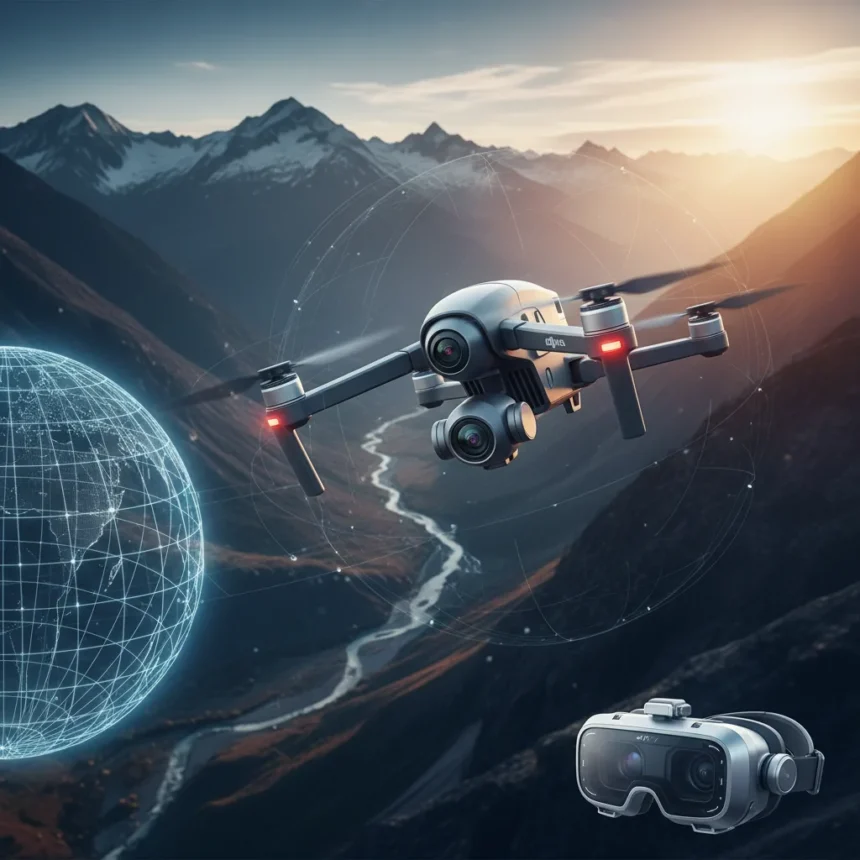
The DJI Avata 360 is the first whoop-style flagship drone with a dual-camera 360° system, rotating mechanical gimbal, and optional FPV control. Its dual 1/1.1-inch sensors—equivalent to 1-inch flagship imaging—capture 8K/60fps HDR 360° video and 120MP/16K 360° stills with exceptional detail. Unlike the Antigravity A1, its only 360° competitor, the Avata 360 shoots at 60fps instead of 30fps and offers a non-FPV variant that lets traditional drone pilots fly without immersive goggles. The rotating lens block is clever engineering: on launch and landing, the lenses face forward and backward (protecting them), then spin 90 degrees in flight to point up and down for true 360° capture.
Flight performance is where the Avata 360 truly excels. It handles wind resistance well, ascends and descends at up to 10 m/s, and delivers excellent stabilization through RockSteady and HorizonBalancing. The drone supports dual flying modes—easy mode for beginners and optional FPV for experienced pilots—so you’re not forced into immersive goggles if you don’t want them. ActiveTrack 360° tracking works flawlessly, handling movement prediction in ways older follow modes couldn’t. One reviewer crashed the drone during testing, swapped the lens in 20 minutes, and kept flying—a testament to the rugged cinewhoop frame and replaceable lens design.
The Post-Production Reality: Why Editing Is the Real Challenge
Here’s where the DJI Avata 360 reveals its biggest weakness: DJI Studio, the included editing software, needs serious refinement. You cannot simply upload 360° footage to YouTube. Instead, you must reframe each clip in DJI Studio, choosing crops, dynamic transitions, and aim-and-reframe techniques to create a traditional linear video from 360° source material. This workflow is powerful—you can reframe 8K/60fps footage in HD or 4K ultra-wide, adjusting framing after the fact—but it’s also time-consuming and unintuitive for creators accustomed to traditional drone editing. Mobile editing exists but adds another layer of complexity.

The upside? You gain creative flexibility that single-lens drones cannot match. You can create impossible shots, pan across scenes, and adjust framing in post-production without reshooting. For YouTubers and filmmakers willing to invest editing time, this is genuinely powerful. For anyone expecting straight-to-upload 360° clips, the Avata 360 will disappoint.
Flight Features and Intelligent Modes
The DJI Avata 360 supports seamless switching between 360° mode and Single Lens mode during flight, so you can capture wide 360° scenes and then zoom into traditional framing without landing. Intelligent flight modes include head tracking (aiming the camera with your head in goggles), gyroframe (for creative aiming), panorama zoom, and free mode for artistic shots. Omnidirectional obstacle avoidance works flawlessly, even when flying backwards, using the 360° cameras plus physical sensors to detect and avoid obstacles automatically.



One caveat: the downward obstacle avoidance sensors are overly cautious during fast dives, occasionally triggering unnecessary braking. Also, avoid moving the drone on the ground before launch—accidental lens movement can cause damage before they spin to their protective positions.
How the DJI Avata 360 Compares to Alternatives
The Antigravity A1 is the only other dedicated 360° drone on the market, but it falls short in several critical ways. It maxes out at 30fps (versus the Avata 360’s 60fps), operates exclusively in FPV mode (no traditional control option), and delivers less detail overall. The DJI Osmo 360 shares the same 1/1.1-inch sensor but is limited to an action camera format—8K/50fps or 5K/60fps—rather than a true aerial drone. The Avata 360 is more affordable than both competitors, positioning it as the clear value leader in the nascent 360° drone category.
Traditional single-lens drones like the DJI Air 3S or Mini 4 Pro remain better choices if you want simplicity and immediate usability. The Avata 360 is not a replacement for traditional drone cameras—it’s a complementary tool for creators who want 360° flexibility and are willing to invest post-production time.
Specs and Practical Details
The Avata 360 measures 246×199×55.5 mm and weighs 455 grams. That 455-gram weight is significant: it exceeds the 250-gram threshold that triggers stricter regulations in many countries, limiting some of the ultralight drone’s convenience benefits. Flight time reaches 23 minutes per battery under ideal conditions, extending to 69 minutes with the Fly More Combo including three batteries. The drone supports RC 2 controller, DJI Goggles 3/N3 paired with RC Motion 3, and standard joystick control, giving you flexibility in how you fly.



Should You Buy the DJI Avata 360?
Buy the DJI Avata 360 if you’re a filmmaker, content creator, or serious hobbyist willing to spend hours reframing footage in DJI Studio. The 8K/60fps 360° capture, dual 64MP sensors, and creative flexibility are genuinely impressive. The 20-minute lens swap after a crash is a huge practical advantage. Skip it if you want straight-to-upload footage, prefer simple controls, or need ultralight regulatory benefits. The DJI Avata 360 is the best 360° drone money can buy, but it demands patience and post-production discipline.
What is the flight time of the DJI Avata 360?
The DJI Avata 360 delivers 23 minutes of flight time per battery under ideal conditions. With the Fly More Combo, which includes three batteries, you can achieve up to 69 minutes of total flight time across multiple flights.
Can you fly the DJI Avata 360 without FPV goggles?
Yes. Unlike the Antigravity A1, the DJI Avata 360 offers a non-FPV variant that lets you fly with a standard joystick controller or RC 2 remote. You can also use DJI Goggles 3/N3 if you prefer immersive FPV control, but goggles are optional.
How does the DJI Avata 360 handle obstacle avoidance?
The DJI Avata 360 uses omnidirectional obstacle avoidance powered by its 360° cameras plus physical sensors, allowing it to detect and avoid collisions even when flying backwards. The downward sensors can be overly cautious during fast dives, occasionally triggering unnecessary braking.
The DJI Avata 360 is not for everyone, but for creators who embrace 360° capture and post-production flexibility, it remains the best-value option in its category. The footage quality is exceptional, the build is rugged, and the creative possibilities are genuinely unique. Just accept that editing will be your biggest time investment.
Where to Buy
Edited by the All Things Geek team.
Source: T3