





Sleep apnea while traveling presents a unique challenge for millions of people who rely on nightly treatment to stay healthy. Unlike jet lag or temporary sleep disruption, sleep apnea demands consistent therapeutic intervention regardless of location, time zone, or accommodation type. Skipping treatment during a trip can trigger dangerous breathing interruptions and leave you exhausted for days afterward. The good news: with proper preparation and packing strategy, you can maintain your sleep apnea treatment anywhere in the world.
Key Takeaways
- Sleep apnea treatment cannot be paused during travel without serious health consequences.
- Advance planning and portable equipment are essential for managing sleep apnea while traveling.
- TSA and international customs have specific rules for sleep apnea devices that require documentation.
- Hotel and accommodation choices directly impact your ability to use treatment devices effectively.
- Backup power solutions and device-specific adapters prevent treatment interruptions during trips.
Why Sleep Apnea While Traveling Demands Advance Planning
Sleep apnea is not something you can simply pause for a vacation. When you stop using your prescribed therapy—whether CPAP, BiPAP, or another device—your airway collapses repeatedly during sleep, depriving your brain and organs of oxygen. This does not just leave you tired the next day. Untreated sleep apnea during travel increases your risk of heart problems, stroke, and sudden cardiac events, especially when combined with travel stress and irregular sleep schedules.
The complexity of managing sleep apnea while traveling begins weeks before you leave home. You need to research your destination’s electrical standards, humidity levels, and noise restrictions. You must arrange TSA documentation or international customs paperwork for your device. You need backup power sources, replacement filters, and contingency plans for equipment failure. Skipping any of these steps can turn a relaxing trip into a medical crisis.
Essential Preparation Steps Before You Travel
Start preparation at least four weeks before departure. Contact your sleep specialist and request a letter documenting your sleep apnea diagnosis and device prescription. This letter is critical—TSA agents and international customs officials will ask for it, and having official documentation prevents delays and confiscation at security checkpoints.


Next, research your destination’s electrical infrastructure. If you are traveling internationally, identify the plug types used in your destination country and purchase appropriate power adapters. Do not assume a universal adapter will work—many sleep apnea devices require grounded three-prong connections that universal adapters cannot provide safely. Order destination-specific adapters at least two weeks before travel.
Contact your hotel or accommodation in advance and ask about their electrical outlets, room humidity levels, and noise policies. Some older hotels have limited outlets or aging electrical systems that may not support your device safely. Boutique hotels and luxury chains often have better infrastructure and may even offer sleep-friendly rooms with enhanced electrical systems. Ask whether they allow humidifier use, since many hotels restrict steam devices due to mold concerns.



Packing Your Sleep Apnea Equipment Strategically
Pack your sleep apnea device in your carry-on luggage, never in checked baggage. Checked bags are pressurized, temperature-fluctuating cargo holds that can damage sensitive electronics. Your device needs to travel with you in the cabin where conditions remain stable. TSA allows sleep apnea devices through security checkpoints without additional screening if you declare them and show your medical documentation.
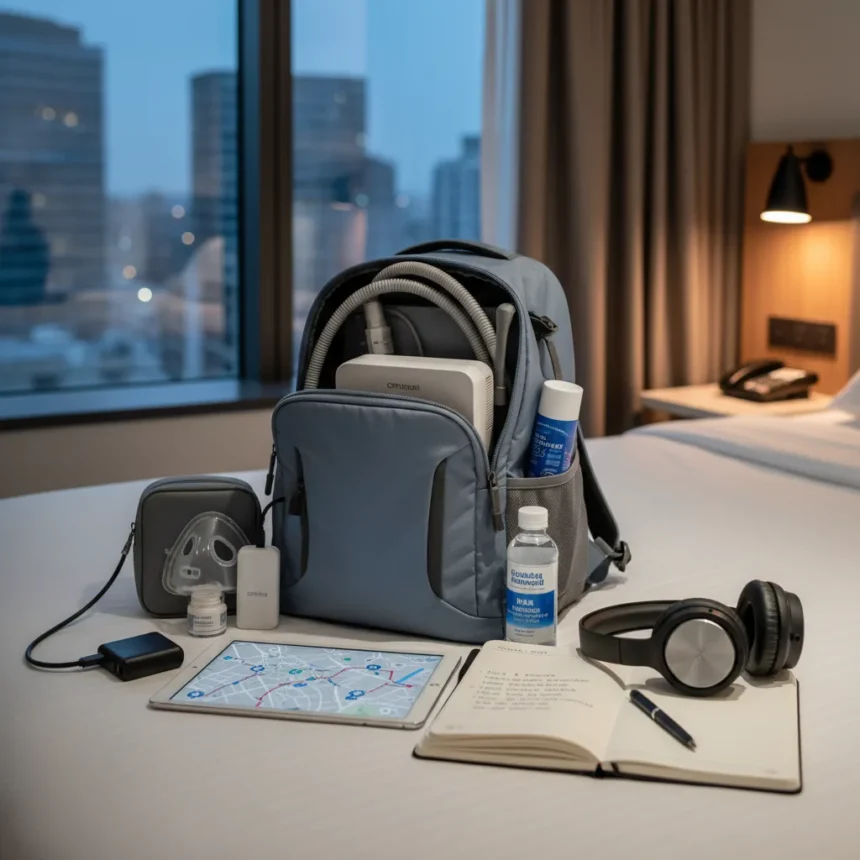
Include these items in your carry-on: your primary device, a backup power source (portable battery pack rated for your device’s wattage), replacement filters for the entire trip duration plus extras, distilled water for your humidifier chamber, the power adapter for your destination, a cleaning kit, and your sleep specialist’s letter. Pack a small travel case designed specifically for your device type—these cases protect against drops, pressure changes, and humidity fluctuations during flight.
Bring twice as many replacement filters as you think you will need. Filters degrade faster in unfamiliar environments with different air quality, dust, or humidity levels. If your filter fails mid-trip and you cannot find a replacement locally, you have no backup. Many destinations do not stock your specific device’s filters, making it impossible to replace them on short notice.
Managing Sleep Apnea While Traveling Across Time Zones
Time zone changes complicate sleep apnea management because your body’s natural sleep schedule shifts, but your apnea does not. If you are traveling east and losing hours, you may find yourself using your device at unusual times relative to local time. If you are traveling west and gaining hours, you might use your device twice in one night by local time.


The solution: keep your device on your home time zone for the first two to three days of travel, then gradually shift it to match your destination’s schedule. This prevents the shock of sudden schedule changes and gives your body time to adjust. Set phone reminders for your device use times, accounting for time zone differences. Some travelers find it helpful to use a small travel clock set to home time alongside their phone to avoid confusion.
Navigating TSA Rules and International Customs
TSA explicitly permits sleep apnea devices through security checkpoints. You do not need to remove your device from your carry-on bag, but you should declare it and show your medical documentation when asked. TSA agents understand sleep apnea devices and will not delay you if you have proper paperwork. Without documentation, however, agents may confiscate your device or require extended screening that could make you miss your flight.
International travel adds complexity. Different countries have different customs regulations for medical devices. Some nations require advance notification of medical equipment imports. Others have specific rules about humidifier use or power adapter safety standards. Research your destination country’s customs website at least three weeks before travel and contact the embassy or consulate if you have questions. Having documentation from your sleep specialist makes international customs clearance significantly faster.
Power Solutions and Backup Strategies
Your sleep apnea device will not work without power. A single power failure during travel can leave you without treatment for an entire night—a serious health risk. Invest in a portable battery pack (power bank) with sufficient capacity to run your device for at least one full night. Check your device’s power requirements (usually listed in watts) and choose a battery pack with matching voltage and amperage ratings. A standard smartphone power bank will not work—you need a medical-grade portable power system.
Pack a second backup power source in a separate bag. If your primary battery fails, your backup ensures you can still use your device. Some travelers also carry a small inverter that plugs into a car’s 12-volt outlet, allowing them to charge their device during road trips or layovers.
Frequently Asked Questions
Can I use my sleep apnea device on an airplane?
No. Federal Aviation Administration rules prohibit operating electrical medical devices during flight due to potential interference with aircraft systems. You can use your device during ground time before boarding and after landing, but not during flight itself. Plan your travel schedule to minimize time without treatment—short flights are easier to manage than long international journeys.
What if my device breaks while I am traveling?
Contact your device manufacturer’s customer support line immediately. Many manufacturers have international service centers and can arrange emergency repairs or replacements. Your sleep specialist can also provide guidance. As a last resort, some hospitals and urgent care clinics can provide temporary treatment alternatives, though availability varies by location. This is why backup equipment and comprehensive travel insurance are essential.
Do I need travel insurance that covers sleep apnea equipment?
Yes. Standard travel insurance often excludes pre-existing medical conditions and their equipment. Look for travel insurance policies that specifically cover medical devices and pre-existing conditions. This coverage protects you if your device is lost, stolen, or damaged during travel, ensuring you can access replacement equipment quickly.
Managing sleep apnea while traveling is entirely achievable with advance planning, proper equipment, and realistic expectations. The investment in preparation—medical letters, backup power, destination research, and equipment redundancy—pays dividends in uninterrupted sleep and peace of mind. Your health depends on consistent treatment, and that does not change when you leave home. Plan accordingly, pack strategically, and travel confidently knowing your sleep apnea care is secure.
This article was written with AI assistance and editorially reviewed.
Source: Tom's Guide