






Lawn mower grass clumping occurs primarily when you mow wet or damp grass, as moist clippings stick together instead of dispersing evenly across your lawn. This common problem ruins your lawn’s appearance and can invite disease, but the fix is straightforward: mow only when grass is completely dry.
Key Takeaways
- Wet grass is the main cause of lawn mower grass clumping during mowing.
- Dull blades, fast mowing speed, and cutting too much grass at once also contribute to clumping.
- Mow after morning dew evaporates or later in the day when moisture dries completely.
- Sharpen mower blades every 20-25 hours of use and clean the deck after each mowing.
- Raise your mower height to remove no more than one-third of grass height per pass.
Why Wet Grass Creates Lawn Mower Grass Clumping
Moist clippings cling to each other and to your mower deck instead of flying out cleanly. When you mow early in the morning while dew still coats the grass, or immediately after rain, the clippings bunch up in dense mats that smother the healthy grass underneath. This trapped moisture also creates an ideal environment for fungal diseases like brown patch and dollar spot, which thrive in conditions where clippings stay wet against the soil.
The physics is simple: dry clippings are light and disperse easily through the discharge chute or mulching system. Wet clippings are heavy and adhesive. They stick to the mower deck, accumulate in clumps, and either get ejected as thick mats or remain stuck under the mower, blocking airflow and worsening the problem on your next pass.
The Primary Fix: Mow Only Dry Grass
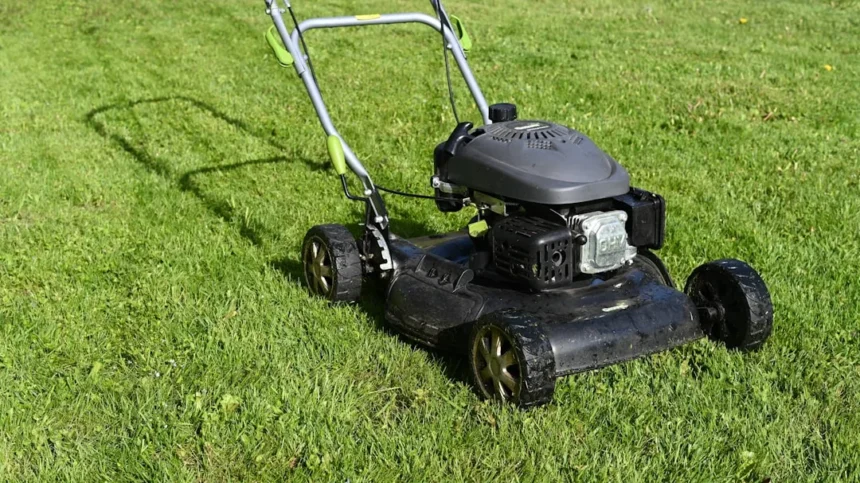
Wait for morning dew to evaporate completely before starting your mower. In most climates, this means waiting until mid-morning or later. Alternatively, mow in the late afternoon after the sun has dried the grass thoroughly. This single change stops lawn mower grass clumping immediately in most cases. Testing on a Greenworks 60V 21-inch self-propelled mower confirmed that clumping ceased entirely once the operator switched to mowing dry grass, regardless of other mower settings.



This timing adjustment requires no equipment investment and works on every mower type—rotary, mulching, or side-discharge. It is the most reliable solution because it addresses the root cause rather than compensating for it. If your lawn has heavy morning dew or you live in a humid climate, plan your mowing schedule around the driest part of your day.
Secondary Causes and How to Address Them
Even on dry grass, lawn mower grass clumping can persist if your mower is not properly maintained. Dull blades tear grass instead of cutting cleanly, creating ragged edges that stick together more easily. Sharpen your blades every 20-25 hours of use—this is non-negotiable for clean cuts and healthy grass. A buildup of dried clippings and grass debris under the mower deck restricts airflow and causes clumping. Clean the deck after each use by tipping the mower on its side (on the air filter side for safety) and scraping away dried material.



Mowing too fast on self-propelled models reduces the mower’s ability to process clippings evenly. Slow down and let the blade do the work. Cutting too much grass at once—skipping weekly maintenance and tackling overgrown grass—overwhelms your mower’s discharge system. Follow the one-third rule: never remove more than one-third of the grass height in a single pass. If your grass is 4 inches tall and you want it at 2.5 inches, make two passes instead of one.
Mower deck height also matters. Raise the cutting height to 2.5 to 3.5 inches for most lawns. Cutting too short stresses the grass and produces more clippings per pass, increasing the chance of clumping. Higher cuts also shade the soil, reducing moisture loss and promoting deeper root growth.
Maintenance Steps to Prevent Lawn Mower Grass Clumping
Start each mowing season by cleaning the mower deck thoroughly and sharpening the blades. Check the blade height and adjust it to your desired cutting height—typically 2.5 to 3.5 inches. After each use, blow or scrape dried clippings from under the deck. Never let buildup accumulate between mowings.
Alternate your mowing direction each week. Mow horizontally one week, vertically the next. This prevents ruts, improves clipping dispersion, and promotes more even grass growth. If heavy clumps do form despite these steps, rake or blow them away before they smother the grass underneath. For lawns that produce exceptionally thick clippings, a lawn sweeper can gather clumps quickly, or you can bag the clippings instead of side-discharging them.



Mulching blade kits offer another option if you prefer finely chopped clippings that decompose quickly. These specialized blades cut clippings into smaller pieces, reducing the risk of clumping even on slightly damp grass. However, mulching blades still work best on dry grass and require a well-maintained deck to function properly.
When to Call in Professional Help
If you have sharpened your blades, cleaned your deck, mowed on dry grass, and lawn mower grass clumping persists, your mower may have a mechanical issue. A bent blade, damaged discharge chute, or worn bearings can prevent the blade from spinning at proper speed. A professional mower technician can diagnose and repair these issues quickly. For most homeowners, though, the dry-grass-first approach solves the problem within a single mowing cycle.
Does cutting height really affect lawn mower grass clumping?
Yes. Cutting shorter produces more clippings per pass and stresses the grass, both of which increase clumping risk. Raising your mower height to 2.5 to 3.5 inches reduces the volume of clippings ejected at once and promotes healthier grass that resists disease.
Can I mow wet grass if I bag the clippings instead?
Bagging wet clippings still stresses your mower and produces dense, heavy bags that are difficult to handle. It is better to wait for dry grass and side-discharge or mulch. If you must bag, do so on dry grass only.
How often should I sharpen my mower blades?
Sharpen your blades every 20-25 hours of use. For most homeowners, this means once or twice per season. A dull blade tears grass instead of cutting cleanly, which worsens lawn mower grass clumping and invites disease.
Fixing lawn mower grass clumping is not complicated. Mow dry grass, maintain your blades, clean your deck, and adjust your cutting height. These simple steps eliminate clumps, prevent disease, and deliver the green, healthy lawn you want. Start with the dry-grass rule—it solves the problem for most homeowners immediately.
Where to Buy
17% OFFFelco F2 Pruning Shears$71$86shop now | Amazing StuffGarden Gloves$9.99shop now | AmazonSpear Head Spade SHFD3 $62shop now
This article was written with AI assistance and editorially reviewed.
Source: Tom's Guide