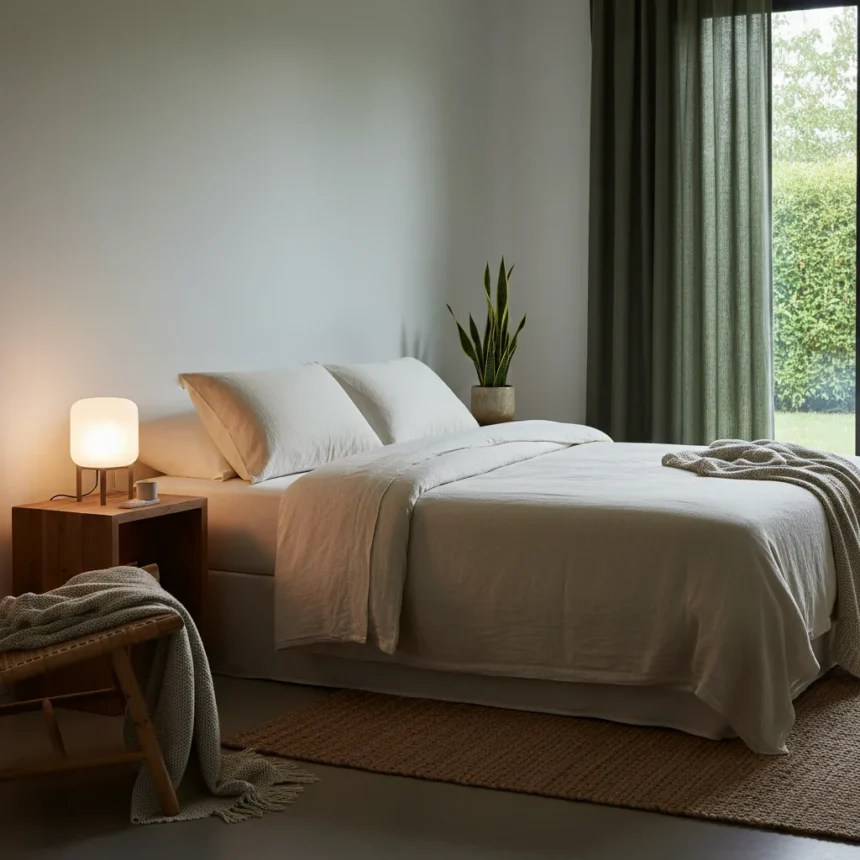
Eco-friendly bedroom swaps offer a straightforward path to better sleep while reducing your environmental footprint. As Earth Day approaches, the bedroom emerges as an ideal space to make changes that benefit both your rest and the planet. These are not radical renovations—they are simple material and lighting adjustments that address two problems simultaneously: poor sleep and unnecessary chemical exposure.
Key Takeaways
- Latex pillows provide a natural, eco-friendly alternative to synthetic pillow materials.
- Dimming lights and using warm-toned bulbs mimic natural sunset and prepare your body for sleep.
- Organic mattresses eliminate chemicals like phthalates, formaldehyde, and fiberglass.
- Wool bedding regulates temperature and wicks moisture naturally.
- A clutter-free, low-stimulus bedroom environment supports deeper, more restorative sleep.
Why Eco-Friendly Bedroom Swaps Matter Now
The push for eco-friendly bedroom swaps reflects a broader shift in how people approach both sleep and sustainability. Traditional bedroom furnishings often contain synthetic materials, chemical treatments, and energy-intensive production methods. Swapping these for natural alternatives reduces chemical exposure in the space where you spend a third of your life, while simultaneously lowering your environmental impact. The timing matters: as awareness of indoor air quality and sustainable consumption grows, the bedroom becomes a logical place to start.
The appeal is practical, not preachy. You are not sacrificing comfort or performance—you are gaining better sleep through materials that work with your body’s natural temperature regulation and chemical sensitivities. This is why organic mattresses have gained momentum in 2025, positioned as investments in both personal health and environmental responsibility.
Latex Pillows and Natural Sleep Support
Latex pillows represent one of the simplest eco-friendly bedroom swaps. Unlike synthetic pillows filled with polyurethane foam or polyester, latex is derived from natural rubber and offers genuine environmental advantages. The material is biodegradable, requires fewer chemical treatments during manufacturing, and delivers comparable or superior comfort and support. For sleepers concerned about off-gassing—the chemical odor some synthetic pillows release—latex eliminates this entirely.

The comparison is straightforward: synthetic pillows rely on petroleum-based polymers and flame retardants, while latex pillows use plant-derived materials with minimal chemical processing. Neither approach is perfect, but latex creates a measurably smaller environmental footprint while supporting your neck and head without the off-gassing concerns many people experience with foam alternatives.
Organic Mattresses: Eliminating Hidden Chemicals
If you are serious about eco-friendly bedroom swaps, the mattress is where the biggest impact happens. Standard mattresses often contain phthalates, fiberglass, and formaldehyde—chemicals used for flame retardancy, durability, and structural integrity. Organic mattresses eliminate these by using plant and animal-derived materials instead. Brands like Avocado Eco Organic, Awara Premier Natural Hybrid, Essentia Stratami, and PlushBeds Botanical Bliss Organic Latex showcase how this category has evolved.



Organic mattresses deliver genuine benefits: reduced chemical off-gassing, hypoallergenic construction, and natural temperature regulation. They are positioned as long-term investments rather than budget purchases, reflecting the higher cost of sustainable materials and manufacturing. The environmental payoff comes not just from what they contain, but from what they exclude—fewer chemicals entering landfills when the mattress eventually reaches end-of-life.
Lighting Changes That Signal Sleep Time
One of the most effective eco-friendly bedroom swaps requires no new purchase—just a behavioral shift and one bulb swap. Dimming your bedroom lights in the evening, and switching to warm-toned or amber bulbs, replicates the natural light changes your body evolved to recognize as a signal to prepare for sleep. Bright, cool-toned LED lights suppress melatonin production and confuse your circadian rhythm, while warm light encourages natural sleep onset.
The environmental benefit is dual: warmer bulbs often consume less energy than bright cool LEDs, and reducing overall light intensity means lower electricity consumption. More importantly, this simple change improves sleep quality measurably. Your body does not need a scientific study to respond to the signal—it just needs the right light conditions. Pair this with putting your phone on grayscale in the evening to reduce dopamine-triggering bright colors, and you have created a low-stimulus sleep environment that costs almost nothing.
Wool Bedding for Temperature and Moisture Control
Wool is an underrated eco-friendly bedroom swap. Unlike synthetic polyester or cotton blends treated with chemical finishes, wool naturally wicks moisture, regulates temperature, and requires minimal processing. This means wool bedding keeps you comfortable across seasons without the energy cost of heavy blankets or the chemical residue of synthetic alternatives.



The environmental story is compelling: wool is a renewable resource, biodegradable, and naturally resistant to dust mites and mold without chemical treatments. For sleepers who overheat or struggle with night sweats, wool delivers performance that synthetic materials often fail to match, reducing the temptation to layer blankets or adjust your thermostat throughout the night.
Creating a Low-Stimulus Sleep Sanctuary
Eco-friendly bedroom swaps extend beyond materials to the overall environment. A clutter-free nightstand, minimal visual stimulation, and intentional design create what sleep experts call a sleep sanctuary. This means removing screens, reducing ambient noise, and eliminating visual chaos that keeps your brain engaged when it should be winding down.
This approach aligns perfectly with sustainability: fewer items in your bedroom means fewer purchases, less waste, and a space designed for function rather than consumption. The sleep benefit is immediate—your brain has less to process—while the environmental benefit compounds over time as you resist the impulse to fill your bedroom with unnecessary items.
The Bigger Picture: Earth Day and Bedroom Choices
Eco-friendly bedroom swaps gain urgency around Earth Day because they represent a rare convergence of personal benefit and planetary impact. You are not sacrificing sleep quality for environmental values, nor are you spending significantly more money to feel virtuous. Instead, you are making straightforward material choices that improve your rest while reducing chemical exposure and environmental harm.
The shift toward organic mattresses and natural bedding reflects a growing recognition that what you sleep on matters—both for your body and for the world. As more people prioritize these swaps, manufacturers respond with better products, which drives prices down and makes sustainable choices more accessible.
Should I replace my entire mattress for an organic one?
If your current mattress supports your sleep well, replacing it solely for environmental reasons is not necessary. However, if you experience allergies, off-gassing odors, or poor temperature regulation, an organic mattress addresses these problems while delivering environmental benefits. Consider it an investment in both health and sustainability rather than a purely environmental purchase.
Can dimming lights really improve my sleep?
Yes. Dimming lights and switching to warm-toned bulbs signals your body to produce melatonin, the hormone that triggers sleep onset. This is not a minor effect—it is a fundamental circadian signal. Pair this with reducing blue light exposure from screens, and you create conditions your body recognizes as nighttime, improving both sleep onset and quality.
Are latex pillows better than memory foam?
Latex and memory foam both provide support, but latex offers environmental advantages: it is derived from natural rubber, biodegradable, and avoids the off-gassing concerns some people experience with synthetic foam. If you are sensitive to chemical odors or prioritize sustainability, latex is the stronger choice. If you prefer the conforming feel of memory foam, that is a valid preference—the eco-friendly swap is still available if you choose a natural latex option.
Eco-friendly bedroom swaps are not about perfection or purity—they are about making conscious choices in the space where you spend a third of your life. Start with one change: swap your pillows, dim your lights, or research an organic mattress when your current one reaches end-of-life. Each choice compounds, building a sleep environment that supports both your rest and the planet.
Where to Buy
This WorksDeep Sleep Pillow Spray (75ml)$33shop now
Edited by the All Things Geek team.
Source: Tom's Guide