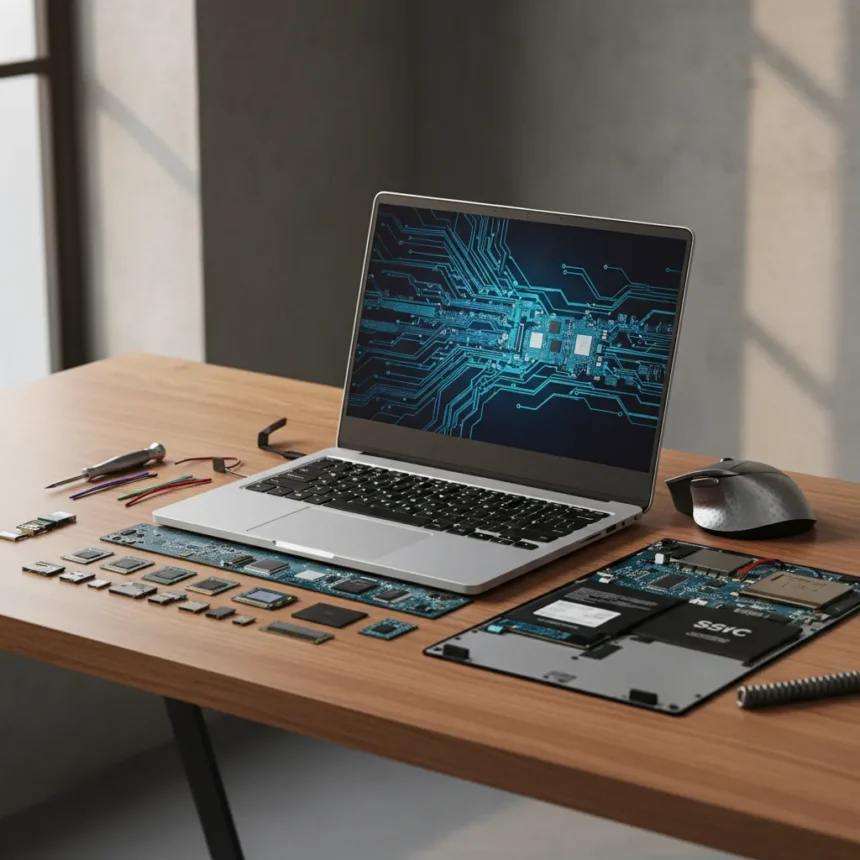
The Framework Laptop Pro 13 is a ground-up redesign of Framework’s modular laptop line, representing a significant step forward in making upgradable machines that don’t feel like compromises. After years of positioning itself as the champion of repairability, Framework has delivered a 13-inch laptop that finally competes with premium competitors on design, build quality, and performance—without abandoning the modular philosophy that defines the brand.
Key Takeaways
- Framework Laptop Pro 13 is a complete redesign that prioritizes premium materials and performance alongside modularity.
- Swappable Expansion Card ports remain a core feature, allowing users to customize connectivity.
- Tool-free repairability design enables users to upgrade and repair components without special equipment.
- The device targets users who want upgradability without settling for mid-range specifications.
- Framework continues to prove that modular architecture can coexist with flagship-level design.
Why the Framework Laptop Pro 13 Matters Right Now
For years, the modular laptop space has felt like a niche category—interesting to enthusiasts but compromised in everyday use. The Framework Laptop Pro 13 changes that equation. This isn’t a budget machine that happens to be repairable; it’s a premium laptop that happens to be modular. That distinction matters enormously for a market tired of disposable hardware and locked-in ecosystems.
The timing is significant. As major manufacturers lock down components and restrict repairs, Framework’s latest iteration proves there’s an audience willing to invest in machines they can actually own and modify. The Pro 13 doesn’t ask users to choose between performance and future-proofing—it delivers both.
Framework Laptop Pro 13 Design and Build Quality
The redesign is comprehensive. This version prioritizes materials and finish in ways that earlier Framework machines didn’t, bringing the overall aesthetic and tactile experience closer to what you’d expect from a premium laptop maker. The device feels intentional, not utilitarian. Framework has managed to integrate its modular philosophy—including the swappable Expansion Card ports—without the design looking compromised or over-engineered.


What makes this particularly impressive is that modularity typically adds bulk or complexity. The Pro 13 avoids both traps. The expansion card system, which allows users to customize their connectivity options, feels integrated rather than bolted-on. This is the kind of thoughtful industrial design that separates products built for enthusiasts from products built for everyone.
Repairability as a Core Feature, Not an Afterthought
Framework’s tool-free repairability design is a genuine differentiator. Users can access and upgrade components without special equipment or technical expertise. In a world where most laptops require a technician visit to replace a battery, this approach feels radical. The Pro 13 maintains this philosophy while elevating the overall product quality, proving that repairability doesn’t require aesthetic compromises.



This matters practically. A laptop that costs this much should last years, and a machine you can actually service yourself extends its lifespan significantly. You’re not locked into a three-year refresh cycle because the battery is soldered to the motherboard. That’s a genuine advantage over traditional premium laptops, even if most buyers won’t exercise it immediately.
How Framework Laptop Pro 13 Compares to Traditional Premium Laptops
The core tension in the premium laptop market is between design-first companies (which lock down everything) and modularity-first companies (which often compromise on polish). The Framework Laptop Pro 13 attempts to bridge that gap. Unlike traditional flagships from major manufacturers, it prioritizes your ability to upgrade and repair. Unlike earlier modular attempts, it doesn’t ask you to accept a second-tier experience to get that capability.
This positions the Pro 13 in an unusual space: it’s not cheaper than premium competitors, but it offers something they don’t—genuine long-term ownership and control. For buyers who value that, it’s a compelling alternative to machines that become e-waste the moment a component fails or becomes outdated.
Should You Buy the Framework Laptop Pro 13?
The Framework Laptop Pro 13 is for buyers who see their laptop as a long-term investment, not a consumable. If you value the ability to upgrade components, repair your own machine, and maintain control over your hardware, this is worth serious consideration. The fact that it now delivers premium design and performance makes that choice less of a compromise than it used to be.



If you primarily care about raw performance or the latest brand prestige, traditional flagships might still appeal more. But if you’re tired of buying locked-down machines and want something that respects your ownership, the Pro 13 finally makes that choice practical.
What makes the Framework Laptop Pro 13 different from older Framework models?
This is a ground-up redesign that prioritizes premium materials, build quality, and overall finish in ways earlier versions didn’t. Framework has maintained its core modular features—swappable expansion cards and tool-free repairability—while elevating the entire product to compete with traditional premium laptops.
Can you actually upgrade the Framework Laptop Pro 13 yourself?
Yes. The tool-free repairability design means you can access and upgrade components without special equipment. This is one of the defining features that separates it from traditional premium laptops, where most upgrades and repairs require a technician.
Does modularity affect performance or battery life?
The research brief does not provide specific performance benchmarks or battery life figures for the Framework Laptop Pro 13, so we cannot make direct claims about how modularity affects these metrics. What we can say is that Framework has designed the Pro 13 to feel like a complete premium product, not a compromise built around modularity.
The Framework Laptop Pro 13 represents a genuine shift in how modular laptops are perceived. It’s no longer a niche product for repair enthusiasts—it’s a legitimate alternative for anyone tired of disposable hardware and locked ecosystems. Framework has finally proved that upgradability and premium design aren’t opposing forces. That’s worth paying attention to, regardless of whether you buy one.
Edited by the All Things Geek team.
Source: Tom's Guide