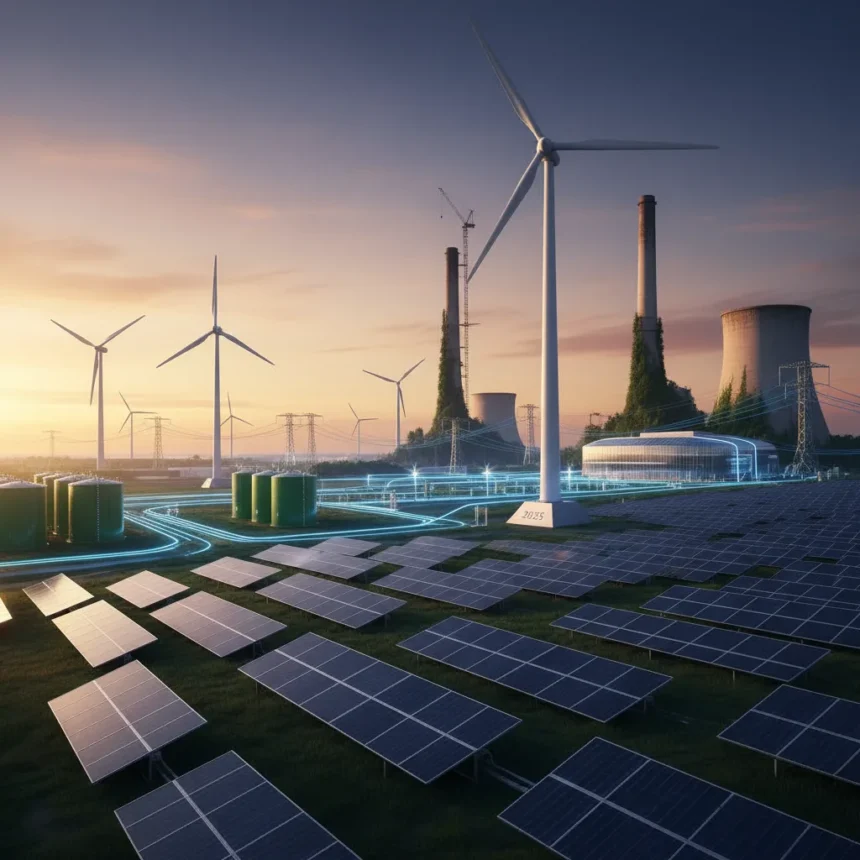
Renewable energy overtakes coal as the world’s main source of electricity in 2025, marking a watershed moment in global power generation. The International Energy Agency declared 2025 the start of the “Age of Electricity,” a year when solar achieved the largest absolute growth ever recorded for any energy source and carbon-free power outpaced rising demand for the first time.
Key Takeaways
- Solar generated over 2,700 terawatt-hours in 2025, more than double its 2022 output.
- Solar now represents over 8% of global electricity production and is the single largest grid source by capacity.
- Solar growth covered one-quarter of all rising energy demand and two-thirds of increased electricity demand in 2025.
- Thirty countries installed at least 1 gigawatt of solar capacity in 2025.
- Electricity demand grew twice as fast as overall energy demand, signaling a shift toward electric vehicles and heat pumps.
Solar’s Historic Growth Breaks All Records
The absolute increase of solar PV generation in 2025 is the largest ever observed for any source, excluding years marked by rebounds from global economic shocks such as COVID-19. Solar generated over 2,700 terawatt-hours in 2025, more than doubling its output from just three years prior in 2022. This explosive growth reflects a fundamental acceleration in the world’s energy transition, driven by falling costs, manufacturing scale, and policy support across multiple continents.
Solar’s dominance extends beyond raw generation figures. The technology now accounts for over 8% of the world’s total electricity production and has become the single largest grid source by capacity, outpacing coal, natural gas, and hydropower in installed megawatts. Thirty countries installed at least 1 gigawatt of solar capacity in 2025 alone, demonstrating that rapid deployment is no longer concentrated in a handful of wealthy nations. This geographic diversification matters: it signals that solar economics work globally, not just in subsidized markets.
How Solar Reshaped Global Energy Demand
Solar’s growth covered a quarter of all rising energy demand and over two-thirds of increased electricity demand in 2025. This is not merely an impressive statistic—it reveals a structural shift in how the world meets new power needs. For decades, fossil fuels absorbed nearly all incremental demand. Now, renewables are the default choice for new capacity additions, driven by cost competitiveness rather than policy mandates alone.


Electricity demand itself grew at twice the rate of overall energy demand in 2025, signaling a broader economic shift. This acceleration reflects the electrification of transport—electric vehicles displacing gasoline—and heating systems, with heat pumps replacing gas and oil boilers in buildings. These trends are not temporary blips but structural changes that will persist as EV adoption and building retrofits continue globally.
Why Renewable Energy Overtakes Coal Matters Now
The shift from coal to renewables as the world’s primary electricity source represents a tipping point, not merely progress toward one. For over a century, coal powered industrial civilization. Its decline signals that the economic case for fossil fuels has fundamentally eroded in electricity generation. Coal plants are being retired faster than new ones are built, and in most developed economies, renewables are now the cheapest option for new generation.



The International Energy Agency emphasized that 2025 marked a turning point for global energy, with solar posting the largest growth ever seen for any energy source and helping carbon-free power outpace rising demand. This framing—carbon-free power outpacing demand growth—is crucial. It means the world is no longer simply adding renewables while fossil fuels continue to grow. Instead, clean energy is the primary driver of new supply, while fossil fuel use stagnates.
What This Means for Energy Systems Ahead
The declaration of the “Age of Electricity” reflects more than solar’s success. It acknowledges that electricity is becoming the primary energy carrier across transport, heating, and industry—domains once dominated by oil and gas. Battery storage expansion, grid modernization, and smart demand management are enabling this transition. Solar’s variability is no longer a barrier; it is managed through batteries, demand shifting, and grid interconnection.
However, renewable energy overtakes coal does not mean coal is gone. Coal still generates significant electricity in Asia, particularly China and India, where coal plants continue operating. The global shift reflects averages: some regions have transitioned fully to renewables, while others remain coal-dependent. This uneven transition creates both opportunity and tension in international climate negotiations, where developing nations argue they should have the same carbon-intensive development pathway that wealthy countries used historically.
Is renewable energy truly the world’s main source now?
Renewable energy overtakes coal as the dominant source of global electricity in 2025, according to the International Energy Agency analysis. However, “main source” refers to capacity and growth dominance, not yet total generation in all regions. Coal still generates substantial power in Asia, and fossil fuels collectively still produce more electricity than renewables globally. But the trajectory is clear: renewables are now the largest source of new capacity additions, and their share of total generation is growing faster than any other source.



How much electricity does solar generate compared to wind and hydropower?
Solar generated over 2,700 terawatt-hours in 2025, accounting for over 8% of global electricity. The research brief does not provide comparable figures for wind or hydropower generation in 2025, so a direct numerical comparison is not available. However, solar’s growth rate—the largest ever observed for any source—indicates it is expanding faster than these alternatives and will likely surpass them in total output within years if current trends persist.
What happens to coal miners and coal-dependent regions?
The research brief does not address employment, retraining, or regional economic impacts of coal’s decline. These are critical questions for policy and social stability, but they fall outside the scope of the energy generation data available. Addressing the economic transition for coal-dependent communities requires separate analysis of labor markets, government support programs, and regional diversification strategies.
The overtaking of coal by renewable energy in 2025 signals the end of an era and the beginning of another. Solar’s record growth, coupled with stagnant fossil fuel use and surging electricity demand, reveals that the energy transition is no longer a future possibility—it is present reality. The “Age of Electricity” is not hype; it is a recognition that the world’s power system has fundamentally shifted. For investors, policymakers, and energy companies, the question is no longer whether renewables will dominate, but how quickly and at what cost to manage the transition for workers and communities dependent on the old system.
Edited by the All Things Geek team.
Source: TechRadar