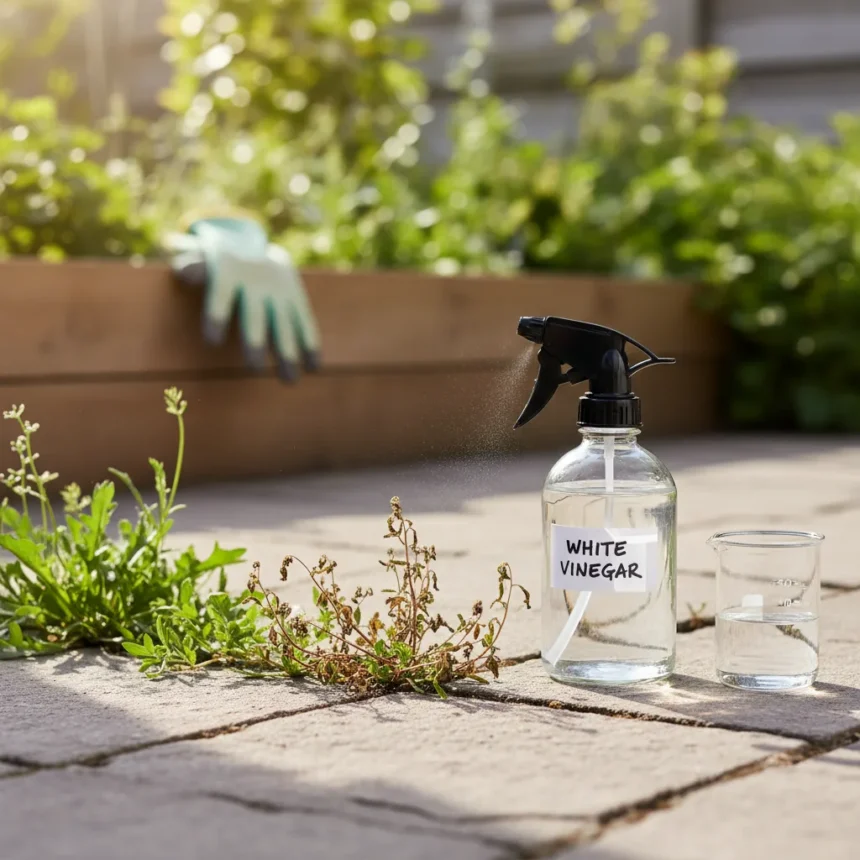
White vinegar weed killer has emerged as a surprisingly effective chemical-free solution for homeowners battling persistent yard weeds. The common laundry staple, typically containing 5% acetic acid, works by drying out plant tissue when applied directly to unwanted growth. Unlike synthetic herbicides, vinegar poses no threat to pets, children, or local waterways, making it an increasingly popular choice for eco-conscious gardeners.
Key Takeaways
- White vinegar kills weeds by drying them out through acidity and sunlight exposure.
- Best applied on sunny days for maximum effectiveness within hours.
- Costs just $1-3 per bottle, making it significantly cheaper than chemical alternatives.
- Combine with boiling water and baking soda for complete weed elimination and regrowth prevention.
- Works on patio cracks and yard weeds but will damage desired plants if splashed.
How White Vinegar Weed Killer Works
White vinegar weed killer operates through a simple but powerful mechanism: the acidity in vinegar, combined with direct sunlight, dries out the plant structure within hours. When you spray or pour vinegar directly onto weeds on a sunny day, the acid penetrates the plant tissue while UV rays accelerate moisture loss. The weed shrivels and dies without requiring any chemical intervention. This dual-action approach makes vinegar far more effective than pouring it on overcast days, when the sun cannot amplify the drying effect.
The beauty of white vinegar weed killer lies in its simplicity. You need no special equipment, no protective gear beyond basic caution, and no toxic fumes. The substance is already in most kitchens, eliminating the need for a trip to a garden center. For homeowners tired of hauling heavy chemical containers or worrying about runoff contaminating soil and groundwater, vinegar represents a genuine shift in yard maintenance philosophy.
White Vinegar Weed Killer Combined with Other Methods
While white vinegar weed killer works on its own, experts recommend combining it with complementary techniques for permanent results. The most effective three-step approach begins with boiling water, which you pour directly onto weeds to destroy plant cells and kill roots instantly. Minutes later, the weed tissue collapses. Follow this the next sunny day with vinegar spray to eliminate any remaining growth. Finally, sprinkle baking soda over the treated area to prevent regrowth.


This layered strategy addresses weeds at multiple levels. Boiling water handles immediate surface elimination. White vinegar weed killer tackles stubborn regrowth. Baking soda creates an inhospitable environment for new seedlings. Gardening specialist Trevor Knight emphasizes the environmental benefit: “By opting for an eco-friendly cleaning agent, you’re protecting waterways and wildlife, ensuring no harsh chemicals are being washed away”. The combination costs under $5 for materials you likely already own, versus $15-40 for chemical herbicide bottles.
Where White Vinegar Weed Killer Works Best
White vinegar weed killer excels in specific yard situations where chemical sprayers pose practical or safety concerns. Patio cracks and paving crevices are ideal targets—weeds growing through concrete or stone are difficult to remove mechanically without damaging the surface, but vinegar seeps into gaps and kills roots without harming the paving itself. Driveway edges, garden borders, and between stepping stones are equally suitable applications.



The critical limitation: white vinegar weed killer will damage or kill any desired plant it contacts. Never spray it carelessly on lawns where grass grows, or near flower beds with plants you want to keep. The acidity does not discriminate between weeds and ornamentals. Apply with precision using a spray bottle aimed directly at weed leaves, or pour carefully from a cup. This selectivity requirement makes vinegar better suited to hardscape areas than open garden beds, though it remains effective for spot-treating individual weeds anywhere in the yard.
Why White Vinegar Weed Killer Beats Chemical Alternatives
Chemical herbicides dominate the market, yet white vinegar weed killer offers advantages that increasingly matter to homeowners. Cost is immediate: a bottle of vinegar costs $1-3, while commercial weed killers run $10-30 per container. Environmental impact is equally stark. Chemical herbicides wash into soil and groundwater, harming beneficial microorganisms and potentially reaching drinking water supplies. Vinegar biodegrades harmlessly. Safety around children and pets is non-negotiable for many families—vinegar poses minimal risk even if accidentally ingested in small quantities, whereas chemical herbicides carry poison warnings and require careful storage.
The trade-off is patience. White vinegar weed killer may require reapplication for deeply rooted perennials, whereas some chemical herbicides claim single-application permanence. However, the regrowth cycle is typically weeks, not days, and repeated vinegar applications cost pennies compared to the environmental debt of chemical dependency. For most homeowners, the safety, cost, and ecological benefits outweigh the minor inconvenience of occasional retreatment.
Does white vinegar permanently kill weeds?
White vinegar kills visible weed growth reliably, but true permanence depends on root depth and follow-up care. Shallow-rooted weeds die completely after one application, while deep-rooted perennials may regrow from surviving roots. Combining vinegar with boiling water (to destroy roots first) and baking soda (to prevent new seeds from germinating) significantly extends the weed-free period. Most treated areas remain weed-free for several weeks to months before spot treatment is needed again.



Can you use white vinegar weed killer on all plants?
No. White vinegar weed killer will damage or kill any plant it touches, not just weeds. Never apply it to lawns, flower beds, or near shrubs you want to preserve. Use it only in areas where you want to eliminate all vegetation, such as patio cracks, driveway edges, or isolated problem weeds you can target precisely.
What’s the best time to apply white vinegar for weeds?
Sunny days are essential. The acidity of vinegar combined with sunlight dries out weeds within hours; overcast days significantly reduce effectiveness. Apply in mid-morning to early afternoon when UV rays are strongest, and avoid rainy forecasts that might wash away the vinegar before it can work.
White vinegar weed killer represents a quiet revolution in yard maintenance—proof that the most effective solutions are often the simplest and cheapest. For homeowners ready to abandon chemical bottles, the path forward runs through the laundry aisle.
Where to Buy
Amazing Stuff for You! Garden Gloves (2-pack):
Edited by the All Things Geek team.
Source: Tom's Guide