






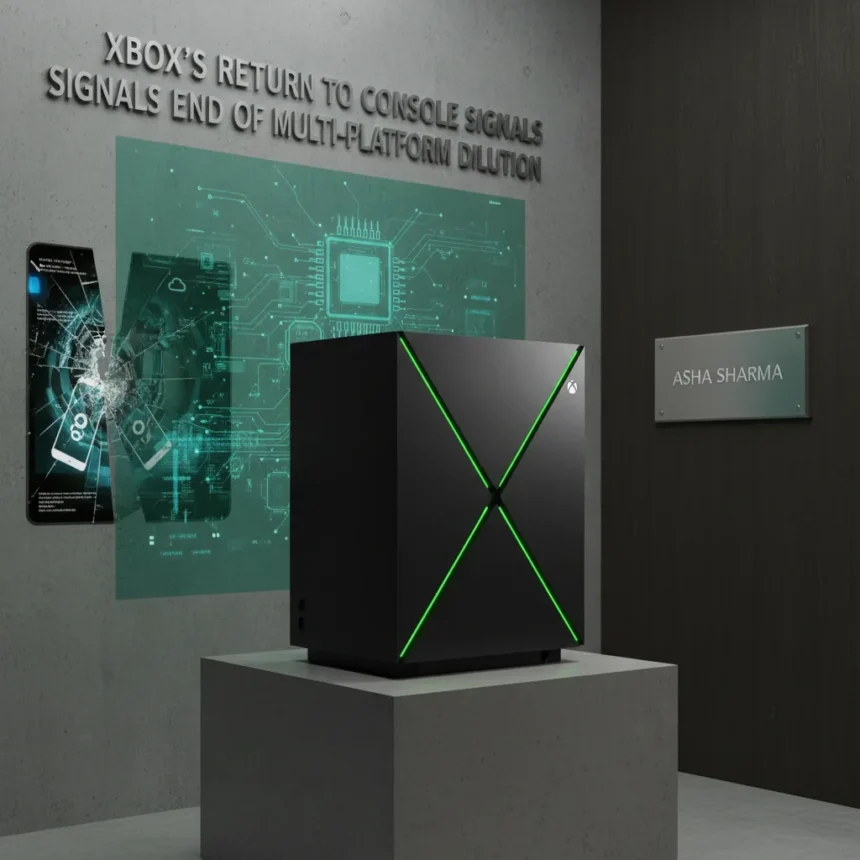
The Xbox return to console marks a dramatic reversal of Microsoft’s multi-platform gaming strategy, with newly appointed CEO Asha Sharma scrapping the controversial ‘This is an Xbox’ campaign and signaling a renewed commitment to hardware as the foundation of the brand.
Key Takeaways
- Asha Sharma, former AI executive at Meta and Instacart, appointed CEO of Xbox with mandate to refocus on consoles.
- Microsoft killed the ‘This is an Xbox’ campaign after it failed to resonate with core fans and discouraged console purchases.
- Xbox Series sales lag behind Xbox One at the same lifecycle point, prompting strategic reset.
- New strategy emphasizes console-first exclusives, marquee IP, and clearer roadmaps for players.
- Sharma acknowledges core Xbox fans’ 25-year investment in universes and console hardware.
Why the Xbox Return to Console Matters Now
Microsoft spent years pushing Xbox beyond consoles—cloud streaming, mobile ports, TVs, even VR headsets. The message was clear: Xbox is not about the box. Then it failed. The ‘This is an Xbox’ campaign, launched in late November 2024 by Sarah Bond, positioned Xbox games everywhere except where they traditionally mattered. Fans hated it. Sharma inherited a brand in crisis and made an immediate, visible choice: kill the campaign because ‘it didn’t feel like Xbox’. That decision signals something bigger than marketing correction. It is a strategic admission that the multi-platform approach diluted Xbox’s identity without moving the needle on console sales.
Xbox Series console sales are lower than Xbox One at the same lifecycle point. That is not a minor metric—it is the core failure driving this reset. Years of emphasizing cloud and cross-platform play did not translate to hardware growth. Instead, it confused players about what Xbox actually is. Sharma’s mandate is to fix that confusion by recommitting to the thing that made Xbox matter: the console itself.
The Leadership Reset and Concrete Commitments
Asha Sharma brings an unusual background to Xbox leadership. She comes from AI roles at Meta and Instacart, not gaming—a choice that signals Microsoft’s intent to apply fresh thinking to a stalled brand. Phil Spencer, Xbox president, is retiring. Sarah Bond is departing. Matt Booty is elevated to chief content officer. These are not reshuffles; they are a purge.


Sharma’s opening letter distills the new direction into three commitments: ‘Great games, return of Xbox, future of play’. The second commitment is the thesis. She directly addresses the 25-year investment core fans have made in Xbox universes and hardware, saying, ‘I want to make sure everybody knows I’m committed to Xbox, starting with the console’. That is not corporate speak—it is a direct rejection of the previous strategy.
The Xbox return to console strategy includes several concrete shifts: console-first exclusives, renewed focus on marquee IP, clearer roadmaps for players, and studio support for ambitious console experiences. Project Helix, a PC-console hybrid emphasizing hardware, is also part of the pivot. None of these initiatives are detailed yet, but the direction is unmistakable.



What the ‘This is an Xbox’ Failure Reveals
The ‘This is an Xbox’ campaign tried to redefine Xbox as a service and ecosystem, not a device. It promoted Xbox games on TVs, laptops, phones via cloud, and VR headsets—everywhere but consoles. The logic was sound in theory: reach players where they are. In practice, it sent the message that Microsoft did not believe in its own hardware anymore. Core fans, the people who had stayed loyal through generations, felt abandoned. A Microsoft spokesperson confirmed Sharma ‘personally led a reset of how we show up as a brand’ after retiring the campaign.
This failure is instructive. A platform cannot be everything to everyone without becoming nothing to anyone. PlayStation and Nintendo did not try to become cloud services first—they built consoles, then layered services around them. Xbox attempted the reverse and lost its anchor. The Xbox return to console is an admission that this approach was wrong.
The Competitive Context: Console Still Matters
PlayStation and Nintendo continue to prioritize hardware innovation and exclusive software. While they also offer cloud and cross-platform features, the console remains the centerpiece of their strategy. Xbox’s years-long push to position cloud and mobile as equal pillars created a vacuum in hardware commitment. Sharma’s reset aligns Xbox more closely with how its competitors actually operate—hardware first, ecosystem second.
What’s Next: Timing and Expectations
Sharma has not announced specific game titles, release dates, or hardware details. She has signaled that concrete actions—exclusives, roadmaps, studio announcements—are coming soon. The Xbox return to console strategy is a direction, not yet a product roadmap. That leaves room for either meaningful course correction or another false start. The next 6-12 months will determine whether this reset is real or another rebranding exercise.



Is the Xbox return to console strategy permanent?
Sharma’s appointment and the campaign kill signal a serious strategic shift, not a temporary pivot. However, ‘permanent’ depends on execution. If console-exclusive games do not materialize or Project Helix fails to differentiate, pressure to diversify again will return. The strategy is permanent only if it works.
Why did Microsoft kill the ‘This is an Xbox’ campaign?
The campaign did not resonate with core Xbox fans and actively discouraged console purchases by positioning Xbox as a service available everywhere but consoles. Sharma retired it because ‘it didn’t feel like Xbox’ and is leading a brand reset to reestablish hardware as the foundation of the brand.
What does ‘return of Xbox’ actually mean?
It means refocusing on consoles as the core of Xbox’s identity, supporting exclusive games and marquee IP on hardware, and moving away from the multi-platform, cloud-first strategy of recent years. It is a return to what Xbox was known for: the box, the exclusives, the community built around that hardware.
The Xbox return to console is not nostalgia—it is necessity. Microsoft spent years chasing a vision of gaming without consoles and lost sight of the millions of players who actually care about them. Sharma’s job is to prove that vision was wrong and that Xbox hardware still matters. Whether she succeeds depends on games, not messaging. The campaign is dead. Now comes the hard part.
This article was written with AI assistance and editorially reviewed.
Source: Windows Central