





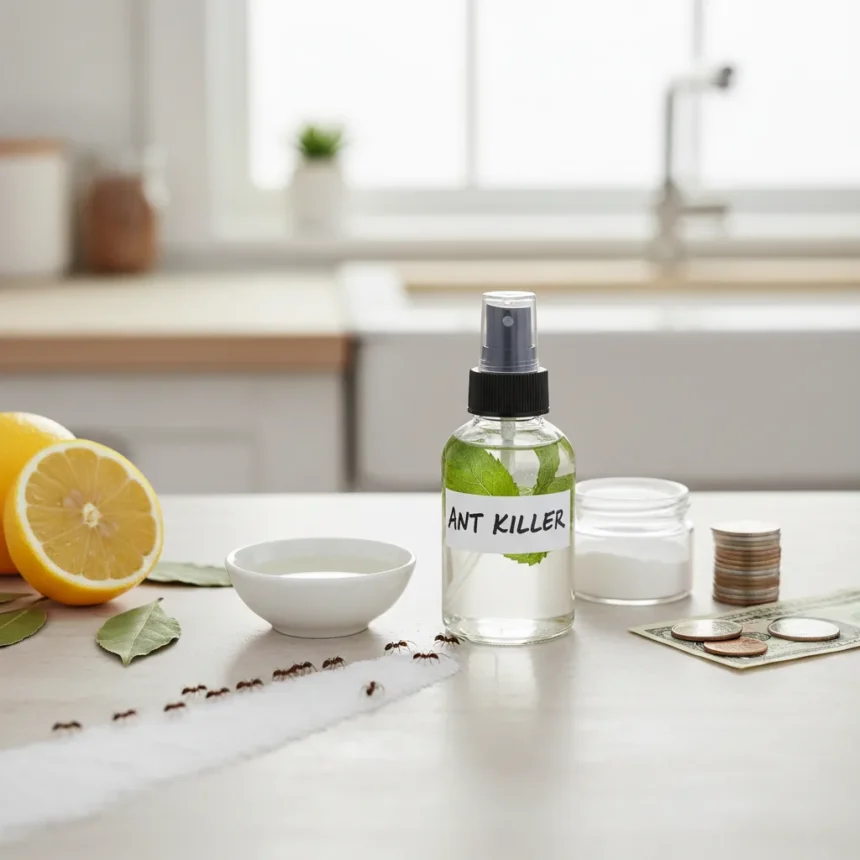
Natural ant control doesn’t require expensive sprays or toxic chemicals—one homeowner discovered a 50-cent solution that stopped an entire kitchen invasion cold. When ants marched across the countertop in organized trails, the hunt for a fix began, and what worked turned out to be refreshingly simple and affordable.
Key Takeaways
- A natural ant control remedy costs approximately 50 cents to deploy.
- The solution is budget-friendly and avoids synthetic pesticides.
- Effective natural ant control stops ants without harming the household.
- Kitchen invasions can be addressed with common household items.
- Non-toxic approaches appeal to families with pets or young children.
Why natural ant control matters for your home
Ant invasions are one of the most common household pest problems, especially in kitchens where food and water sources attract foraging colonies. Traditional chemical pesticides work, but they come with downsides: toxicity concerns for children and pets, lingering chemical odors, and cost. Natural ant control sidesteps these issues entirely. When a homeowner faced an active ant trail in their kitchen, the decision to try a natural remedy instead of reaching for commercial sprays made sense—and the results proved the approach was worth the gamble.
The appeal of natural ant control extends beyond safety. Budget-conscious homeowners appreciate solutions that cost mere cents rather than dollars. A remedy priced at roughly 50 cents is accessible to nearly everyone, removing the excuse that pest management is too expensive. This democratization of pest control means families can act quickly when ants appear, rather than tolerating the problem or delaying treatment until they can afford professional services.
How natural ant control compares to conventional methods
Conventional ant control typically relies on synthetic insecticides, either applied as sprays, baits, or perimeter treatments. These products often cost between 5 and 20 dollars per application and may require repeat treatments over weeks. They also carry label warnings about ventilation, pet exposure, and skin contact. Natural ant control methods, by contrast, use ingredients already present in most homes—making them safer for families and pets while costing a fraction as much.


Pest experts have cautioned against certain amateur approaches, such as squashing ants or pouring liquids down drains, which can damage plumbing or simply scatter the colony rather than eliminate it. A thoughtful natural ant control strategy avoids these traps. The 50-cent remedy that stopped one homeowner’s invasion represents a middle ground: effective enough to halt the problem, safe enough to use around food preparation areas, and cheap enough to repeat if needed.
What makes natural ant control effective
The most successful natural ant control approaches target the colony’s communication and food supply. Ants navigate using pheromone trails—chemical signals they lay down as they forage. Disrupting these trails or making the food source unappealing breaks the colony’s organization. A well-designed natural ant control method interferes with these mechanisms using ingredients ants actively avoid or cannot process. At 50 cents per application, such a remedy is both affordable and repeatable, allowing homeowners to reapply without guilt or budget strain.


Natural ant control also works because it addresses the root cause rather than just the visible ants. Killing the ants you see does nothing to stop the colony from sending more foragers. Effective solutions disrupt recruitment, making the kitchen an undesirable location for the colony to continue searching. This is why natural ant control that targets behavior—rather than just killing individual ants—tends to produce faster, more lasting results than reactive spraying.
Is natural ant control worth trying before calling professionals?
For minor to moderate invasions, natural ant control should be your first step. The financial risk is negligible at 50 cents, and the time investment is minimal. If the remedy works, you’ve solved the problem for pocket change. If it doesn’t, you’ve lost nothing and gained information about what your particular ant species ignores. Only after natural ant control fails should you escalate to professional pest control services, which cost significantly more.
Timing matters with natural ant control. The sooner you intervene after spotting the first trail, the easier the problem is to solve. Ants establish stronger colonies and recruit more foragers as days pass. A prompt natural ant control response can stop an invasion before it becomes entrenched in your kitchen ecosystem.
FAQ
What is the cheapest way to get rid of ants in the kitchen?
A natural ant control remedy costing around 50 cents is among the cheapest options available. This approach uses common household items and avoids the cost of commercial pesticides or professional extermination services, making it ideal for budget-conscious homeowners.



Does natural ant control work as well as chemical sprays?
Natural ant control can be just as effective as chemical sprays when applied correctly, especially for smaller invasions. The advantage is safety and cost; the trade-off is that some severe infestations may require professional intervention. For most kitchen invasions, natural methods stop the problem without the downsides of synthetic chemicals.
How long does natural ant control take to work?
Results from natural ant control can appear within hours to a few days, depending on the remedy and the size of the colony. The 50-cent solution that stopped one homeowner’s invasion produced visible results quickly enough to be considered effective by household pest management standards.
Ant invasions feel urgent, but they’re also solvable without expensive or toxic interventions. A natural ant control approach costing 50 cents offers homeowners an immediate, affordable, and safe way to reclaim their kitchen. The next time you spot an ant trail, you’ll know that relief is just cents away.
Edited by the All Things Geek team.
Source: Tom's Guide




