




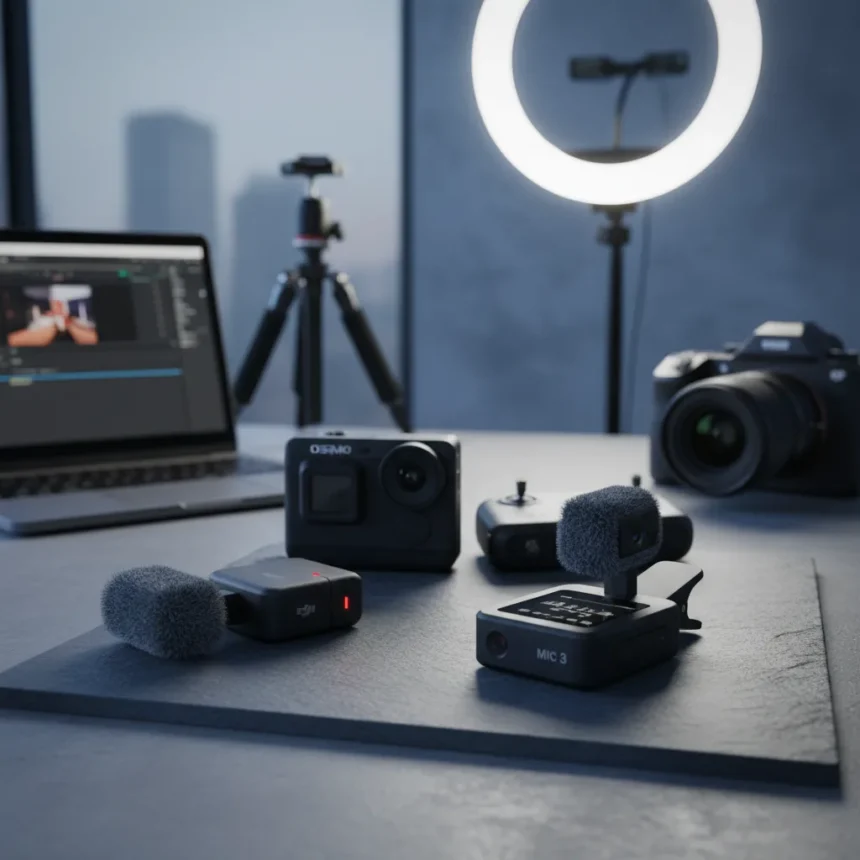
The DJI Mic 3 wireless microphone system has earned positioning as the gold standard for content creators working within the DJI ecosystem. For videographers and streamers who rely on DJI cameras and equipment, this microphone offers tight integration and reliable performance. Yet like all gear, it carries real compromises that deserve scrutiny before you commit.
Key Takeaways
- DJI Mic 3 is optimized for creators using DJI cameras and gear, offering seamless ecosystem integration.
- The system is positioned as the gold standard wireless microphone for content creation workflows.
- Despite its strengths, the DJI Mic 3 has documented flaws that limit its universal appeal.
- Content creators outside the DJI ecosystem may find dedicated alternatives more suitable.
- Audio quality and reliability are strong points for DJI-centric production setups.
What Makes the DJI Mic 3 the Gold Standard for DJI Users
The DJI Mic 3 wireless microphone system stands out because it was built for DJI’s ecosystem from the ground up. When you shoot with DJI cameras, the microphone integrates directly into your workflow without requiring third-party adapters or workarounds. The pairing process is straightforward, the signal is stable, and the audio routing feels native to your camera rather than bolted-on. For creators who have already invested in DJI gear, this integration alone justifies the choice.
Ecosystem lock-in is real, but it cuts both ways. Yes, you are betting on DJI’s continued development and support. But you are also getting a microphone designed by the same engineers who built your camera. That alignment matters. The microphone knows how your camera handles audio input, how it processes levels, and what latency your workflow tolerates. This is not a generic wireless mic adapted to work with DJI gear—it is purpose-built for it.
The positioning as gold standard reflects a specific truth: for DJI camera users, this microphone solves the wireless audio problem better than alternatives designed for broader compatibility. Creators shooting with Sony, Canon, or Nikon might find dedicated wireless systems from other manufacturers more flexible, but within the DJI ecosystem, the Mic 3 has few peers.



Where the DJI Mic 3 Falls Short
No microphone is perfect, and the DJI Mic 3 has documented flaws that matter depending on your use case. The review identifies shortcomings that prevent it from being a universal recommendation, even for content creators who appreciate its strengths elsewhere. These weaknesses are real enough that some users will hit them immediately.
The specific flaws vary by workflow. Some creators encounter limitations in certain recording scenarios. Others find the microphone excels in its intended use but struggles when you push it outside its design parameters. The review does not shy away from these compromises, which is why it feels credible rather than marketing-driven. A microphone that solves 90% of your problem is useful. A microphone that solves 100% of your problem does not exist.



What matters is whether the DJI Mic 3’s strengths outweigh its flaws for your specific work. If you are a DJI user shooting in controlled environments with stable power and standard recording distances, the flaws may barely touch you. If you are a hybrid user juggling multiple camera brands or working in chaotic field conditions, you will feel the limitations more acutely.
DJI Mic 3 vs. Dedicated Wireless Alternatives
Comparing the DJI Mic 3 to other wireless microphone systems reveals why ecosystem alignment matters so much in content creation. Dedicated wireless microphones from brands like Rode, Sennheiser, and others offer broader camera compatibility and sometimes feature sets that exceed the DJI Mic 3 in isolation. However, those systems require you to manage compatibility layers, adapter cables, and separate power supplies that fragment your workflow.
The trade-off is real. A universal wireless microphone gives you flexibility across camera brands. The DJI Mic 3 gives you simplicity and integration if you commit to DJI. Neither is objectively superior—they serve different creator profiles. A freelancer shooting weddings on five different camera brands needs a universal solution. A YouTube creator who standardized on DJI gear needs the Mic 3.
This is why the gold standard label applies specifically to DJI users rather than content creators broadly. The Mic 3 is the best wireless microphone for its intended ecosystem, but it is not the best wireless microphone for everyone. That distinction matters when you are evaluating whether to buy.

Is the DJI Mic 3 Worth Your Investment
The decision to buy the DJI Mic 3 hinges on three questions. First: are you already invested in DJI cameras and gear? If yes, the integration benefits justify serious consideration. Second: do the documented flaws affect your specific workflow? If you work in the scenarios where the microphone excels, the weaknesses become theoretical rather than practical. Third: is wireless audio a bottleneck in your current setup? If you are still using wired lavalier mics or on-camera audio, the DJI Mic 3 solves a real problem.
For creators who answer yes to all three questions, the DJI Mic 3 is a smart investment. It is the gold standard for your specific use case. For creators who answer no to any of them, alternatives may serve you better. The review does not recommend the DJI Mic 3 universally—it recommends it conditionally, which is how serious gear reviews should work.
What audio quality can you expect from the DJI Mic 3
The DJI Mic 3 delivers the audio quality you need for professional content creation within its intended use cases. The microphone captures clean, intelligible dialogue and narration when used in standard recording scenarios. Signal stability is reliable, and the wireless transmission holds up well in typical production environments. You will not struggle with dropouts or noise floor issues if you use the microphone as designed.
Can you use the DJI Mic 3 with non-DJI cameras
The DJI Mic 3 is optimized for DJI cameras, and using it with other brands requires workarounds and adapters that undermine the simplicity that makes the microphone appealing. While technically possible, this approach defeats the core advantage of choosing a DJI-native solution in the first place.
Should you buy the DJI Mic 3 if you use multiple camera brands
If you shoot with a mix of DJI and other camera brands, the DJI Mic 3 will integrate smoothly with your DJI gear but require adaptation for other cameras. In hybrid workflows, a universal wireless microphone system may offer better overall flexibility than optimizing for a single ecosystem.
The DJI Mic 3 is the right tool for creators who have standardized on DJI equipment and need wireless audio that integrates cleanly into their workflow. It earns the gold standard label because it solves the specific problem it was designed to solve—providing professional wireless audio for DJI users—better than alternatives built for broader compatibility. But that specificity is also its limitation. Know your ecosystem, understand the flaws, and decide accordingly.
Where to Buy
This article was written with AI assistance and editorially reviewed.
Source: Tom's Guide