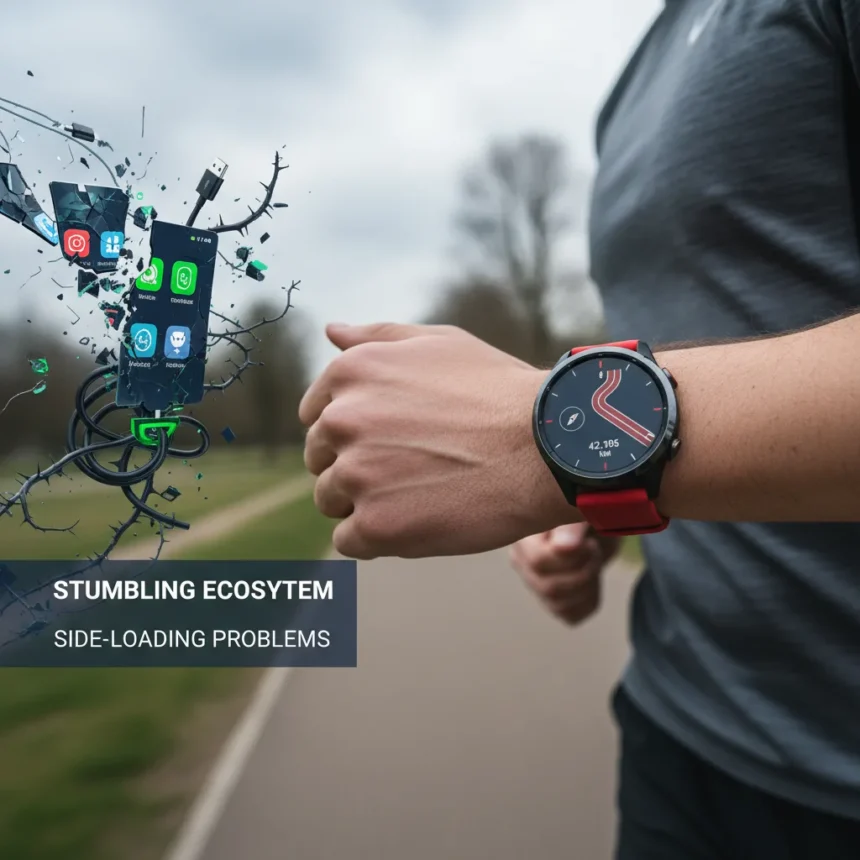
The Huawei Watch GT Runner 2 is a specialist running watch designed for serious road racers, especially those chasing marathon personal bests. Huawei’s latest running tool combines a lightweight, premium design with a revamped GPS system and intelligent marathon coaching features—but its appeal crumbles the moment you try to expand beyond Huawei’s walled ecosystem.
Key Takeaways
- Revamped 3D GPS antenna with ring design improves accuracy in tunnels and shaded areas.
- Intelligent Marathon Mode offers dynamic pace guidance, race strategies, and refuelling reminders for 26.2-mile races.
- AMOLED display remains bright and readable mid-run without draining battery.
- GPS accuracy tested within 30 meters of Garmin Epix Pro on 5.4km runs.
- Side-loading ecosystem problems limit app availability and smartwatch functionality.
The GPS Accuracy Question
Huawei claims the Watch GT Runner 2’s new antenna system delivers superior GPS tracking compared to premium Garmin watches, but independent verification remains thin. In direct testing against the Garmin Epix Pro on a 5.4km run, the Huawei showed a 30-meter distance variation and 8 bpm heart rate difference—close enough for recreational runners, though not definitively superior. The watch kept pace with road crossings and object navigation in Huawei Health app, with minor building clipping attributed to map overlay issues rather than antenna problems.
This matters because GPS accuracy is everything for serious runners. A 30-meter variance over 5 kilometers sounds trivial until you’re chasing a sub-3-hour marathon and every meter counts. The watch performs admirably, but Huawei’s internal testing claims should be taken with skepticism—the brand has a history of inflating performance metrics in controlled environments.
Marathon Mode Changes Everything
The Intelligent Marathon Mode (IMM) is where the Watch GT Runner 2 genuinely differentiates itself from Garmin’s more generic training tools. This all-in-one service provides dynamic pace guidance that adjusts in real-time, customized training routines, race strategies, and smart refuelling reminders specifically designed for 26.2-mile efforts. For marathon runners, this is the feature that justifies the purchase—it’s co-created with elite runner Eliud Kipchoge, lending credibility that Garmin’s algorithmic approaches sometimes lack.


The AMOLED display shines here too. Unlike competitors that rely on always-on modes to drain battery, the Watch GT Runner 2’s accelerometer detects wrist raises reliably, keeping the screen bright and crisp when you need it most during a race. Mid-run, even in direct sunlight, readability never becomes an issue.
The Ecosystem Trap
Here’s where the Watch GT Runner 2 stumbles hard. Huawei’s software leans smartwatch-first with solid training tools, but the ecosystem remains hobbled by side-loading problems. Want to install a third-party running app? Good luck. The watch simply doesn’t have the app library that Garmin or Apple Watch ecosystems offer. This limitation becomes increasingly frustrating if you use multiple fitness platforms or want to experiment with specialized training apps.



The original Watch GT Runner faced similar criticism but delivered a solid mid-range alternative with impressive battery life. The GT Runner 2 improves on that foundation with better GPS and marathon-specific features, but it doesn’t solve the fundamental problem: Huawei remains locked out of major app ecosystems that runners increasingly depend on.
How It Stacks Against Garmin
The Garmin Epix Pro remains the safer choice for runners who want a complete ecosystem. While the Watch GT Runner 2 matches Garmin’s GPS accuracy and arguably surpasses it in display quality and lightness, Garmin’s app library and training community are vastly superior. The Fenix 8 offers similar ecosystem depth with more rugged design. For runners who live entirely within Huawei Health and don’t need third-party integrations, the GT Runner 2 is genuinely compelling—lighter, brighter, and cheaper than equivalent Garmin flagships. For everyone else, the ecosystem walls become a dealbreaker.
Should You Buy the Huawei Watch GT Runner 2?
If you’re a marathon-focused runner willing to commit entirely to Huawei’s ecosystem, yes. The Intelligent Marathon Mode, GPS accuracy, and display quality make this a seriously impressive comeback for Huawei’s performance line. The launch offer of a £30 discount and free watch strap sweetens the deal. But if you value flexibility, third-party app support, or plan to switch ecosystems later, Garmin’s ecosystem advantage outweighs the GT Runner 2’s hardware strengths. This watch works best for runners who’ve already chosen Huawei and want the most specialized tool possible within that constraint.
Does the Huawei Watch GT Runner 2 have always-on display?
No. The watch uses an accelerometer to detect wrist raises and activate the AMOLED display on demand, preserving battery life while maintaining readability during runs. This approach works reliably and avoids the constant drain of always-on mode.



How does the Huawei Watch GT Runner 2 compare to the original GT Runner?
The GT Runner 2 improves GPS accuracy with its revamped 3D antenna array and adds the new Intelligent Marathon Mode for race-specific coaching. The original was a striking mid-range watch with excellent battery life but sometimes inaccurate GPS. The sequel fixes the GPS weakness and adds professional-level marathon features.
Is the Huawei Watch GT Runner 2 available in the US?
The original Watch GT Runner had no US release noted, and current availability details for the GT Runner 2 remain limited to regional launch offers. Check Huawei’s official channels for your region’s availability and pricing.
The Huawei Watch GT Runner 2 proves that specialist hardware can rival premium Garmin watches when focused on a single discipline. For marathon runners committed to Huawei’s ecosystem, it’s a genuine contender. For everyone else, the ecosystem walls make it a hard sell—even if the watch itself is genuinely impressive.
Edited by the All Things Geek team.
Source: TechRadar