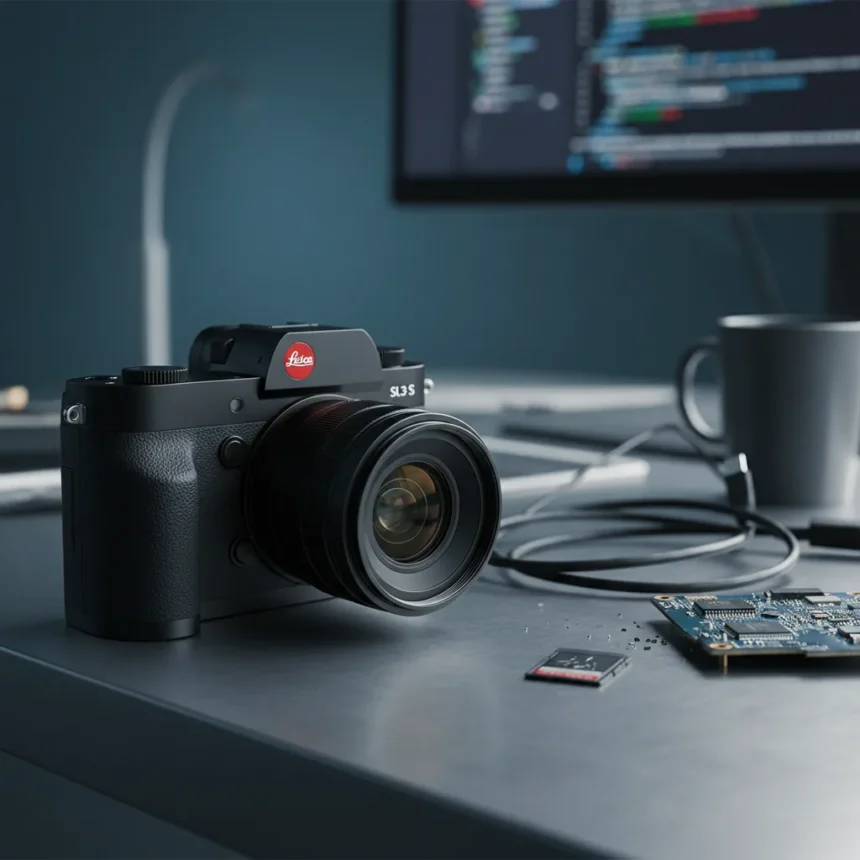
The Leica SL3-S is a mirrorless camera that turns heads before you even power it on. Its minimalist titanium body and obsessive attention to industrial design make it one of the most visually striking cameras available today. But raw beauty alone does not make a great camera, and the Leica SL3-S proves that lesson in three compelling ways—and stumbles in one that matters.
Key Takeaways
- The Leica SL3-S combines exceptional industrial design with solid photographic performance.
- Build quality and materials feel premium, justifying the camera’s high-end positioning.
- Three standout strengths make it genuinely desirable for photographers who value craftsmanship.
- One significant limitation creates real friction in daily shooting workflows.
- The SL3-S targets a niche: photographers willing to pay for design and brand heritage.
What Makes the Leica SL3-S Worth Considering
The Leica SL3-S delivers three core strengths that explain why photographers become genuinely attached to this camera. First, the industrial design is not just attractive—it is functionally thoughtful. Every dial, every button, every edge serves a purpose. The titanium construction feels substantial in your hands, not lightweight or plasticky. This is a camera built to last a decade, not replaced every two years.
Second, the camera’s overall performance across the board inspires confidence. The 24MP sensor and 6K Open Gate video capabilities give you genuine creative flexibility. Whether you are shooting stills or video, the Leica SL3-S handles both with competence and precision. Third, the ecosystem integration works smoothly. If you already own Leica glass or are willing to invest in their lens lineup, the system feels cohesive and purpose-built rather than patched together.
These three strengths combine to create something rare: a camera that feels like it was designed by people who actually use cameras, not by a committee chasing spec sheets.

The One Thing That Ruins the Experience
Here is where the Leica SL3-S stumbles badly. The user interface is frustratingly unintuitive. Menu navigation feels like it was designed by someone determined to hide every setting behind three layers of submenus. Changing basic parameters that should take two seconds turns into a hunt through cryptic categories. If you are coming from any other modern mirrorless camera—Canon, Sony, Nikon—you will spend the first week fighting the interface instead of shooting.
This is not a minor inconvenience. It is a constant friction point that undermines the camera’s otherwise excellent hardware. You buy a Leica SL3-S for its beautiful design and performance, then spend half your shoot day squinting at confusing menu options. The gap between the hardware’s elegance and the software’s usability is jarring.



Leica SL3-S vs. the Competition
Compared to other premium mirrorless options in this price range, the Leica SL3-S occupies a unique position. Sony and Canon offer cameras with more intuitive interfaces and faster autofocus systems. Fujifilm delivers more character and creative tools. But none of them match the Leica’s sheer industrial presence or the prestige of the Leica name. If you are buying a Leica SL3-S, you are not just buying a tool—you are buying into a 180-year-old brand with genuine photographic heritage.
That said, the interface problem is not unique to Leica, but the company’s refusal to modernize it is. Other manufacturers have learned that photographers want powerful tools that are also accessible. Leica seems to believe that difficulty equals sophistication.
Should You Buy the Leica SL3-S?
Buy it if you value design and brand heritage above all else. Buy it if you are willing to spend an evening learning the menu system and then never think about it again. Buy it if you shoot slowly and deliberately, where every frame matters more than speed. Do not buy it if you need a camera that gets out of your way, or if you are upgrading from a more user-friendly system and expect immediate comfort.
The Leica SL3-S is a photographer’s camera for a specific type of photographer: one who sees the camera itself as part of the creative process, not just a tool. That photographer will forgive the interface. Everyone else will find it maddening.



What makes the Leica SL3-S different from other mirrorless cameras?
The Leica SL3-S combines industrial design excellence with a 24MP sensor and 6K Open Gate video in a way that feels intentional rather than compromised. Most competitors prioritize either performance specs or user experience. The Leica SL3-S prioritizes the object itself—how it feels, how it looks, what it says about the person holding it.
Is the Leica SL3-S menu system really that bad?
Yes. If you are accustomed to Sony, Canon, or Nikon interfaces, you will find it significantly less intuitive. The learning curve is real, and the menu structure does not follow modern conventions. However, once you memorize the layout, it becomes second nature. The question is whether you want to spend that time.
Who should actually buy the Leica SL3-S?
Photographers who view their camera as a design object and a creative tool in equal measure. Leica collectors expanding their system. Anyone who has used Leica glass and wants a body that justifies the investment. Professionals who bill enough that the premium price is negligible and who value the Leica name on their work. If you need a practical, user-friendly workhorse, look elsewhere.
The Leica SL3-S is a beautiful camera that makes shooting feel like a deliberate, considered act. That is its strength and its curse. You are paying for that aesthetic and philosophical stance as much as you are paying for the sensor and lens mount. Whether that trade-off makes sense depends entirely on what you value in a camera.
Where to Buy
Edited by the All Things Geek team.
Source: Tom's Guide