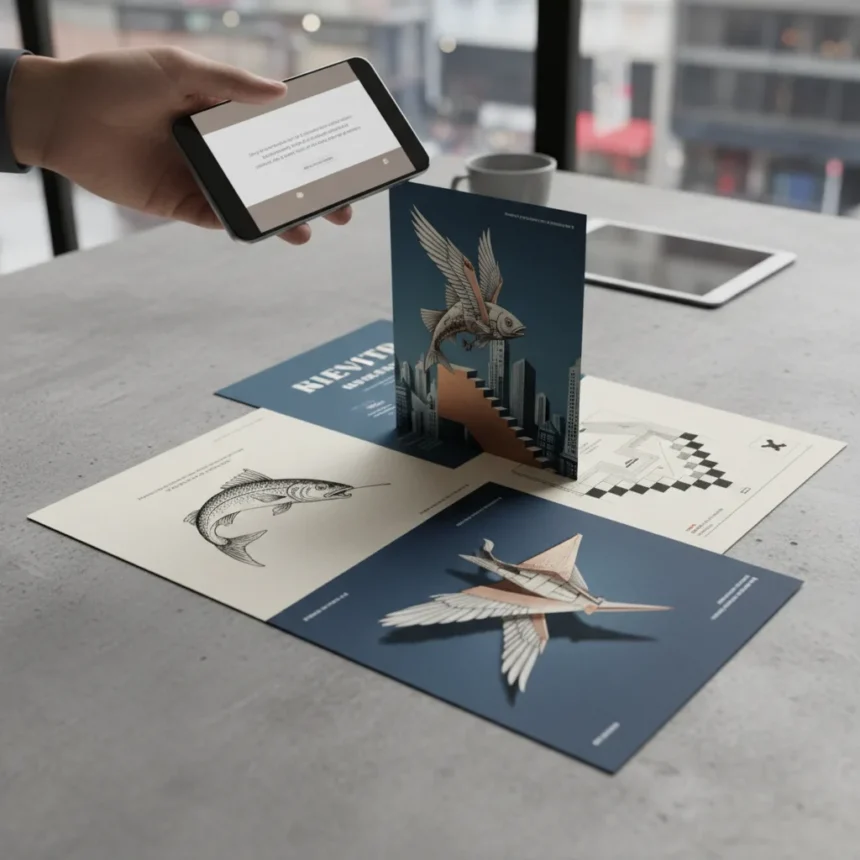
Print advertising visual design continues to demonstrate why the medium refuses to fade despite decades of digital disruption. While marketers obsess over click-through rates and impressions, print campaigns built on clever visual thinking still capture attention in ways that feel almost impossible to replicate on screens.
Key Takeaways
- Print advertising visual design relies on spatial composition and physical presence that digital ads cannot replicate.
- Single-image campaigns that communicate multiple product benefits show sophisticated creative thinking.
- Clever visual metaphors in print create memorable brand moments that outlast typical digital ad exposure.
- Print’s permanence forces designers to think more carefully about composition than throwaway digital content.
- The tactile nature of print advertising makes unexpected visual solutions feel more impactful to audiences.
Why Print Advertising Visual Design Still Matters
Print advertising visual design succeeds because it demands constraint and clarity. A digital ad can pile on animations, autoplay video, and layered messaging. A print ad has one moment to land. This limitation forces creative teams to think harder about what actually matters—and that discipline shows. The best print campaigns solve visual puzzles: how do you communicate two distinct product benefits in a single photograph without looking cluttered or confusing?
The permanence of print changes how audiences process messages. A billboard stays put. A magazine spread sits on a coffee table for weeks. This extended exposure window means designers cannot rely on repetition to build familiarity—they need the initial visual impact to sustain interest through multiple viewings. A clever print ad reveals new layers of meaning the second or third time someone looks at it.
The Power of Single-Image Storytelling
Print advertising visual design often achieves its greatest impact through elegant simplicity. When a single photograph or illustration must convey multiple ideas simultaneously, designers lean on visual metaphor, scale relationships, and compositional balance. The constraint forces innovation that multi-layered digital experiences sometimes avoid.

Consider how print campaigns use negative space, color contrast, and object placement to guide the eye and control interpretation. A digital ad might use animation or sequential reveals to walk viewers through a concept step by step. Print must accomplish the same journey in one static frame. This difference in medium creates fundamentally different design problems—and often produces more memorable solutions.
Print Advertising Visual Design vs. Digital Alternatives
Digital advertising excels at targeting, measurement, and real-time optimization. Print advertising visual design wins on memorability and creative constraint. A digital campaign can A/B test ten variations and optimize toward the highest click rate. A print campaign must commit to a single visual approach, which means the creative thinking has to be sharper from the start.



The tactile dimension of print also matters more than marketers acknowledge. Holding a magazine, feeling paper stock, encountering an unexpected image in physical space—these sensory moments create stronger memory encoding than scrolling past a banner ad. Print advertising visual design leverages this advantage by creating visual moments that reward close attention and reward the physical act of engaging with the medium.
Why Clever Visual Thinking Drives Better Results
Brands that invest in sophisticated print advertising visual design often see outsized returns because the work stands out in an increasingly digital media landscape. When audiences expect ads to be everywhere online, a carefully crafted print campaign feels like a gift rather than an interruption. The visual sophistication signals that a brand respects its audience’s intelligence.
Print advertising visual design also creates shareable moments. People photograph clever ads and post them online, extending reach through earned media. A digital ad rarely gets screenshot and shared because it was so good—but a print ad with a brilliant visual concept absolutely will. This secondary distribution channel represents value that traditional media metrics often fail to capture.
The Future of Print Advertising Visual Design
Print advertising is not disappearing. Instead, it is evolving into a premium medium for brands willing to invest in genuine creative thinking. As digital advertising becomes increasingly cluttered and algorithm-driven, print offers a sanctuary for visual storytelling that demands and rewards craftsmanship.



The most successful print campaigns of recent years share a common trait: they treat the medium with respect. Rather than translating digital concepts into print, smart creative teams design specifically for print’s constraints and strengths. They understand that print advertising visual design is not a secondary channel—it is a distinct discipline with its own rules, opportunities, and potential for impact.
How do designers create effective print advertising visual design?
Effective print advertising visual design starts with constraint. Designers identify the single most important message, then explore how to communicate it through visual composition, color, typography, and scale. The best print ads often feature unexpected juxtapositions or clever use of white space that makes the message impossible to miss.
Can print advertising compete with digital on cost and reach?
Print advertising costs more per impression than digital, but the quality of attention and memorability often justifies the investment. Print advertising visual design targets audiences willing to engage deeply with content, which can deliver better conversion rates despite smaller reach numbers. The comparison depends on campaign goals rather than simple cost metrics.
Why do some brands still invest heavily in print advertising?
Brands invest in print advertising visual design because it builds brand prestige, creates memorable moments, and reaches audiences in contexts where they are less distracted than online. Print campaigns also generate owned media through social sharing and earned press coverage, multiplying their effective reach beyond the initial distribution.
Print advertising visual design proves that creativity and constraint are not enemies—they are partners. In a media landscape drowning in infinite content, the discipline to say one thing beautifully often outperforms the temptation to say everything everywhere. That is why clever print campaigns endure while most digital ads vanish without a trace.
Edited by the All Things Geek team.
Source: Creativebloq