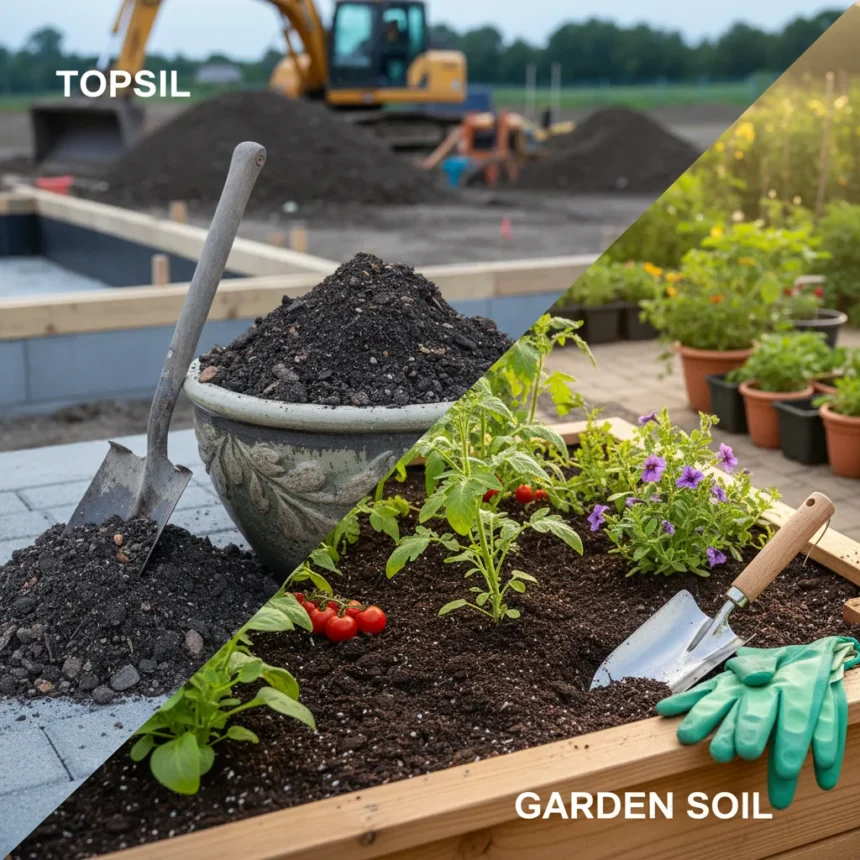
Topsoil vs garden soil—most homeowners treat them as interchangeable. They’re not. One is natural earth; the other is engineered for planting. Buying the wrong one can sabotage your entire garden before you even plant a seed, and it wastes money you could spend elsewhere.
Key Takeaways
- Topsoil is natural, unmodified earth; garden soil is topsoil mixed with compost and fertilizers.
- Use topsoil for leveling, grading, or filling low spots; use garden soil for planting beds and containers.
- Topsoil costs $2-5 per 40-lb bag; garden soil runs $5-10, making project type crucial to your budget.
- 40% of DIY gardeners misuse topsoil in planting beds, leading to poor drainage and nutrient deficiencies.
- Ideal garden soil pH is 6.0-7.0; test your existing soil before amending.
What Is Topsoil vs Garden Soil?
Topsoil is the uppermost layer of naturally occurring soil, typically 5-12 inches deep, rich in organic matter, nutrients, and microorganisms that support plant life. Garden soil, by contrast, is a manufactured product—topsoil blended with compost, fertilizers, and soil amendments specifically formulated for direct planting. Think of it this way: topsoil is what Mother Nature provides; garden soil is what we enhance for planting.
The distinction matters because topsoil lacks the added nutrients and structural amendments that garden soil contains. Topsoil may compact over time, creating drainage problems. Garden soil improves both drainage and aeration, making it ideal for vegetable beds, flower gardens, and container planting. But that engineering comes at a cost—garden soil runs roughly double the price of topsoil per bag, so using it for large-scale filling is wasteful.
The Most Common Soil Mistake Gardeners Make
Here’s where most DIY landscapers go wrong: they buy cheap topsoil for their new planting beds. It seems logical until plants start struggling. Topsoil alone provides insufficient nutrients and compacts easily, strangling root systems and trapping water. The result is poor drainage, fungal issues, and stunted growth. Conversely, using garden soil to level a large yard or fill a berm is throwing money away—you’re paying for nutrients and amendments you don’t need.


The wrong soil can doom your plants before they even sprout, so always match your soil to your project’s goal. If you’re building a raised bed, garden soil is the right call. If you’re grading a slope or filling a low spot, topsoil does the job cheaper. Mixing them—a 50/50 blend of topsoil and garden soil—works for custom beds where you want some structure and some fertility without the full premium price tag.
How to Choose the Right Soil for Your Project
Start by assessing what you’re actually doing. Grading? Filling? Planting? Use topsoil for grading, filling low spots, or creating berms. Use garden soil for new garden beds or containers. Next, check the bag labels carefully. Topsoil lists no additives; garden soil explicitly names compost and fertilizer content.

Before you buy anything, test your existing soil. Dig a hole, grab a handful of moist soil, and squeeze it. If it forms a ball that crumbles easily, you have loamy soil—the gold standard. If it’s sticky (clay-heavy) or falls apart immediately (sandy), you’ll need amendments. Ideal garden soil pH sits between 6.0 and 7.0, so consider a simple pH test from any garden center.
When sourcing soil, buy from reputable suppliers. Screened topsoil is finer and weed-free, whereas unscreened bulk topsoil may contain rocks and weed seeds. Prices vary by region and supplier—topsoil typically runs $2-5 per 40-lb bag or $20-40 per cubic yard in bulk, while garden soil costs $5-10 per bag or $40-60 per cubic yard. Organic garden soil variants run higher, around $7-12 per bag, but offer richer microbial life.
Building a New Garden Bed: Step-by-Step
Once you’ve chosen garden soil, here’s how to install it properly. First, till your existing soil 6-8 inches deep to break up compaction and integrate amendments. Then spread 4-6 inches of garden soil on top of the tilled area. Mix thoroughly into your native soil—this integration matters more than simply layering. Finally, water the bed and let it settle for a few days before planting.
This method blends your existing soil with the nutrient-rich garden soil, creating a stable root zone that drains well and retains fertility. Skipping the tilling step or simply dumping garden soil on top of hard ground leads to poor results—roots can’t penetrate, and water pools.


Topsoil vs Garden Soil vs Other Soil Products
Potting mix is a lighter, sterile alternative to garden soil for containers and indoor plants. It drains better but is nutrient-poor without added fertilizer, making it unsuitable for outdoor beds. Compost is an organic amendment you can mix with topsoil in a 1:3 ratio instead of buying pre-mixed garden soil—this approach is cheaper for bulk projects and gives you control over the blend. Fill dirt is the budget option, but it’s nutrient-deficient and rocky, suitable only for non-planting fill work.
Brand-name options like Miracle-Gro Garden Soil ($5-8 per bag) offer nutrient-rich formulations, while generic topsoil at big-box retailers ($2-4 per bag) provides basic fill without additives. For spring planting season, garden soil stock increases at most nurseries and home centers, so availability is highest March through May.
FAQ: Topsoil vs Garden Soil Questions
Can I use topsoil for planting vegetables?
Not without amendment. Topsoil alone lacks sufficient nutrients and compacts easily, leading to poor drainage and stunted growth. Mix it 50/50 with garden soil or compost, or till it into existing soil with garden soil layered on top.
Is bulk topsoil cheaper than bagged?
Yes. Bulk topsoil runs $20-40 per cubic yard versus $2-5 per 40-lb bag (roughly $80-160 per cubic yard bagged). Bulk delivery requires a $50-100 minimum order but saves money for large projects. For small raised beds, bags are more practical.
What pH should my garden soil be?
Aim for 6.0-7.0, which is slightly acidic to neutral and optimal for most vegetables and ornamentals. Test your existing soil with a kit from any garden center before amending. If your soil is too acidic or alkaline, garden soil amendments can help, but testing first prevents wasted effort.
The bottom line: stop treating topsoil and garden soil as the same product. They’re fundamentally different tools for different jobs. Topsoil fills and grades; garden soil plants and nourishes. Match the soil to your project, test your existing earth, and buy screened products from reputable suppliers. Your spring garden will thank you for the precision.
Where to Buy
My soil storeMySoil Soil Test Kit$31shop now | 17% OFFFelco F2 Pruning Shears$71$86shop now | Amazing StuffGarden Gloves$9.99shop now | 17% OFFLegigo6-Pack Tomato Cage for Garden Plant Support- Up to 48inch $27.54$32.99shop now
Edited by the All Things Geek team.
Source: Tom's Guide