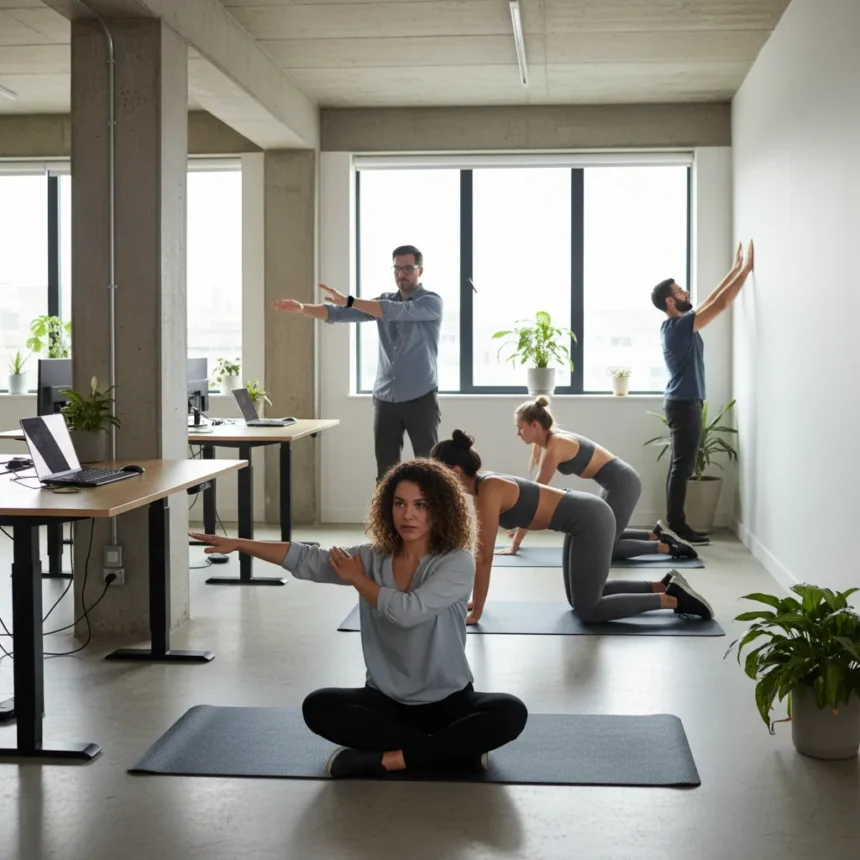
Desk worker mobility exercises are the antidote to hunching, shoulder tension, and spinal stiffness that plague anyone sitting at a computer for hours. Child’s pose gets recommended constantly, but it is not enough on its own. A 2017 study found Child’s pose lowers blood pressure, yet static stretching misses the dynamic, multi-directional movement your shoulders and spine actually need to stay mobile.
Key Takeaways
- Child’s pose is beneficial but insufficient for desk-induced upper-body stiffness.
- Dynamic mobility work through full range of motion outperforms static stretching for desk workers.
- Shoulders are the body’s most mobile joints and require multi-directional movement to stay strong.
- A 10-minute routine using four targeted exercises can reverse desk hunch and improve posture.
- Cat-cow stretches offer superior spinal mobility compared to Child’s pose alone.
Why Desk Worker Mobility Exercises Beat Static Stretching
The problem with relying on Child’s pose is architectural. Static holds do not move your spine and shoulders through their full range of motion. Desk workers spend eight-plus hours in flexion—hunched forward—which tightens the chest, rounds the shoulders, and compresses the spine. Child’s pose reinforces that same flexed position rather than reversing it. Dynamic desk worker mobility exercises work differently. They use active, flowing movement to strengthen and stretch key muscles simultaneously, addressing the actual damage prolonged sitting causes. Your shoulders are your body’s most mobile joints, capable of rotating in multiple planes. They need multi-directional movement to stay strong and functional.
This is where cat-cow stretching enters the conversation. Unlike Child’s pose, cat-cow alternates between spinal flexion (the cat phase) and extension (the cow phase), working your spine through full range for 5-10 repetitions. This dynamic approach reverses the desk hunch while strengthening the muscles that support your spine. A physical therapist working with desk workers confirms this principle: dynamic integration of your trunk and head improves spine and shoulder blade mobility far more effectively than holding a single position.
The Four Desk Worker Mobility Exercises That Actually Work
A focused 10-minute routine using four targeted desk worker mobility exercises can transform your upper body. Roll out a yoga mat and commit to dynamic movement rather than static holds. The exercises are: shoulder opener, chest and shoulder opener, trunk and head integration move, and upright posture support move. Each targets a specific aspect of desk-induced dysfunction.

The shoulder opener ranks as a top-tier anti-desk move. Using light weights, this exercise opens your shoulders and undoes the damage from prolonged sitting. It relieves tension by moving your shoulders through their full range of motion, counteracting the internal rotation that desk work enforces. The chest and shoulder opener targets mobility through your shoulders and chest while encouraging the front of your body to open. This directly counteracts slouching and supports better posture. The trunk and head integration move improves spine and shoulder blade mobility by coordinating your entire upper body, not just isolating one joint. A physical therapist notes this move is excellent for improving spine and shoulder blade mobility while integrating the trunk and head. Finally, the upright posture support move focuses on opening your chest and shoulders to fight the forward slouch that desk sitting creates.
Perform these as dynamic movements, not static holds. Alternate positions for 5-10 repetitions each, similar to cat-cow flexion and extension. This approach works your muscles through full range while building strength and mobility simultaneously.



How Desk Worker Mobility Exercises Compare to Traditional Stretching
Static stretching has its place, but it is not the solution for desk-induced stiffness. Child’s pose, shoulder stretches, and other static holds do not address the root problem: your muscles are tight because they are weak in certain ranges of motion. Dynamic desk worker mobility exercises build strength while improving flexibility, which static stretching alone cannot achieve. The difference matters. A yoga instructor explains that spinal extension moves are a wonderful antidote to desk hunch because they reverse that position while both strengthening and stretching the key muscles that support your spine. Static stretches address only the stretching component.
Cat-cow is the clearest example. This dynamic sequence works your spine through full flexion and extension, 5-10 repetitions per session. It is more effective than Child’s pose because it actively reverses the desk hunch rather than reinforcing it. If you are currently relying on Child’s pose as your primary mobility tool, switching to a dynamic routine will feel immediately different. Your shoulders will feel more open, your spine more resilient, and your posture more upright.
Building a Sustainable Desk Worker Mobility Routine
You do not need an hour in the gym to fix desk-induced stiffness. A 10-minute session works. Roll out your mat, perform the four desk worker mobility exercises dynamically, and alternate positions for 5-10 reps each. Consistency matters more than duration. A quick routine done daily will outperform a longer session done once a week. The goal is to counteract the eight-plus hours of sitting you do daily—even 10 minutes of dynamic movement addresses that imbalance. If you are a beginner returning from injury, or if you are pregnant or postpartum, consult a qualified physical therapist or fitness professional before starting any new mobility routine. Form matters, and a professional can ensure you are moving safely through your full range of motion.
Can I replace Child’s pose entirely?
Child’s pose is fine for relaxation and hip mobility, but it should not be your primary tool for upper-body desk-worker mobility. Replace it with dynamic alternatives like cat-cow and the four targeted exercises above. If you enjoy Child’s pose for breathing and stress relief, keep it—just do not rely on it to fix spinal and shoulder stiffness.



How often should I do these desk worker mobility exercises?
Daily is ideal, especially if you sit at a desk eight-plus hours. A 10-minute routine every morning or evening will reverse desk hunch and maintain shoulder mobility. If daily is not possible, aim for at least three times per week.
Do I need weights for these exercises?
Light weights enhance the shoulder opener, but they are optional. Bodyweight versions of these desk worker mobility exercises work effectively. If you use weights, start light and focus on moving through full range of motion rather than lifting heavy.
Desk worker mobility exercises are not complicated, but they are non-negotiable if you spend your day at a computer. Child’s pose is fine, but dynamic movement through full range is what actually reverses the damage sitting does. Ten minutes of cat-cow, shoulder openers, and integrated trunk work will do more for your spine and shoulders than months of static stretching. Start today, and you will feel the difference by the end of the week.
Edited by the All Things Geek team.
Source: Tom's Guide