






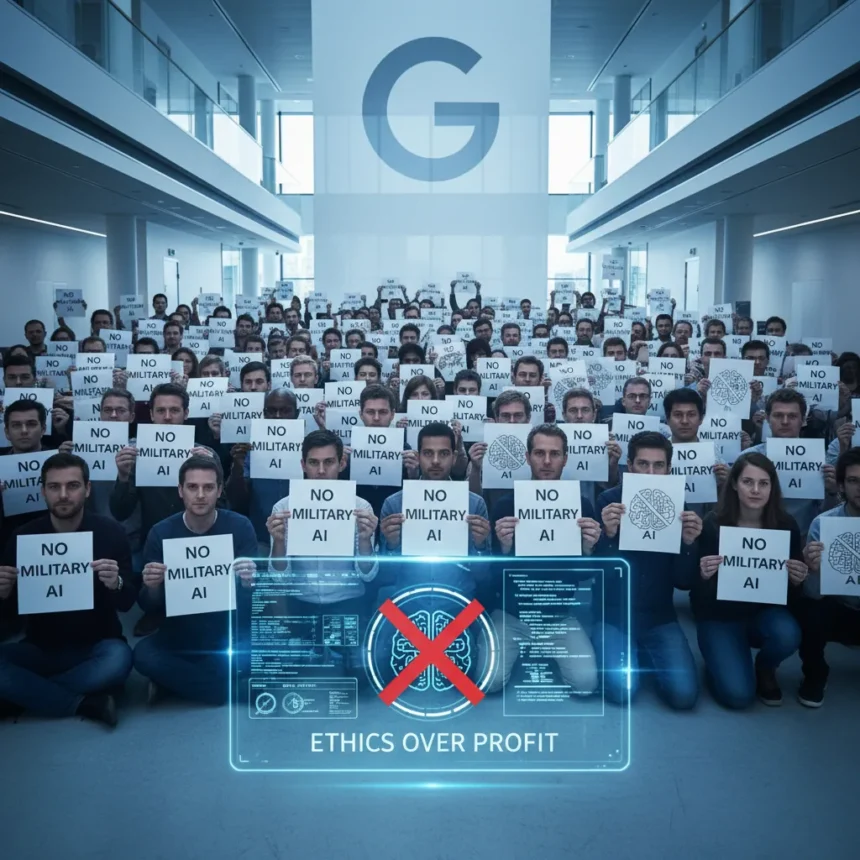
Military AI use has become the flashpoint in a widening conflict between tech workers and their employers over Pentagon contracts. Over 600 Google employees, most working directly on AI systems, have signed an open letter urging CEO Sundar Pichai to reject negotiations that would make Gemini available to the Department of Defense for classified purposes.
Key Takeaways
- 600+ Google employees signed a letter opposing classified military AI use with the Pentagon
- The letter addresses ongoing DOD negotiations to deploy Gemini in classified environments
- Nearly 1,000 employees across Google and OpenAI signed a related solidarity letter
- Google updated its AI Principles last year but language evolved from earlier weapons-use restrictions
- Anthropic refused similar military deals and was designated a Pentagon supply chain risk
Why Google Employees Are Rejecting Military AI Use
The signatories argue that military AI use represents a fundamental breach of ethical responsibility. They contend that their proximity to AI technology creates an obligation to prevent its most dangerous applications. The letter explicitly warns that human lives are already being lost from AI misuse at home and abroad, and that military deployment of these systems would accelerate that harm. Signatories claim that AI systems can centralize power and make critical errors—risks that become catastrophic in military contexts where decisions affect civilian populations.
The timing matters. Google updated its AI Principles last year following 2018 employee protests, establishing a commitment to avoid weapons development. However, the company’s language has shifted from earlier pledges not to pursue developments likely to cause harm. This evolution has left employees concerned that the door is now open to military contracts that the old principles would have explicitly blocked.
The Pentagon’s Pressure Campaign and Anthropic’s Refusal
Google is not alone in facing military contract pressure. The Pentagon has been actively negotiating with multiple AI companies, but Anthropic refused to participate in deals involving domestic mass surveillance or fully autonomous weapons. As retaliation, the Pentagon designated Anthropic a supply chain risk, effectively punishing the company for its ethical stance. Google and OpenAI are now reportedly in similar negotiations, suggesting the Pentagon is determined to secure military-grade AI access across the industry.



Anthropic’s refusal and subsequent designation as a supply chain risk has become a warning signal to other companies. Employees at Google and OpenAI view the Pentagon’s strategy as coercive—use our AI or face consequences. This dynamic has prompted an unusual show of solidarity: nearly 1,000 employees from both Google and OpenAI signed a broader letter titled We Will Not Be Divided, acknowledging that Pentagon pressure is designed to divide companies by making each fear the other will capitulate. The cross-company letter explicitly states that this strategy only works if employees remain isolated.
What Google’s Reputation Is at Stake
The letter warns that accepting military contracts would cause irreparable damage to Google’s reputation, business, and global standing. This is not idle rhetoric. Google spent years building a brand identity around ethical AI development and employee trust. A military deal would contradict that positioning and likely trigger internal exodus and external backlash from customers, partners, and governments wary of US military-aligned tech infrastructure.



The broader context amplifies the stakes. Tech companies are increasingly viewed as extensions of state power. Governments worldwide are scrutinizing whether their data flows through systems designed to serve US military interests. A Google-Pentagon AI deal would confirm those suspicions and potentially trigger regulatory action in Europe, Asia, and other regions where data sovereignty concerns run high.
How This Signals Broader Industry Tensions
The open letter emerges at a critical moment. Google’s AI Principles update last year was meant to settle internal debates about weapons development. Instead, it has created ambiguity. The company promised to avoid weapons, but classified military use occupies a legal gray zone—technically not weapons development, but clearly military application. Employees are calling this distinction a loophole.
The Pentagon’s designation of Anthropic as a supply chain risk is also significant. It signals that the military-industrial complex is willing to punish companies that refuse cooperation, and that it will pursue multiple vendors simultaneously to avoid dependency on any single refusal. This creates a race-to-the-bottom dynamic where the first company to capitulate gains favor and competitive advantage.
Will Google Cave to Pentagon Pressure?
Sundar Pichai faces a genuine dilemma. Rejecting the Pentagon risks losing government contracts and facing retaliation similar to what Anthropic experienced. Accepting creates immediate internal revolt and long-term reputational damage. The fact that 600+ employees felt compelled to sign a public letter suggests internal confidence in their position is high, but also that they fear leadership is already leaning toward acceptance.



The letter’s framing—that employees feel a responsibility to prevent unethical AI use—redefines the relationship between tech workers and their employers. It asserts that employee conscience supersedes corporate profit. Whether that assertion holds depends on whether Pichai prioritizes worker retention and brand trust over military revenue.
Can other tech companies avoid this trap?
The military’s pressure campaign suggests this will not be the last such letter. Any AI company with government contracts faces similar Pentagon requests. Anthropic’s example shows that refusal is possible but comes with real costs. The question for other firms is whether those costs are worth the ethical alignment and employee morale they preserve.
What happens if Google accepts the military deal?
If Google proceeds despite the letter, expect immediate internal backlash and likely departures of senior AI researchers. The company would also face criticism from international governments and human rights organizations. However, the Pentagon would gain a major vendor, and Google would secure lucrative classified contracts. The trade-off is brand damage and employee trust erosion.
Why is Anthropic’s supply chain risk designation significant?
The Pentagon’s move to designate Anthropic a supply chain risk is a warning to other companies that refusal has consequences. It signals that the military is willing to punish ethical stands and that it has other vendors willing to cooperate. This coercive approach is designed to isolate any company that refuses military contracts.
The Google employee letter represents a critical juncture in tech industry ethics. For years, tech workers have protested weapons development and surveillance. Now they are confronting the reality that military AI use exists in a legal gray zone where their employers can claim compliance with ethics policies while enabling military objectives. The outcome of this letter will signal whether employee activism can actually constrain corporate behavior or whether profit and state power will override worker conscience.
This article was written with AI assistance and editorially reviewed.
Source: TechRadar