





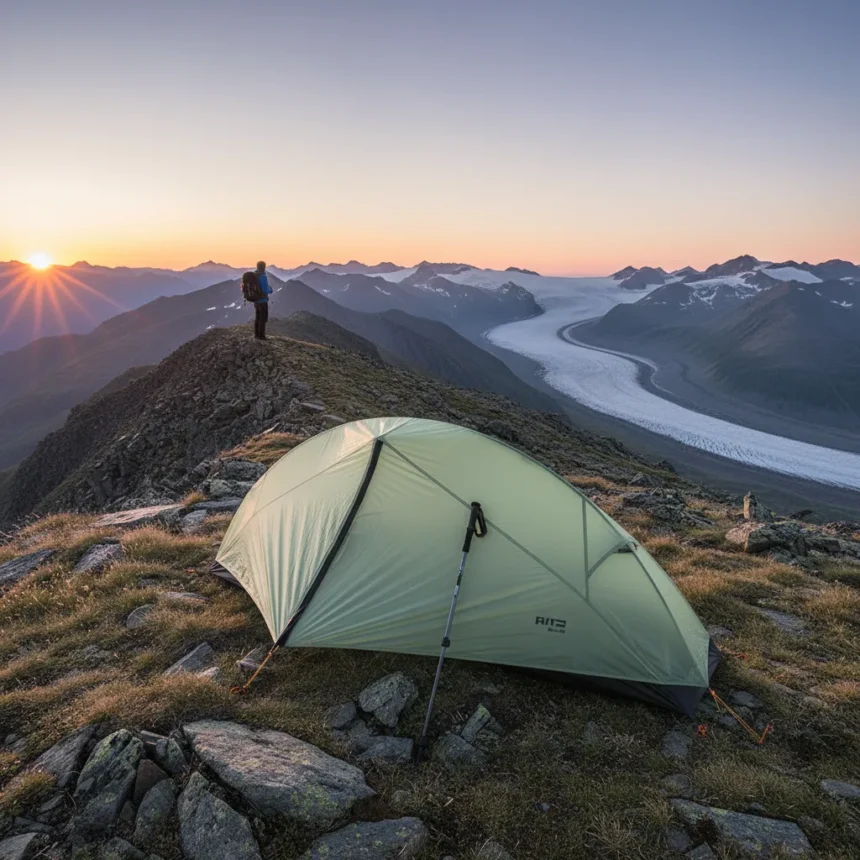
The Simond Sprint ultralight two-person tent represents a bold statement about where trekking shelter design is heading. At just 620g, this Dyneema-built shelter from Simond’s new Wilder Collection challenges the assumption that two-person tents require significant weight penalties for durability and livability.
Key Takeaways
- Simond Sprint weighs 620g and accommodates two people, setting a new ultralight standard.
- Dyneema construction delivers extreme weight savings without sacrificing material strength.
- Part of Simond’s Wilder Collection, signaling a strategic push into speed-focused trekking.
- Emphasizes self-sufficiency and fast-moving adventure over traditional camping comfort.
- Represents a shift toward minimalist ultralight shelters for serious backcountry trekkers.
What Makes This Ultralight Two-Person Tent So Extreme
At 620g, the Simond Sprint ultralight two-person tent sits at the far edge of what most trekkers consider possible for a shelter that sleeps two. Traditional two-person tents typically weigh between 1.5kg and 2.5kg, making this Dyneema design roughly 60–75% lighter than conventional options. That weight reduction matters enormously on multi-day treks where every gram compounds across days of walking.
The Dyneema material choice is the key enabler. Dyneema fabric delivers tensile strength comparable to traditional nylon while weighing significantly less, allowing Simond to build a shelter that does not compromise on durability despite the aggressive weight target. This is not a fragile emergency shelter—it is a genuine two-person tent engineered for actual use in variable conditions.
The ultralight two-person tent category has historically meant sacrificing interior space, weather protection, or longevity. Simond’s approach suggests the brand believes trekkers are willing to accept different trade-offs: minimal interior volume, streamlined ventilation, and a focus on speed over extended base-camp comfort. That is a philosophy shift, not just a weight reduction.


The Wilder Collection’s Trekking-First Strategy
The Sprint sits within Simond’s broader Wilder Collection, a product line explicitly built around two core ideas: speed and self-sufficiency. Rather than designing shelters for car camping or established campgrounds, the Wilder Collection targets fast-moving trekkers who cover significant distance daily and prioritize carrying capacity over creature comforts.
This positioning matters because it signals how Simond is thinking about the ultralight two-person tent market. The brand is not chasing the casual backpacker market—it is building for experienced trekkers who understand ultralight trade-offs and actively embrace minimalism. A 620g shelter appeals to someone doing a three-week Himalayan trek or a speed-focused alpine push, not someone looking for a comfortable weekend car-camping option.



The emphasis on self-sufficiency suggests the tent is designed to handle genuine wilderness conditions without relying on established infrastructure. Ultralight two-person tents in this weight class typically assume minimal or no campground amenities, which aligns with Simond’s apparent target audience of independent, backcountry-focused trekkers.
Ultralight Two-Person Tent Design Trade-Offs
Any ultralight two-person tent this extreme involves deliberate compromises. The 620g weight almost certainly means reduced interior headroom, simplified ventilation systems, and minimal storage pockets. Setup likely requires careful site selection—uneven ground or rocky terrain becomes more challenging with minimal floor cushioning. Weather protection probably favors dry conditions over extended exposure to heavy rain or snow load.
These are not flaws. They are intentional design decisions that make the ultralight two-person tent viable at this weight. A trekker choosing this shelter understands they are optimizing for weight, not for spacious interior volume or all-weather fortress-like protection. The trade-off calculation is straightforward: 620g of carried shelter versus 2kg of traditional tent, with the weight savings enabling longer days, higher altitude, or simply more comfortable carrying.
Dyneema’s durability helps mitigate some ultralight risks. The material resists punctures and tears better than ultralight nylon alternatives, which means the ultralight two-person tent should hold up to repeated use despite its minimal construction. That durability is critical for a shelter intended for serious trekking, not one-off adventures.



How the Sprint Fits Into the Broader Ultralight Landscape
The ultralight two-person tent market has fragmented into specialized niches. Some brands prioritize three-season versatility; others build for specific environments like alpine or desert trekking. Simond’s Sprint appears positioned at the intersection of weight obsession and genuine two-person capacity, a relatively rare combination. Most ultralight shelters either drop to solo designs or add weight to accommodate two people comfortably.
The Wilder Collection’s trekking focus also distinguishes it from ultralight shelters designed for thru-hiking established trails, where predictable weather and established campsites reduce the need for extreme durability. An ultralight two-person tent built for trekking—where routes are less predictable and self-sufficiency is non-negotiable—requires different engineering priorities than a thru-hiker’s shelter.
What remains unclear from the announcement is how Simond’s ultralight two-person tent performs in actual conditions: wind resistance, condensation management, and long-term durability after months of use. The 620g weight is impressive on paper, but field performance ultimately determines whether the Sprint becomes a standard in ultralight trekking or remains a niche curiosity for weight-obsessed adventurers.
Is the Simond Sprint ultralight two-person tent worth the trade-offs?
The answer depends entirely on your trekking style. If you are doing multi-week wilderness treks where every kilogram matters and you have the experience to manage a minimalist shelter, the ultralight two-person tent design makes sense. If you value comfort, spacious interiors, or all-weather protection, traditional tents remain the better choice despite their weight penalty.
What makes Dyneema the right material for an ultralight two-person tent?
Dyneema delivers exceptional tensile strength at minimal weight, allowing the ultralight two-person tent to resist tears and punctures without the bulk of heavier fabrics. This durability is essential for backcountry use where repair options are limited and shelter failure is genuinely dangerous.
How does 620g compare to other ultralight shelters?
Most two-person tents weigh 1.5kg–2.5kg, making the Simond Sprint roughly 60–75% lighter. Solo ultralight shelters often weigh 300–500g, so the 620g ultralight two-person tent sits in genuinely rare territory—offering two-person capacity at a weight that approaches solo shelter standards.
The Simond Sprint ultralight two-person tent represents a deliberate engineering statement: that serious trekkers are willing to accept minimalist design in exchange for dramatically reduced weight. Whether the Sprint becomes the standard for ultralight two-person tents or remains a specialized tool for the weight-obsessed depends on how well the Dyneema construction holds up to real-world use and whether other brands follow Simond’s lead.
This article was written with AI assistance and editorially reviewed.
Source: T3