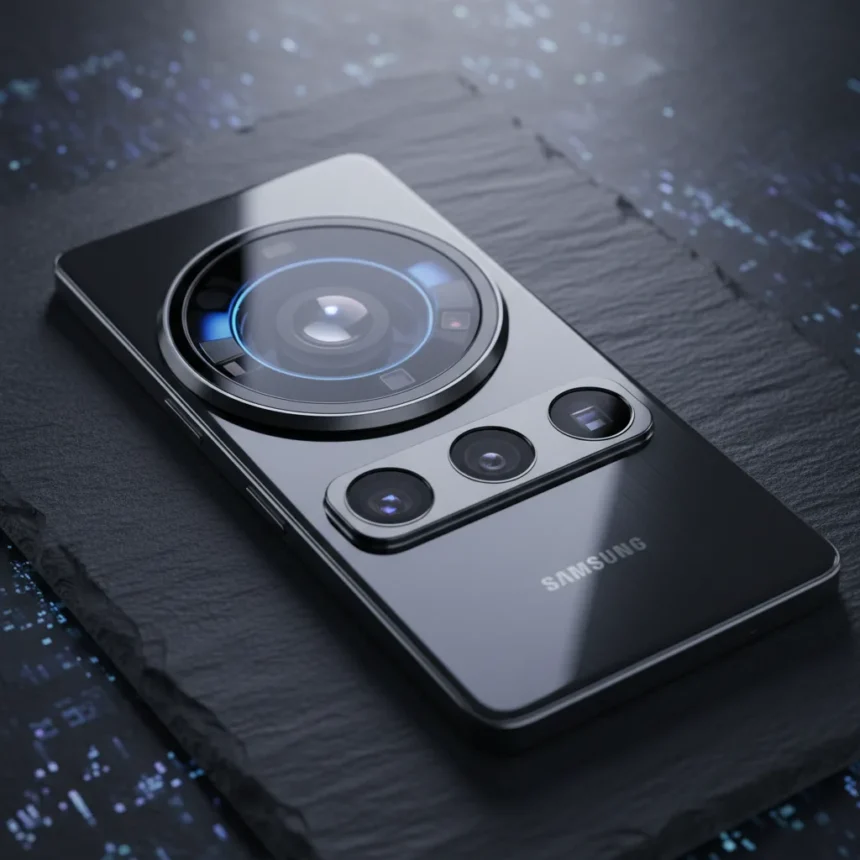
The Galaxy S27 Ultra camera redesign could represent Samsung’s most radical imaging overhaul in years, according to early leaks. Expected to launch around early 2027, the flagship is rumored to drop the dedicated 3x telephoto lens entirely, replacing it with advanced crop zoom and a triple camera system featuring new 200MP sensors with enhanced low-light and HDR capabilities.
Key Takeaways
- Galaxy S27 Ultra could drop the 3x telephoto lens in favor of crop zoom and advanced 200MP sensors.
- Samsung may replace main, ultrawide, and front cameras simultaneously—a rare triple hardware upgrade in one generation.
- New sensors rumored to use LOIC (Lateral Overflow Integration Capacitor) technology for better HDR, low-light, and dynamic range.
- Isocell HP6 or HPA sensors could power the main camera, described as Samsung’s most powerful imaging chips yet.
- Galaxy S27 Ultra expected to launch early 2027, making this the first major camera hardware refresh since the S25 Ultra.
Why Samsung Is Ditching the 3x Telephoto Lens
The Galaxy S27 Ultra camera redesign moves away from the dedicated 3x zoom lens that has defined Samsung’s Ultra flagships for years. Instead, Samsung is reportedly banking on advanced crop zoom—digital zoom powered by higher-resolution sensors and computational photography—to handle mid-range magnification. This is a calculated trade-off: losing a dedicated optical lens but gaining sensor resolution and processing power that can simulate zoom without the hardware bulk.
The shift makes sense given smartphone optics constraints. A dedicated 3x lens adds thickness, weight, and manufacturing complexity. By consolidating to three main sensors and relying on computational zoom, Samsung can allocate more engineering resources to the core imaging pipeline—sensor size, aperture, and HDR processing. The Galaxy S25 Ultra already features a 200MP main camera; the S27 Ultra would upgrade to an even larger sensor with superior light-gathering ability.
The New Sensors Powering Galaxy S27 Ultra Camera Redesign
The Galaxy S27 Ultra camera redesign hinges on two advanced sensor options: the Isocell HP6 and the larger Isocell HPA. Both incorporate LOIC (Lateral Overflow Integration Capacitor) Ultra technology, which Samsung describes as enabling major improvements in HDR performance, low-light photography, color accuracy, and dynamic range. The HPA sensor measures 1/1.12 inches—larger than typical flagship sensors—giving it superior light collection for night shots and high-contrast scenes.


If accurate, the Isocell HP6 would be the likely choice for the S27 Ultra’s main camera. Though smaller than the HPA, the HP6 packs LOIC technology that delivers significant gains in image quality across low-light and HDR scenarios. This represents a generational leap from the current generation’s imaging hardware. Samsung would simultaneously upgrade the ultrawide and front-facing cameras, making the Galaxy S27 Ultra camera redesign one of the rarest occurrences in smartphone design: a complete triple-camera sensor replacement in a single generation.
How This Compares to the Galaxy S25 Ultra
The Galaxy S25 Ultra relies on a proven but aging imaging architecture. Its 200MP main sensor is capable, but the S27 Ultra’s rumored upgrade—a larger 200MP sensor with superior aperture and LOIC HDR support—would represent the first meaningful hardware advancement in the main camera since Samsung introduced the HP2 sensor in recent Ultra models. The S25 Ultra’s 3x telephoto lens would be gone entirely, replaced by software-driven zoom that leverages the higher-resolution main sensor and computational photography.



This shift signals a broader industry trend: flagship phones are moving away from lens multiplication and toward sensor quality and computational zoom. By concentrating engineering effort on fewer, more powerful sensors, Samsung can deliver cleaner low-light images and more accurate colors—areas where computational zoom actually excels compared to optical zoom.
When Will the Galaxy S27 Ultra Launch?
The Galaxy S27 Ultra is expected to arrive around early 2027, giving Samsung roughly two years to finalize the imaging pipeline and validate the new sensors in real-world conditions. These are early leaks from tipster sources like Ice Universe, and details remain speculative. Sensor assignments and final camera configurations could shift before launch. However, the direction is clear: Samsung is preparing a significant camera overhaul that prioritizes sensor power and computational intelligence over traditional lens multiplication.
Will the Galaxy S27 Ultra lose optical zoom entirely?
The Galaxy S27 Ultra camera redesign appears to drop the dedicated 3x telephoto lens, replacing it with crop zoom and advanced 200MP sensors. However, early rumors should be treated cautiously—Samsung could retain a telephoto lens in final production. The rumored approach suggests Samsung is betting that a higher-resolution main sensor combined with intelligent crop zoom can deliver competitive mid-range magnification without the hardware complexity of a dedicated lens.
What is LOIC technology in the Galaxy S27 Ultra camera redesign?
LOIC (Lateral Overflow Integration Capacitor) is Samsung’s technology for improving dynamic range, low-light performance, and color accuracy in smartphone sensors. By managing pixel-level charge overflow, LOIC enables sensors to capture more detail in both bright and dark areas of a scene simultaneously, resulting in more balanced, natural images. The Isocell HP6 and HPA sensors rumored for the S27 Ultra both incorporate this technology.



How often does Samsung redesign all three camera sensors in one generation?
A simultaneous replacement of main, ultrawide, and front cameras is rare in smartphone design. Most flagship updates refresh one or two sensors per generation while carrying over proven designs. The Galaxy S27 Ultra camera redesign would represent an unusually aggressive hardware refresh, suggesting Samsung is confident in the new sensors and wants to deliver a unified imaging improvement across all shooting scenarios.
The Galaxy S27 Ultra camera redesign is a calculated gamble: Samsung is betting that computational zoom and superior sensor hardware can replace traditional telephoto optics. If the leaks prove accurate, it would mark a significant philosophical shift in how Samsung approaches flagship imaging—away from lens multiplication and toward sensor quality and intelligent software. Early 2027 will tell whether the bet pays off, but the direction signals where smartphone cameras are heading: fewer lenses, smarter sensors, and more computational power.
Edited by the All Things Geek team.
Source: Android Central