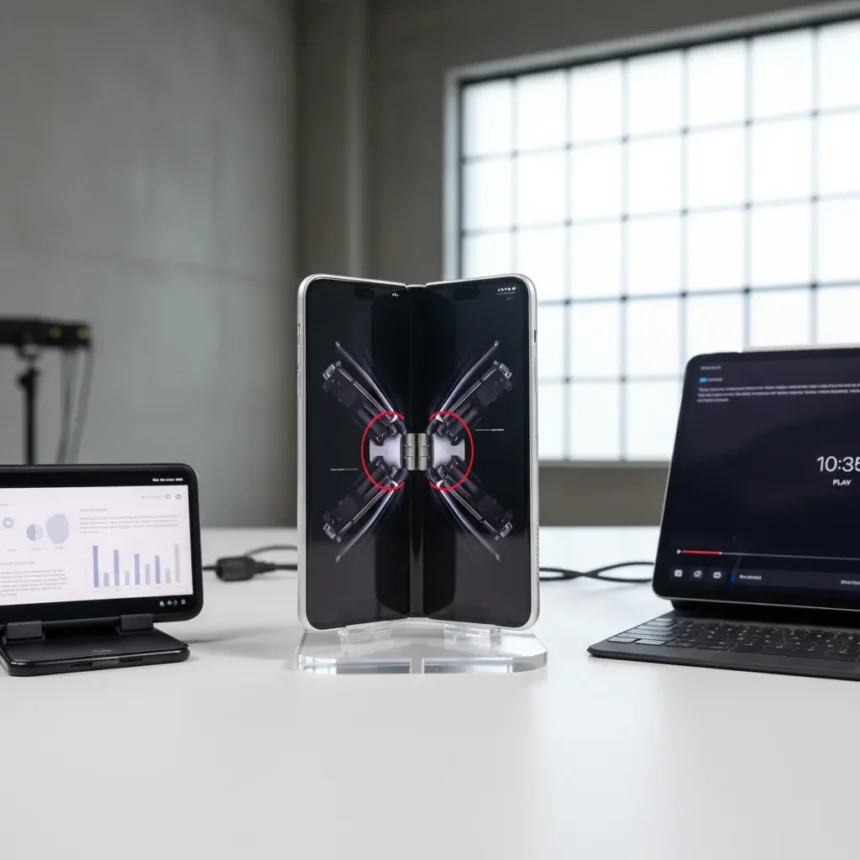
An iPhone Fold dummy unit video just gave the world its first extended look at Apple’s first foldable phone, and the 10-minute tour reveals both ambitious design choices and a serious structural problem that Apple will need to address before launch.
Key Takeaways
- iPhone Fold dummy unit shows a wide design format distinct from Pixel Fold and iPad Pro proportions
- Video tour exposes a notable wobble issue in the hinge mechanism that raises durability concerns
- Display appears crease-free, potentially powered by Samsung’s advanced OLED technology
- Form factor sits between traditional smartphones and existing foldables in the market
- Structural stability remains the primary engineering challenge shown in footage
What the iPhone Fold Dummy Unit Design Reveals
The iPhone Fold dummy unit captured in the video demonstrates a wider form factor than the Pixel Fold, with proportions that fall somewhere between a standard smartphone and the iPad Pro. This design choice reflects Apple‘s approach to maximizing usable screen real estate when unfolded, a departure from Samsung’s more compact foldable strategy. The wide layout suggests Apple is targeting users who want a tablet-like experience without carrying a separate device.
The dummy unit’s physical construction shows careful attention to materials and finish, with surfaces that appear polished and refined in the video footage. However, the extended runtime of the tour—stretching across 10 minutes—allowed viewers to see the device from multiple angles, revealing inconsistencies in how the hinge performs under different handling conditions.
The Wobble Problem: A Critical Structural Flaw
The most concerning aspect of the iPhone Fold dummy unit video is the visible wobble in the hinge mechanism. When the device is held at certain angles or moved gently, the two halves of the phone shift slightly relative to each other, creating a flex that no flagship device should exhibit. This is not a minor cosmetic issue—it suggests the hinge lacks the rigidity needed to support a large foldable display safely over years of daily use.


Wobble in a foldable hinge can accelerate wear on the display’s edges, stress the adhesive layers holding the screen together, and eventually lead to creasing or separation failures. The fact that this problem is visible in a dummy unit means Apple’s engineering team is aware of it and has time to redesign the mechanism before production. Yet the video evidence indicates this remains an unsolved challenge as of the dummy unit’s creation.
How iPhone Fold Dummy Unit Compares to Pixel Fold and iPad Pro
The iPhone Fold dummy unit’s wide proportions set it apart from Google’s Pixel Fold, which uses a narrower, more pocketable design when folded. The Pixel Fold prioritizes portability; Apple’s approach prioritizes screen real estate. When unfolded, the iPhone Fold dummy unit appears closer in width to an iPad Pro, though the video does not provide exact measurements for direct comparison.



The iPad Pro comparison is particularly interesting because it highlights Apple’s tablet ecosystem. If the iPhone Fold dummy unit succeeds, it could cannibalize iPad mini sales—a risk Apple will have to manage through pricing and software positioning. The Pixel Fold, by contrast, fills a different market niche with its narrower folded profile, making it more of a phone-first device than a phone-tablet hybrid.
Display Technology and the Crease Question
One of the most exciting elements shown in the iPhone Fold dummy unit video is what appears to be a crease-free display. Samsung’s advanced OLED technology, specifically the company’s latest display innovations, is rumored to power this breakthrough. A crease-free foldable screen would be a major selling point, as the visible crease in existing foldables remains a persistent complaint from users.
If Apple has solved the crease problem while competitors still struggle with it, that advantage could justify a premium price. However, a crease-free display does nothing to address the wobble issue visible in the dummy unit footage. Durability and structural integrity matter more than optical perfection if the device falls apart after a year of use.
What This Means for Apple’s Foldable Timeline
The existence of a dummy unit with visible design flaws suggests Apple is still in the prototype and testing phase. Dummy units are typically created 12 to 18 months before production to test form factor, ergonomics, and manufacturing feasibility. The wobble issue visible in the video indicates Apple has identified a problem but has not yet finalized a solution.



This timeline aligns with industry speculation that an iPhone Fold would not arrive until 2026 or later. Apple rarely rushes foldable technology—the company waited years before entering the market, choosing to observe competitors’ mistakes first. The iPhone Fold dummy unit video, leaked or intentionally seeded, serves as a reality check: Apple’s foldable is still a work in progress.
Does the iPhone Fold dummy unit prove Apple can compete in foldables?
The dummy unit shows Apple understands foldable design at a high level, but the wobble issue raises serious doubts about execution. Apple has the engineering talent and resources to fix this, but the video evidence suggests the problem is not trivial. Samsung and Google have already shipped millions of foldables; Apple is years behind and cannot afford a flawed launch.
How does the iPhone Fold dummy unit’s wide design affect usability?
The wide format shown in the video maximizes screen space when unfolded, ideal for media consumption and productivity apps. However, it makes the device less pocketable than the Pixel Fold when folded. Apple is betting users will tolerate a thicker, wider folded phone in exchange for a larger unfolded display—a trade-off the iPad Pro user base might accept, but smartphone-first users may not.
When will Apple release the iPhone Fold?
No official release date has been announced. Based on the dummy unit’s development stage, industry analysts expect the iPhone Fold to arrive in 2026 or 2027 at the earliest. Apple will need time to solve the hinge wobble issue and optimize manufacturing before committing to a launch date.
The iPhone Fold dummy unit video is a sobering reminder that even Apple’s foldable ambitions face real engineering challenges. The wide design is bold, the crease-free display is promising, but the wobble problem is a red flag. Apple has time to fix it, but the video evidence shows the company still has significant work ahead before it can claim foldable leadership.
Edited by the All Things Geek team.
Source: Tom's Guide