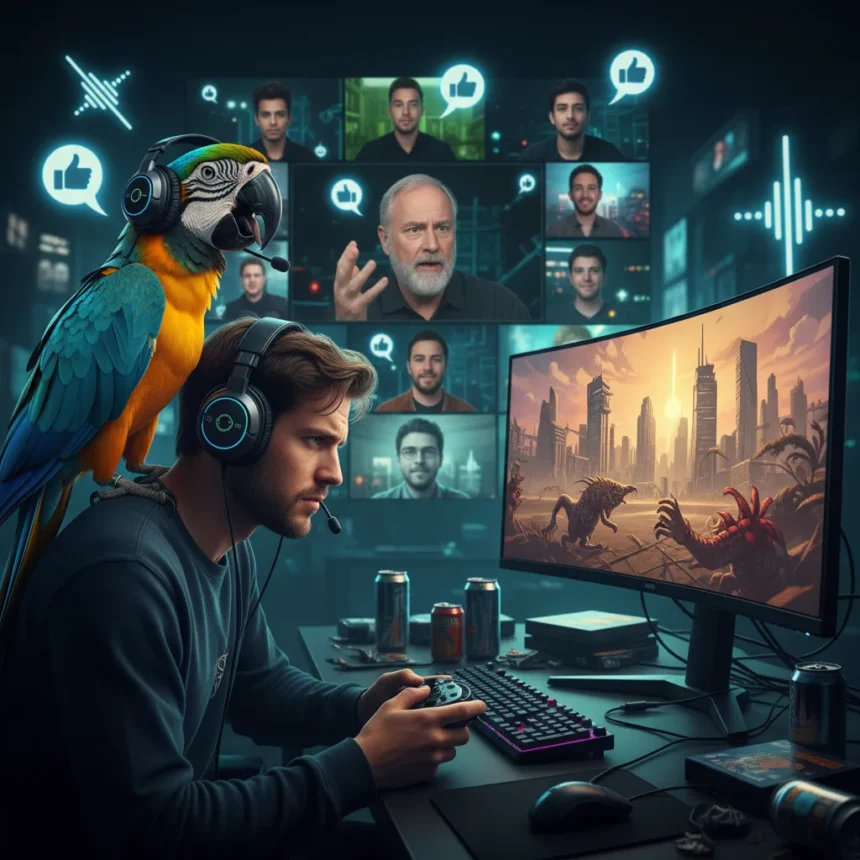
Influencer opinions gaming has become so dominant that many players no longer seek reviews—they seek permission to think. Tim Cain, co-creator of Fallout and co-developer of The Outer Worlds, articulated this troubling shift in a video on his personal YouTube channel, arguing that modern gamers have outsourced critical thinking to content creators.
Key Takeaways
- Tim Cain observes that gamers adopt influencer opinions without forming independent judgments about games.
- Game developers now design with “clips for influencers” in mind, similar to preparing media soundbites.
- Identical comments on Cain’s channel quote influencers verbatim, sometimes misapplied to irrelevant contexts.
- Review language has shifted from descriptive (“less combat, more puzzles”) to opinion-laden (“stupid, slow paced, made for casuals”).
- Cain predicts either tighter influencer bubbles or a generational rejection of gaming labels.
How Game Design Has Shifted for Influencer Clips
The relationship between developers and influencers has fundamentally altered how games are built. Cain draws a direct parallel to traditional media: “So now we’re thinking about our game the way we used to think about interviews. When you went into an interview, you were like ‘okay, I got to have some sound bites ready, so when I get quoted, I want to make sure the sound bites are quoted’. Now it’s like ‘what part of our game would make good clips for influencers to show?'”. This shift means developers prioritize moments that generate views, not necessarily moments that deepen gameplay or narrative.
The problem runs deeper than marketing strategy. When games are designed around clip-ability, they are designed around spectacle and reaction rather than substance. A puzzle that takes ten minutes to solve generates no viral moment. A set-piece explosion does. This creates an incentive structure that rewards visual drama over mechanical depth, fragmenting the player experience into highlight reels rather than cohesive journeys.
The Collapse of Independent Gaming Thought
What troubles Cain most is not the influence itself but the abdication of thought. “Now we’re in the 2020s and many gamers don’t even look to influencers for reviews. They look to influencers to be told how to think about the games. So, people don’t form opinions from the online video. They’re handed an opinion from the online channel they’re watching”. This distinction matters enormously. A review informs; an opinion directive controls.


Cain sees this play out directly in his own community. He receives multiple nearly identical comments where viewers quote influencers verbatim, often without attribution and sometimes in contexts where the criticism does not even apply. A player watches a creator dismiss a game as “slow paced and made for casuals” and repeats the phrase in Cain’s comments section, not because they have played the game, but because the opinion has been handed to them as gospel.
The shift in review language itself tells the story. Where past gaming discourse might have said “this game has less combat and more puzzles and dialogues for you to interact with than this other game,” modern influencer-driven commentary says “this game is stupid and slow paced and made for casuals, I think you should skip it”. The first describes; the second judges and directs. Players absorb the judgment without the reasoning.
What Comes Next: Bubbles or Rebellion
Cain offers two speculative futures, neither reassuring. Either influencer culture becomes “even more tightly controlled in bubbles… and all of their thoughts will be guided by these people,” creating echo chambers where a single creator’s opinion becomes law for thousands of followers. Or, he suggests, “maybe the next generation is going to get tired of that. Get tired of all the labeling and tired of all the placing things in a box”.
The second scenario assumes a level of cultural pushback that is far from guaranteed. Influencer culture has only deepened over the past five years. Younger gamers have never known a world without parasocial relationships to content creators. Breaking that habit requires active resistance, not passive fatigue.
Why This Matters Now
Cain’s comments arrived amid a surge in Fallout’s cultural prominence following the 2024 Amazon Prime TV adaptation, which introduced millions of new players to the franchise. For a moment, the gaming discourse expanded beyond influencer bubbles. New players asked genuine questions. Established players encountered fresh perspectives. That window is closing as influencer narratives reassert control over the conversation.
The real cost is not to individual games but to gaming as a medium. When players stop thinking critically about what they play, they stop demanding innovation. They accept what they are told is good. Developers, sensing this, optimize for influencer approval rather than player satisfaction. The feedback loop tightens. Gaming becomes less about exploration and more about consumption of pre-approved experiences.


Are gamers really just parroting influencers?
Yes, according to Cain’s direct observation of comment patterns on his own channel, where identical opinions appear verbatim from multiple viewers citing the same creators. While not every gamer operates this way, the trend is visible enough that developers now design with influencer clips as a primary consideration.
How has influencer culture changed game design?
Developers now treat games like interview soundbites, prioritizing moments that generate shareable clips over cohesive gameplay experiences. This shifts design incentives toward spectacle and reaction content rather than mechanical depth or narrative complexity.
What does Tim Cain predict for gaming’s future?
Cain sees two paths: either influencer bubbles become even more controlling, or the next generation rejects the labeling and boxing of games entirely. He offers no certainty, only concern that the current trajectory favors tighter control.
The uncomfortable truth in Cain’s observation is that influencer opinions gaming has become a substitute for media literacy in gaming communities. Players once asked “Is this game good?” Now they ask “What did my favorite creator say about this game?” Until that question changes, developers will keep designing for clips, and players will keep parroting opinions they did not form themselves.
Edited by the All Things Geek team.
Source: Windows Central