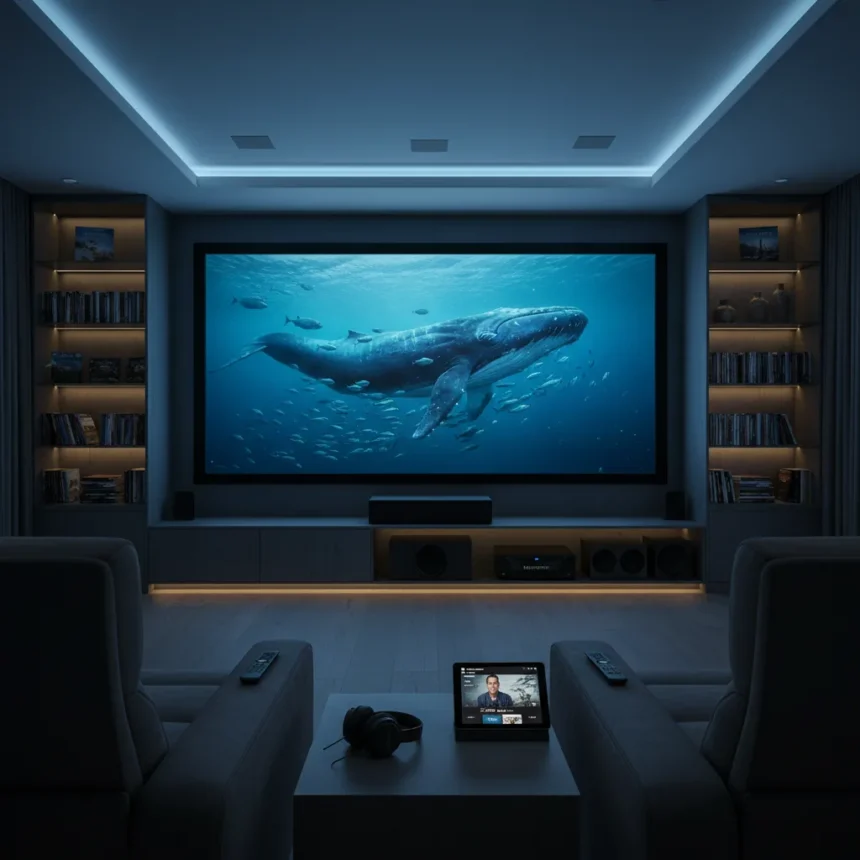
David Attenborough documentaries represent some of the most visually demanding and sonically rich content available for home cinema enthusiasts. These productions showcase latest cinematography, natural sound design, and color grading that expose both strengths and weaknesses in premium audio-visual systems. For anyone serious about home cinema performance, Attenborough’s body of work serves as an essential reference library.
Key Takeaways
- David Attenborough documentaries demand high-quality 4K displays and immersive audio systems to fully appreciate their production values
- These films stress-test home cinema equipment with complex color palettes, dynamic range, and layered soundscapes
- Natural world cinematography reveals display panel performance through rapid scene transitions and subtle color gradations
- Attenborough’s narration paired with environmental sound design exposes audio system clarity and spatial imaging capabilities
- Premium documentaries provide reference material for calibrating home cinema setups across brightness, contrast, and color accuracy
Why Attenborough Documentaries Matter for Home Cinema
David Attenborough documentaries function as genuine stress tests for home cinema systems. Unlike narrative films with controlled lighting and studio-bound scenes, nature documentaries demand displays capable of rendering extreme brightness ranges—from deep forest shadows to brilliant sunlit landscapes. The cinematography forces processors to handle rapid scene transitions while maintaining color accuracy across wildly different environments. This technical challenge separates adequate displays from genuinely premium ones.
The audio design in these productions is equally demanding. Attenborough’s narration sits at a precise level in the soundstage, requiring speakers to deliver clarity without harshness. Environmental sounds—rustling leaves, water flows, insect calls—layer across the surround channels, testing a system’s ability to create seamless spatial imaging. A mediocre audio setup will collapse these subtle elements into a muddy background; a well-calibrated system reveals them as distinct, immersive components of the overall soundscape.
Visual Performance and Display Technology
Modern David Attenborough documentaries are shot on cinema cameras capable of capturing extraordinary detail and color information. This wealth of data exposes display weaknesses immediately. Panel technology matters enormously—OLED displays excel at rendering deep blacks but can struggle with sustained brightness in bright scenes, while high-brightness LCD panels maintain peak luminance but may crush shadow detail. Attenborough’s work includes extended sequences in both extremes, making it ideal for evaluating which display technology suits your viewing priorities.


Color accuracy becomes critical when watching nature documentaries. A poorly calibrated display might render rainforest greens as either sickly or oversaturated, destroying the cinematographer’s intent. The same applies to skin tones in close-up shots of Attenborough himself—any color cast becomes immediately obvious. Professional colorists grade these documentaries in controlled environments with reference monitors, so home viewers using calibrated displays can experience something approaching the creative vision. Uncalibrated systems will reveal their limitations within minutes.
Audio Design and Surround Field Performance
The soundscape in David Attenborough documentaries extends far beyond the narrator’s voice. Each environment carries its own acoustic signature. An underwater sequence demands that surround speakers create a sense of depth and weightlessness; a rainforest scene requires layered, directional ambient sound; an Arctic sequence needs crisp, clear environmental detail without muddiness. Systems with weak surround channels or poor calibration will fail to deliver this spatial complexity.



Attenborough’s narration itself serves as a calibration reference. His voice should sound natural and present without any sense of effort or strain—it occupies a specific spatial position in the soundstage. If your center channel is too bright, his words become fatiguing; if it’s too dark, they lose presence. Professional audio engineers use similar reference material to dial in systems, and home viewers can adopt the same approach. Extended listening sessions reveal whether your setup is truly neutral or colored by room acoustics and speaker characteristics.
Using Documentaries as Reference Material
Serious home cinema enthusiasts treat David Attenborough documentaries as calibration tools. Specific scenes become benchmarks—a particular wildlife sequence might reveal whether your display handles motion smoothly, while a narration-heavy segment tests speaker tonal balance. Rather than watching passively, reference viewing involves pausing to examine specific technical elements: How does the display handle the transition from shadow to bright sunlight? Does the surround field collapse during quiet moments? Does the center channel maintain clarity during complex scenes with layered dialogue and sound effects?
This approach transforms entertainment into education. Over multiple viewings, you’ll develop an intuitive sense of your system’s strengths and limitations. You might discover that your display excels at rendering natural skin tones but struggles with shadow detail in forest scenes. You might notice that your surround speakers create a convincing ambient field during ocean sequences but become obvious during quiet moments. These insights guide future upgrades and recalibration efforts, making your investment in home cinema more intentional and effective.
Frequently Asked Questions
What makes David Attenborough documentaries ideal for testing home cinema systems?
These productions combine extreme dynamic range, complex color palettes, rapid scene transitions, and sophisticated audio design. They expose weaknesses in display panel technology, color calibration, audio clarity, and surround field performance that narrative films often mask. Professional cinematography and sound mixing create genuinely demanding reference material that separates adequate systems from truly excellent ones.



Do I need a 4K display to properly watch David Attenborough documentaries?
While 4K resolution provides additional detail, the more critical factors are display brightness, color accuracy, and black level performance. A well-calibrated 1080p display might reveal more of the cinematographer’s intent than a poorly calibrated 4K screen. That said, modern Attenborough productions are mastered in 4K, so a 4K display capable of accurate color reproduction will deliver the fullest experience.
How should I calibrate my home cinema system using these documentaries?
Begin with specific reference scenes: use a rainforest sequence to evaluate surround field performance, an Arctic scene for shadow detail, and close-ups of Attenborough for color accuracy and center channel clarity. Pause frequently to examine technical elements rather than watching passively. Compare your results against professional calibration references if available, and adjust display color temperature, brightness, and audio speaker levels based on what you observe.
David Attenborough documentaries represent far more than entertainment—they’re sophisticated tools for evaluating and refining home cinema performance. Whether you’re shopping for a new display, upgrading your audio system, or simply curious about your current setup’s capabilities, these productions will reveal exactly what your investment can and cannot deliver. For serious enthusiasts, they’re indispensable reference material that justifies repeated viewing.
Edited by the All Things Geek team.
Source: What Hi-Fi?