






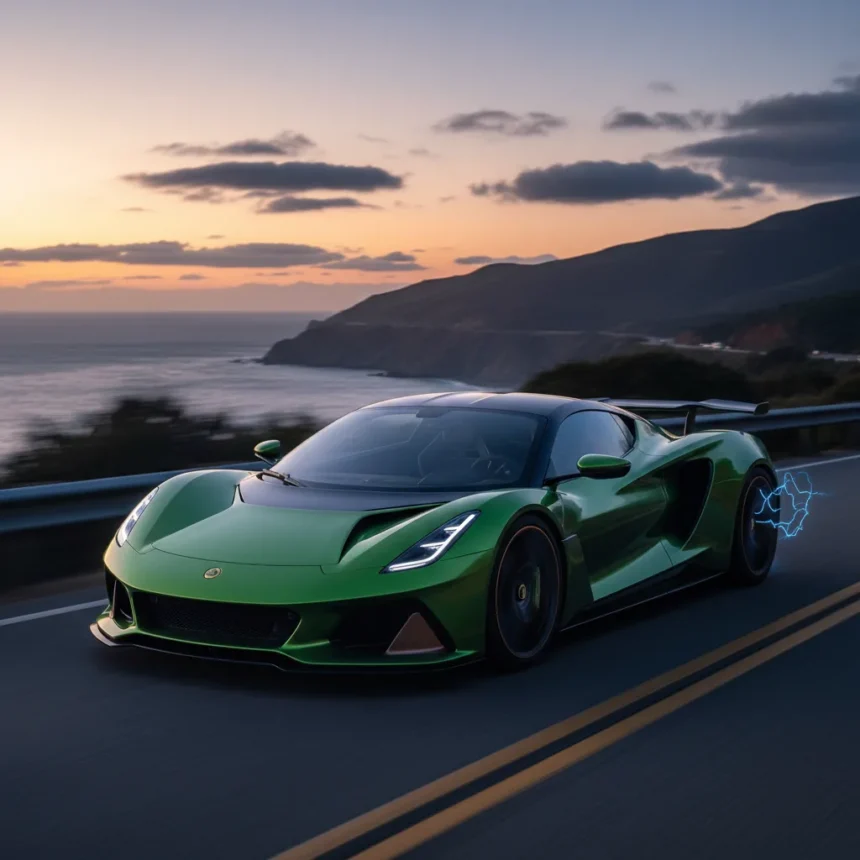
The Lotus Type 135 V8 hybrid supercar represents a stunning reversal. After committing to an all-electric future, Lotus is dusting off its V8 heritage with a 1,000-plus-horsepower machine set to debut in 2028. This is not incremental. This is a company admitting its EV-only strategy failed and pivoting hard toward hybrid performance.
Key Takeaways
- Lotus Type 135 exceeds 1,000 hp via a hybrid V8 powertrain, arriving in 2028
- First Lotus V8 supercar since the Esprit ended production in 2004, over 20 years ago
- Likely powered by a Mercedes-AMG 4.0-litre twin-turbo V8 engine already supplied to Lotus
- Part of Focus 2030 strategy targeting 60% hybrid and plug-in hybrid sales globally
- Developed at Coventry Design Centre; manufacturing expected in Europe
Lotus confirmed the Type 135 development in May 2026, with the supercar positioned above the Emira in the lineup. The hybrid powertrain—not a plug-in hybrid—prioritizes weight savings, a critical factor for a mid-engine supercar chasing sub-4-second 0-100 km/h performance. The move signals a company reckoning with market reality: electric supercars face battery weight penalties that traditional hybrids sidestep.
Why Lotus Abandoned the All-Electric Vision
Lotus spent years marketing an all-electric future. The Eletre and Emeya were supposed to anchor a new era. Instead, weak EV sales forced a strategic retreat. The Focus 2030 plan now targets hybrids and plug-in hybrids for 60% of global sales, with the Type 135 as the flagship statement. This is not a minor adjustment—it is a full recalibration of brand direction under parent company Geely’s ownership.
The Esprit, Lotus’s last V8 model, ceased production in 2004. A 22-year gap between V8 generations is extraordinary for a performance brand. The Type 135 codename itself was previously assigned to a cancelled all-electric Emira replacement, making the pivot even more symbolic. Lotus is essentially saying: we tried the future, and it did not work. Now we are going backward to move forward.


The hybrid approach solves a real problem. Electric supercars like the Lamborghini Revuelto and Ferrari 849 Testarossa variants carry immense battery weight. A traditional hybrid V8 delivers instant torque without that penalty, allowing Lotus to chase performance figures that rival the world’s best supercars while staying lighter than full-electric competitors.
Engine and Performance Specs: What We Know
The Type 135 will likely use a Mercedes-AMG 4.0-litre twin-turbo V8 engine. Lotus already sources a 2.0-litre four-cylinder from Mercedes-AMG for the Emira. The V8 connection is not confirmed by Lotus, but the supply relationship is established. In Mercedes-AMG’s S-Class facelift, this V8 produces 537 hp and 750 Nm, though higher outputs are planned for the Type 135 to exceed 1,000 hp combined with hybrid assistance.



The hybrid system is a traditional HEV (hybrid electric vehicle), not a PHEV. This means no plug-in charging—the electric motor supplements the V8 for brief power bursts and efficiency gains, keeping total weight down. Lotus engineers are targeting a 0-100 km/h sprint under 4 seconds, positioning the Type 135 as genuinely competitive with modern hybrid supercars despite the 22-year absence from the V8 segment.
Design inspiration pulls from Lotus’s past and present. The Type 135 borrows visual cues from the 2024 Theory 1 EV concept and the classic Esprit, with slender LED tail lights, circular tailpipes, and a wedgy profile visible in early teasers. The car will be developed at Lotus’s Coventry Design Centre, with manufacturing expected in Europe—a significant statement for a brand now owned by a Chinese parent company.
Lotus Type 135 vs. Hybrid Supercar Rivals
The Lamborghini Revuelto and Ferrari 849 Testarossa variants represent the closest competition, both offering V12 hybrid power at extreme price points. The Aston Martin Valhalla, meanwhile, shares a potential Mercedes-AMG V8 engine source, making it a more direct technological rival. Lotus’s advantage lies in weight and agility—the brand’s DNA emphasizes driver engagement over raw luxury, a positioning that could appeal to enthusiasts fatigued by 2-tonne hybrid supercars focused on status over sensation.
Unlike the Revuelto’s all-wheel-drive complexity or Ferrari’s extreme pricing, the Type 135 is positioned as a more driver-focused, lightweight alternative. Lotus claims it will challenge the world’s best supercars, and the hybrid-V8 formula suggests a car optimized for engaging handling rather than pure straight-line dominance.



What Happens to the Emira?
The Type 135 does not replace the Emira—it sits above it. Lotus plans an updated Emira with more power and lighter construction than the current 1.5-tonne ICE version. This positions Lotus with a two-tier performance lineup: the accessible-but-potent Emira and the flagship Type 135 supercar. The strategy mirrors traditional performance brands, where entry-level and flagship models coexist to capture different buyer segments.
When Will We Know More?
Lotus promised additional details later in 2026. Pricing, exact specifications, and final design remain unannounced. The 2028 launch window is firm, but a 2027 reveal is likely given typical automotive timelines. For now, the Type 135 exists as a statement of intent: Lotus is serious about hybrid performance, it remembers its V8 heritage, and it is betting that drivers still crave naturally aspirated or turbocharged power over batteries alone.
Is the Lotus Type 135 V8 hybrid supercar really coming in 2028?
Yes. Lotus officially confirmed the Type 135 development in May 2026 with a 2028 launch target. The company has publicly committed to the timeline and positioned it as a cornerstone of the Focus 2030 strategy. However, automotive timelines shift—delays are possible, but cancellation is unlikely given the strategic importance of returning to V8 performance.
Will the Lotus Type 135 V8 hybrid supercar use a Mercedes engine?
Lotus has not officially confirmed the engine source, but the Mercedes-AMG 4.0-litre twin-turbo V8 is the most likely candidate. Lotus already sources engines from Mercedes-AMG for the Emira, and the V8 would deliver the power and efficiency needed for 1,000-plus-hp hybrid output without requiring Lotus to develop an entirely new engine from scratch.
How much will the Lotus Type 135 V8 hybrid supercar cost?
Pricing has not been announced. Lotus will likely position the Type 135 between the Emira and flagship hybrid supercars like the Lamborghini Revuelto, but exact figures will emerge closer to the 2028 launch or during a formal reveal in 2026 or 2027.
The Lotus Type 135 V8 hybrid supercar is a gamble on an unfashionable formula—combustion engines in an EV-obsessed era. But it is a calculated one. Hybrid supercars are selling better than full-electric alternatives, and Lotus’s lightweight philosophy gives it a fighting chance against heavier rivals. The real test comes in 2028, when the Type 135 finally arrives and proves whether Lotus can execute on a supercar vision or whether the 22-year gap has cost the brand too much momentum.
Where to Buy
Nextbase iQ | Nextbase 622GW | Thinkware F800 Pro | Nextbase 522GW
Edited by the All Things Geek team.
Source: T3