





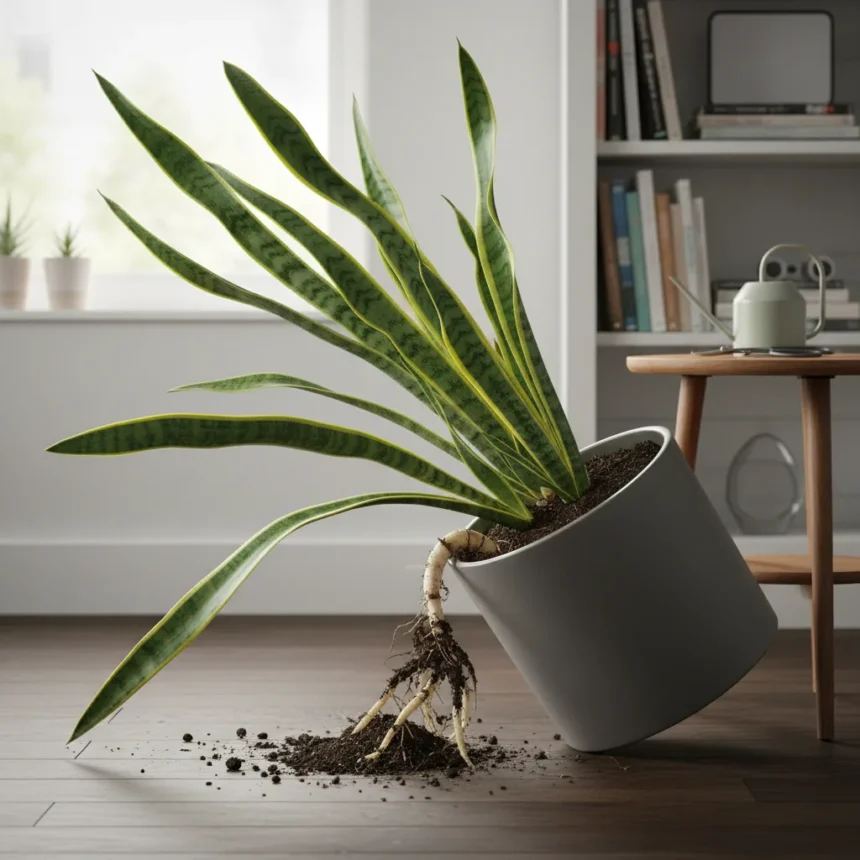
A snake plant falling over is almost always a cry for help. These succulents from West Africa thrive on neglect, so when the sturdy leaves suddenly droop or topple, something fundamental has gone wrong. The good news: most causes are fixable, and recovery takes just 4 to 6 weeks if you act quickly.
Key Takeaways
- Overwatering and root rot are the leading cause of snake plant leaves falling over.
- Pots that are too small (rootbound) or too large (wet soil) both trigger collapse.
- Healthy roots are white and firm; rotten roots are black, slimy, and smell foul.
- Recovery requires removing the plant, trimming damaged roots, and repotting in fast-draining soil.
- Prevention relies on sparse watering, proper drainage, and repotting every 2 to 3 years.
Why Your Snake Plant Is Falling Over
The primary culprit is overwatering. Snake plants are succulents engineered for arid conditions—they store water in their leaves and need far less moisture than most houseplants. Waterlogged soil triggers root rot, where roots turn black, slimy, and mushy, losing all ability to support the plant’s weight. A rotting root system cannot deliver nutrients or stability, so the leaves weaken and collapse.
Pot problems run a close second. A pot that is too small creates a rootbound plant with circling roots that cannot absorb water efficiently. Conversely, a pot that is too large keeps soil wet for too long after watering, suffocating roots and accelerating decay. Heavy top growth in a lightweight plastic pot can also cause physical tipping, especially if the plant leans toward light.
Low light is another sneaky culprit. Without bright indirect light, snake plants grow weak and leggy, producing thin, fragile leaves that cannot support themselves. Fungal diseases, lack of fertilizer, and improper repotting technique can also contribute to decline, though these are less common than water and pot issues.


How to Diagnose Root Rot
Before you fix anything, you need to know what you are dealing with. Remove the plant gently by tipping the pot sideways and easing it out—do not pull the leaves. Inspect the roots closely. Healthy roots are white or light tan and feel firm to the touch. Rotten roots are black, brown, gray, slimy, or mushy, and they smell foul. If you see any soft, discolored roots, root rot is present.
Check the soil itself. Does it smell sour or swampy? Is it compacted and heavy? These are signs of poor drainage and prolonged moisture. Also observe the plant’s leaves. If the base of the leaves feels soft or mushy, rot has spread beyond the roots and into the plant tissue itself. This is more serious but still recoverable if you act fast.



Step-by-Step Recovery for Snake Plant Falling Over
Once you have diagnosed the problem, follow this repair sequence to bring your plant back. First, trim all damaged roots using sterilized scissors. Cut away black, brown, or slimy tissue until you reach healthy white material. Do not be timid—remove all visibly rotted portions. Next, cut off any leaves with soft or blackened bases to prevent the rot from spreading upward.
After trimming, let the plant dry on paper towels for 1 to 2 days. This allows the cut surfaces to callous over and reduces shock during repotting. While it dries, prepare a clean pot that is only 1 to 2 inches wider than the root ball and has drainage holes. Do not jump to a larger pot hoping to give the plant room to grow—oversized pots are a trap that keeps soil wet and roots rotting.
Fill the new pot with fast-draining soil. A commercial cactus or succulent mix works perfectly, or make your own by combining one part potting soil, one part perlite, and one part coarse sand or pumice. Do not pack the soil tightly; gently fill around the roots to eliminate air pockets without compressing the medium. Center the plant at the same depth it was growing before.
Here is the hardest part: wait 7 to 10 days before watering. Freshly cut roots are vulnerable to rot, and new soil already holds some moisture. Watering too soon invites fungal infection and undoes your repair work. After the waiting period, water thoroughly until it drains from the bottom, then do not water again until the soil is dry 2 to 3 inches down.



Prevention: Stop It Before It Starts
Once your snake plant recovers, prevent a relapse with a simple prevention checklist. Water only when the soil is dry 2 to 3 inches down—roughly once a month in growing season, less in winter. Use pots with drainage holes and never let the plant sit in standing water. Repot every 2 to 3 years or whenever roots circle the pot. Choose pots only 1 to 2 inches wider than the root ball, not the full 4 to 6 inches that many gardeners assume.
Position your snake plant in bright indirect light near a window, but avoid direct sun, which can scorch the leaves. If your plant grew weak and leggy before falling over, moving it to brighter conditions will strengthen new growth and improve stability. For extra security with a top-heavy plant, use a heavier ceramic pot instead of lightweight plastic, or add stones to the bottom for ballast.
How Long Until Your Snake Plant Recovers?
New growth typically appears within 4 to 6 weeks if the repair was successful. Do not expect overnight miracles. The plant needs time to develop new roots and redirect energy to healthy leaves. During this period, maintain the sparse watering schedule and keep the plant in bright indirect light. Resist the urge to fertilize—wait until the plant shows vigorous new growth before feeding, as fertilizer can stress recovering roots.
Can a severely damaged snake plant be saved?
Yes, even near-death snake plants can recover. If the damage is severe, cut back the remaining leaves significantly and repot in fresh soil. The plant will look bare and sad for weeks, but it will regrow. Snake plants are remarkably resilient—they can regenerate from small pieces of healthy leaf or root tissue. Patience and correct care matter far more than the plant’s current appearance.
Should I use a larger pot to give my snake plant room to grow?
No. Larger pots are the second-biggest mistake after overwatering. A pot that is too large keeps soil wet longer, which rots the roots faster. Choose a pot only 1 to 2 inches wider than the root ball, repot every 2 to 3 years as the plant grows, and let the pot size increase gradually. This approach keeps soil moisture in balance and roots healthy.
What is the best soil mix for a snake plant?
Fast-draining soil is non-negotiable. Commercial cactus and succulent mixes are ideal, or blend your own using one part potting soil, one part perlite, and one part coarse sand or pumice. Avoid standard houseplant potting soil, which retains too much moisture for a succulent. The goal is soil that dries out quickly after watering, mimicking the arid conditions snake plants evolved in.
Snake plant falling over is preventable and fixable. The plant is not dying because you failed—it is signaling that its environment has shifted. Water less, drain better, and choose the right pot size, and your snake plant will stand tall again within weeks.
Where to Buy
Edited by the All Things Geek team.
Source: Tom's Guide




