





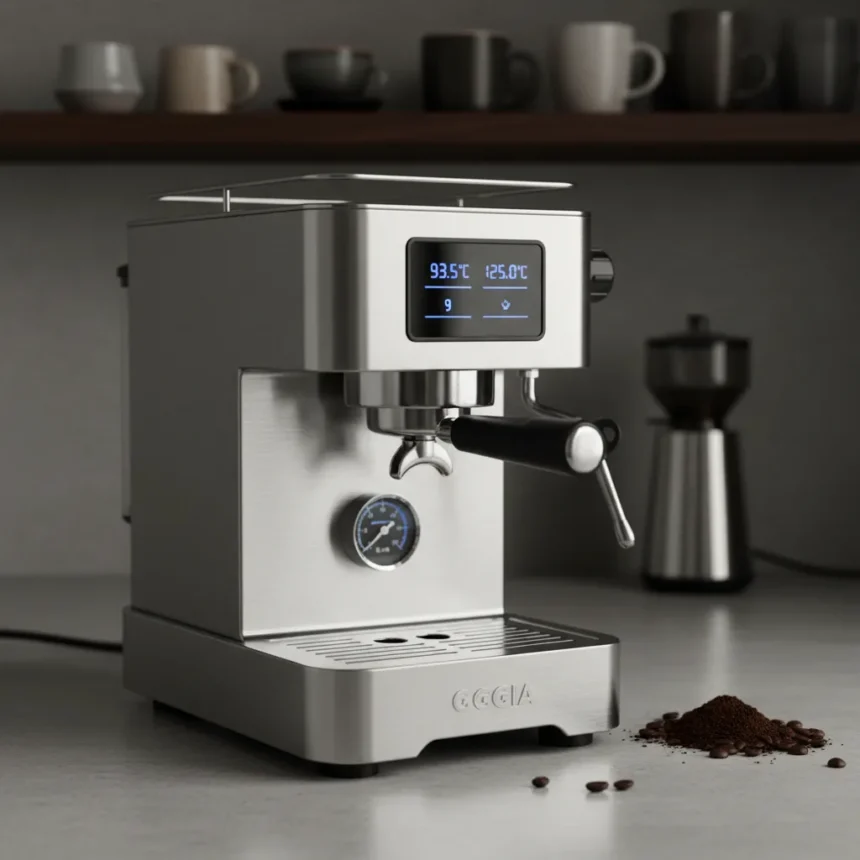
The Gaggia Classic UP is a modernized espresso machine that builds on the original 1991 Gaggia Classic, introducing dual PID temperature control, a 2-inch colour display, and a front brew pressure gauge while retaining the iconic brass boiler and stainless steel chassis.
Key Takeaways
- Dual PID system manages both brew temperature and steam temperature independently for precision espresso extraction.
- 2-inch colour display and front pressure gauge provide real-time feedback during brewing and steaming.
- Pre-infusion and programmable shot length allow customization for different coffee beans and roast profiles.
- Manual operation requires a separate grinder and user involvement; suitable for beginners through experienced baristas.
- Priced at £849, available now from Gaggia retailers; positioned as a direct Sage machine alternative.
What Makes the Gaggia Classic UP Stand Out
The Gaggia Classic UP inherits the stripped-down, manual espresso philosophy of its 1991 predecessor but adds technology where it matters. The dual PID system is the headline upgrade—one PID maintains precise brew temperature (adjustable to specific degrees), while the second manages steam temperature independently. This eliminates the temperature-surfing frustration that plagues cheaper machines, where you wait for the boiler to cool between shots and steaming.
The 2-inch colour display sits at the top of the machine and shows real-time data during brewing and steaming. Paired with the front brew pressure gauge, you get visual feedback that entry-level machines simply do not offer. Pre-infusion capability lets you wet the coffee puck before full pressure application, reducing channelling and improving extraction consistency. Programmable shot length means you can dial in a specific volume and let the machine cut the shot automatically—a feature baristas use to replicate winning espresso recipes.
Design and Build Quality
Gaggia has not abandoned the Classic’s aesthetic. The machine retains the brass boiler, brass group head, oversized heating element, and slim stainless steel body finished in black. Three dial controls keep the interface tactile and mechanical—no software menus to navigate. The portafilter is traditional, and two drip trays accommodate different cup sizes, from espresso cups to larger mugs.


This is not a fully automatic or super-automatic machine. You grind separately, tamp by hand, and manage the shot manually (unless you use programmable shot length). That hands-on involvement appeals to coffee enthusiasts who enjoy the craft, but it also means there is a learning curve for absolute beginners. Espresso requires technique—grind size, tamp pressure, distribution—and the Gaggia Classic UP does not hide that reality behind automation.
Gaggia Classic UP vs. Sage Competition
The Gaggia Classic UP directly challenges Sage machines in the home espresso category. Where Sage often leans toward semi-automatic convenience and integrated grinders, the Gaggia Classic UP prioritizes manual control and precision engineering. Sage machines typically cost more and bundle features like built-in grinders, which can be an advantage for space-constrained kitchens but also means you cannot upgrade the grinder independently.



The Gaggia Classic UP at £849 sits in a competitive price band. You are paying for dual PIDs, the pressure gauge, and the digital display—features that justify the cost for serious home espresso makers. If you already own a quality grinder and want maximum control over your shots, the Gaggia Classic UP is the stronger choice. If you want a one-box solution that requires minimal technique, a Sage semi-automatic might suit you better.
Who Should Buy the Gaggia Classic UP
This machine suits three audiences: coffee enthusiasts upgrading from a basic single-boiler machine, home baristas who own a separate grinder and want precision tools, and beginners willing to invest in learning espresso properly. The dual PID system and pressure gauge give you the feedback and control needed to improve your technique over time. Programmable shot length adds a safety net—if you dial in a recipe, the machine executes it consistently, reducing the guesswork.
Skip the Gaggia Classic UP if you want a hands-off experience or minimal counter space. Manual espresso machines demand attention, a quality grinder, and practice. They reward dedication but punish neglect. This is not a machine for someone who wants to press a button and walk away.
Is the Gaggia Classic UP worth the investment?
At £849, the Gaggia Classic UP represents solid value for a machine with dual PID temperature control and a pressure gauge. Home espresso enthusiasts will appreciate the precision tools and manual control. Budget-conscious buyers might find cheaper single-boiler machines, but they will lack the independent temperature management and real-time feedback that the Classic UP provides.



Do I need a separate grinder for the Gaggia Classic UP?
Yes. The Gaggia Classic UP is a portafilter machine only—it does not include a built-in grinder. You will need to purchase a separate burr grinder. A quality grinder is actually an advantage because you can upgrade or replace it independently without replacing the entire espresso machine.
How does the dual PID system improve espresso extraction?
The dual PID system maintains stable brew temperature and allows you to adjust it precisely. One PID controls the brewing temperature, while the second manages steam temperature independently. This eliminates temperature fluctuations between shots and lets you optimize extraction for different coffee beans without waiting for the machine to cool or heat between brewing and steaming.
The Gaggia Classic UP succeeds because it respects the original 1991 design while addressing its real limitations. Dual PIDs, a digital display, and a pressure gauge transform the Classic from a cult classic into a genuinely capable home espresso machine. If you have the grinder, the counter space, and the willingness to learn, it is a machine worth buying now.
Where to Buy
Amazon | 9 Amazon customer reviews | £49.90
Edited by the All Things Geek team.
Source: T3




