






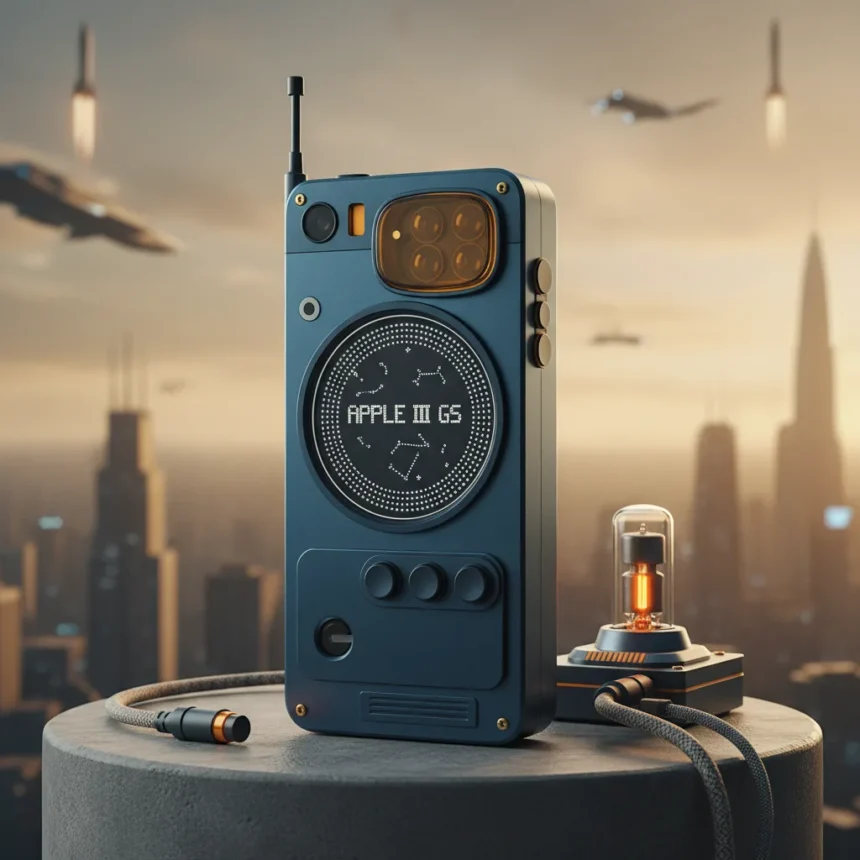
For All Mankind’s iPhone design philosophy reveals something crucial about why the Apple TV series stands out in a crowded streaming landscape. The show does not just imagine an alternate timeline—it builds one with architectural precision, and the devices characters use are not afterthoughts but deliberate extensions of that world.
Key Takeaways
- For All Mankind’s alt-universe iPhones fuse real Apple hardware with speculative design choices.
- The show’s prop team blended an Apple Newton MessagePad 120 with iPhone 12 aesthetics to create believable future devices.
- Meticulous device design is a hallmark of the series’ broader commitment to world-building.
- The iPhone iterations in the show reflect alternate technological and cultural timelines, not just random futurism.
- This attention to detail separates For All Mankind from shows that treat technology as set dressing.
How For All Mankind Builds Worlds Through Device Design
Most science fiction shows treat technology as decoration. A spaceship has blinking lights. A future phone has a curved screen and glowing edges. For All Mankind rejects this laziness. The show’s creators understand that in an alternate timeline, consumer technology would evolve differently—not wildly differently, but noticeably. The Newton MessagePad 120, Apple’s ill-fated personal digital assistant from the 1990s, becomes a design ancestor in this universe. When the prop team fused it with iPhone 12 elements, they were not just making something that looked cool; they were suggesting a different technological inheritance, a path Apple might have taken if history had bent another way.
This approach matters because viewers are not stupid. They notice when a show’s future devices feel borrowed from other shows, or worse, when they feel like they belong in a different fictional universe entirely. For All Mankind avoids this trap by grounding its speculative design in real Apple DNA. The devices are recognizable as Apple products—they carry the company’s design language—but they carry it into a space that feels plausible for an alternate 1960s-onward timeline where the space race never cooled and technology evolved along different lines.
Why Device Design Reflects Narrative Ambition
The decision to customize iPhones for an alternate timeline is not a small one. It signals that the show’s creators care about internal consistency. When a character in For All Mankind pulls out a phone, that phone tells a story about the world they inhabit. It says: this is not our timeline. The technology is familiar enough to understand, but different enough to remind you that everything—politics, culture, economics—has shifted. A generic modern iPhone in the same scene would shatter that immersion instantly.


This level of detail extends beyond phones. It is embedded in the show’s DNA. The production design, the space hardware, the uniforms, the architecture—everything reflects the same principle: in an alternate timeline, details compound. A different space race means different priorities, different funding, different cultural heroes. Those differences ripple outward and reshape consumer products. For All Mankind understands this and executes it relentlessly. The iPhone design is just one visible symptom of a much larger commitment.
For All Mankind iPhone Design and Competitive World-Building
When measured against other alternate-history shows or space-focused science fiction, For All Mankind’s approach to technology design stands apart. Many shows treat future or alternate devices as one-off props, created fresh for each episode without regard for consistency or plausibility. Others borrow wholesale from real tech companies, stripping branding and adding neon. For All Mankind instead treats device design as world-building architecture. The Newton MessagePad 120 fusion with iPhone 12 aesthetics is not a gimmick; it is a statement about how this timeline’s technology evolved. It suggests that Apple’s actual history—including its failed products—might have taken a different path, and that path is visible in the devices characters use.



This distinction matters for how viewers experience the show. In a timeline where the space race never diminished, where government funding for space exploration remained robust, consumer technology companies might have developed differently. They might have invested more heavily in certain product categories, maintained different design philosophies, or pursued different aesthetic directions. For All Mankind’s iPhone design reflects these possibilities. It is not random futurism. It is speculative history embedded in a handheld device.
Does For All Mankind’s Design Philosophy Actually Matter?
Yes. Immersion in alternate-history fiction depends on consistency. If viewers cannot trust that the world follows its own internal logic, the narrative falls apart. A character’s phone, their clothes, their surroundings—these are not decorative. They are the texture of believability. When a show gets these details right, viewers relax into the story. When it gets them wrong, viewers are pulled out, reminded they are watching fiction. For All Mankind refuses to let that happen. Every device, every prop, every visual choice reinforces the world the show has built.
The For All Mankind iPhone design also signals respect for the audience. It assumes viewers are smart enough to notice details and care enough about consistency to appreciate when a show gets it right. That assumption is correct. Science fiction fans, in particular, are detail-oriented. They notice when a show’s technology feels borrowed or generic. They appreciate when creators think through the implications of an alternate timeline and let those implications shape what they see on screen.
What makes For All Mankind stand out compared to other Apple TV shows?
For All Mankind combines meticulous world-building with strong narrative stakes. The show treats alternate history not as a gimmick but as a framework for exploring how different choices reshape society, culture, and technology. Other Apple TV shows excel at different things—character work, emotional depth, visual spectacle—but few commit to the kind of systematic consistency that For All Mankind demonstrates. The iPhone design is one visible example of a much broader philosophy.


Why does the Newton MessagePad 120 appear in For All Mankind’s iPhone design?
The Newton MessagePad 120 was Apple’s attempt at a personal digital assistant in the 1990s. By blending it with iPhone 12 aesthetics, the show’s prop team created a device that felt like a plausible evolution of Apple’s design language in an alternate timeline. It suggests that in this world, Apple’s failed products might have succeeded, or that the company pursued different product lines. The choice grounds speculative design in real Apple history.
Is For All Mankind worth watching if you care about design and world-building?
Absolutely. The show’s commitment to detail extends far beyond phones. Every element of the production—from spacecraft interiors to office architecture to consumer devices—reflects the same principle: in an alternate timeline, everything changes, and those changes are visible. If you appreciate science fiction that treats world-building as seriously as narrative, For All Mankind rewards that appreciation. The iPhone design is just the most visible symptom of a much larger creative ambition.
For All Mankind succeeds because it understands that alternate history is not about adding neon and calling it the future. It is about thinking through how different choices compound and reshape every aspect of a world. The iPhone design proves the show’s creators have done that work. They have imagined not just a different space race, but a different consumer technology landscape, and they have made that landscape visible in the devices characters use. That is why the show works, and why its attention to detail matters far more than the sum of its individual props.
Edited by the All Things Geek team.
Source: Tom's Guide