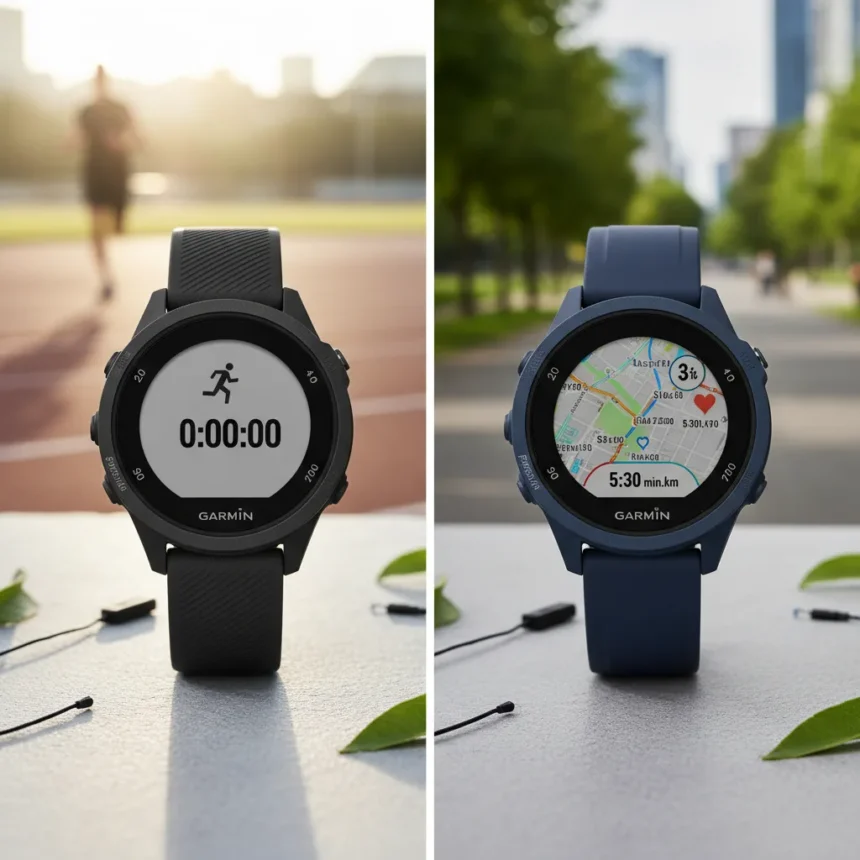
The Garmin Forerunner 70 vs 170 choice matters if you’re shopping for your first serious running watch. Garmin recently launched both models as entry-level alternatives to fitness trackers, positioning them as affordable gateways into serious GPS-powered training. But which one deserves your money?
Key Takeaways
- Forerunner 70 and 170 are Garmin’s newest budget-friendly running smartwatches with core GPS and activity tracking.
- Both watches support PacePro for cadence control, Body Battery for workout planning, and recovery time recommendations.
- Recent free software upgrades add training plans, Course Planner with aid stations, and multi-activity tracking to compatible models.
- Garmin Forerunner 165 offers a proven budget alternative with more sports modes than the new models.
- The Forerunner 570 provides better overall value for runners seeking a step up from entry-level options.
Garmin Forerunner 70 vs 170: What’s the core difference?
The Garmin Forerunner 70 vs 170 comparison hinges on feature depth and pricing positioning. Both watches share Garmin’s essential running DNA—GPS tracking, daily activity monitoring, and smart notifications—but they target slightly different runner profiles. The Forerunner 70 appears positioned as the ultra-affordable option, while the 170 likely adds a few more features or display refinements. Neither competes with premium models like the Forerunner 570 or Fenix 8, which Garmin reserves for runners who demand advanced metrics and multi-sport capabilities.
What makes these newcomers relevant right now? Garmin just rolled out massive free software upgrades across its watch lineup, including training plans, Course Planner with cut-off times and aid stations, and the ability to track multiple sports in a single session. New runners benefit immediately from these tools without paying premium prices.
Shared features: What both watches deliver
The Garmin Forerunner 70 and Forerunner 170 both inherit Garmin’s core running intelligence. PacePro helps you maintain consistent cadence during training. Body Battery estimates your readiness for hard efforts based on sleep, stress, and recovery data. Both watches offer workout suggestions tailored to your recent activity, recovery time recommendations, and insights into sleep quality and stress levels.


Beyond running, both models support contactless payments, smartphone notifications, and installable apps through Garmin Connect. This positions them as genuine smartwatches, not stripped-down fitness trackers. The recent software upgrades mean both will gain access to gym and bodyweight training plans, multi-activity tracking, and Sports Scores for 15 major leagues as updates roll out.
Where Garmin Forerunner 70 vs 170 likely diverges
Without full specification sheets publicly available, the split between these models likely follows Garmin’s established playbook: the Forerunner 70 probably offers a smaller, simpler display with essential metrics, while the 170 may include a larger screen, additional sports modes, or longer battery life. The Forerunner 165, Garmin’s proven budget option, suggests this pattern—it delivers the core running essentials with more sports modes than you’d expect at the entry level, making it an ideal balance of cost and features.



Pricing remains unconfirmed for both new models, but Garmin’s track record indicates the 70 will undercut the 170 by roughly 20-30%, positioning it for runners who want GPS and nothing else, while the 170 targets those willing to spend slightly more for a fuller feature set.
How do they stack up against alternatives?
The Garmin Forerunner 70 and Forerunner 170 face competition from Garmin’s own lineup. The Forerunner 165 remains a compelling alternative if you prioritize sports mode variety and proven reliability. For runners ready to invest more, the Forerunner 570 represents the best overall value in Garmin’s range, delivering features that justify the step up without the excessive capabilities—and double the price—of premium models like the Fenix 8 Pro.
Outside Garmin, competitors like Coros offer similar GPS-focused experiences. The Coros Pace 4 has proven competitive in marathon accuracy testing against higher-end Garmin models, suggesting that budget-focused watches from rivals deserve consideration if you prioritize specific features like ultra-long battery life.
Should you buy the Forerunner 70 or 170?
Choose the Forerunner 70 if you’re a new runner who wants essential GPS tracking, basic recovery insights, and smart features without complexity. It’s the entry point to Garmin‘s ecosystem at the lowest price.



Choose the Forerunner 170 if you plan to run multiple sports, want a larger display, or anticipate needing more training customization. The extra investment likely pays dividends if you’re serious about logging data and following structured plans.
Skip both if you already own a recent Garmin watch—the free software upgrades mean your current device will gain training plans, Course Planner, and multi-activity support without spending more. Consider the Forerunner 165 if you want proven reliability with established reviews. Jump to the Forerunner 570 if you’re willing to spend more for genuinely advanced features that beginner runners won’t immediately need.
Will the Forerunner 70 and 170 receive future updates?
Yes. Garmin consistently updates its watch lineup through the Garmin Connect app, and both new models will receive the same software enhancements rolling out now to compatible devices. Expect training plans, Course Planner features, and expanded sports tracking to arrive as updates.
How does battery life compare between Garmin’s entry-level watches?
The research brief does not specify battery life for the Forerunner 70 or 170. Garmin’s recent software updates mention devices with up to 11 days of standard battery and 37 hours of GPS-plus-solar operation, but these specs apply to different models in the range. Check Garmin’s official product pages for exact battery claims on the 70 and 170.
Is the Forerunner 70 or 170 better for marathon training?
Both watches support the core features marathoners need: GPS accuracy, recovery insights, and training plan integration through recent software upgrades. The Forerunner 170 likely offers more flexibility if you’re training for multiple race distances, while the 70 handles marathon preparation adequately at a lower price point. For serious marathon runners, the Forerunner 570 provides better overall value with features specifically designed for endurance events.
The Garmin Forerunner 70 vs 170 decision ultimately depends on your budget and how much watch complexity you want right now. Both bring Garmin’s trusted running intelligence to an affordable price point, backed by free software upgrades that keep them relevant for years. New runners benefit immediately. Experienced runners might stretch for the 570. Either way, you’re investing in a brand that delivers.
Edited by the All Things Geek team.
Source: Tom's Guide