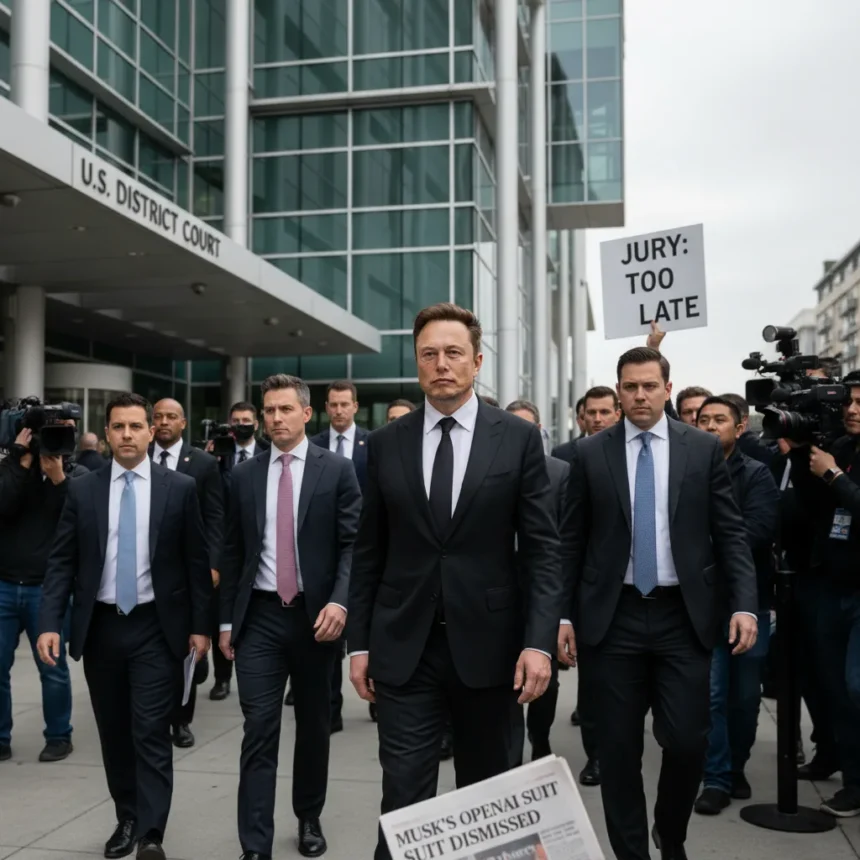
A federal jury in Oakland, California has unanimously rejected the Elon Musk OpenAI lawsuit, delivering a swift and decisive blow to the entrepreneur’s legal challenge. The jury deliberated for less than two hours before voting unanimously to throw out every claim. The core reason: Musk filed the lawsuit too late.
Key Takeaways
- Federal jury in Oakland unanimously rejected all claims in Elon Musk OpenAI lawsuit
- Jury deliberation lasted less than two hours before reaching unanimous verdict
- Musk’s lawsuit was dismissed because he filed it after the legal deadline
- The decision marks a complete loss for Musk in his dispute with OpenAI
- Timing issues, not the merits of the claims, determined the outcome
The Elon Musk OpenAI lawsuit verdict explained
The jury’s rejection of the Elon Musk OpenAI lawsuit came swiftly and without hesitation. Every single claim Musk brought against OpenAI was dismissed. The unanimous decision indicates the jury found no ambiguity in the central legal issue: Musk waited too long to file. Procedural deadlines in federal court are strict, and courts routinely dismiss cases filed after the statute of limitations expires. This case followed that well-established pattern.
The speed of deliberation—less than two hours—suggests the jury faced a straightforward legal question rather than a complex factual dispute. When jurors must evaluate competing expert testimony, weigh technical evidence, or parse intricate contract language, deliberations typically extend for days or weeks. A verdict this quick indicates the jury likely viewed the timing issue as dispositive, leaving little room for debate about whether Musk’s claims had merit on their substantive grounds.
Why timing mattered more than the claims themselves
Federal courts enforce filing deadlines strictly. A plaintiff cannot simply sue whenever they choose—the law imposes specific windows, often measured in years from the date of injury or discovery of wrongdoing. The Elon Musk OpenAI lawsuit apparently fell outside that window. Rather than examining whether Musk’s allegations were true or false, the jury dismissed the case on procedural grounds.



This outcome highlights a critical distinction in litigation: a case can be legally sound but procedurally barred. The jury did not rule that Musk’s claims were baseless or that OpenAI acted properly. Instead, they ruled that Musk had no right to bring those claims in court because he missed the deadline. It is a technical but absolute barrier. Once a statute of limitations expires, the courthouse door closes, regardless of the strength of the underlying grievance.
What this means for Elon Musk and OpenAI
For Musk, the verdict represents a complete legal defeat. He cannot appeal based on the merits because the case never reached the merits stage. The dismissal was procedural, which typically offers limited grounds for appeal. Musk’s attempt to hold OpenAI accountable in court has ended.



For OpenAI, the verdict is a clear win. The company faced no requirement to defend itself against the substance of Musk’s allegations. The jury’s rapid, unanimous decision sends a strong signal: the case should never have been filed in the first place. OpenAI can move forward without the burden of ongoing litigation or the risk of a jury verdict against it.
Frequently Asked Questions
What were the specific claims in Elon Musk’s lawsuit against OpenAI?
The research brief does not specify the exact legal claims Musk brought. The case was dismissed on timing grounds before those claims were evaluated on their merits. To learn the specific allegations, you would need to review the original complaint filed in the federal court.
Can Elon Musk appeal the jury’s decision?
Appeals of procedural dismissals are possible but face high hurdles. Since the jury ruled on timing, not substance, Musk would need to argue the court misapplied the statute of limitations. Courts rarely overturn such rulings. An appeal is theoretically available, but success would be unlikely.
How common are jury verdicts this quick?
Verdicts reached in under two hours are uncommon in complex litigation but not unheard of when a case turns on a single, clear legal issue. When jurors unanimously agree on a procedural barrier, they may reach a decision rapidly without needing to debate competing interpretations of law or fact.


The Elon Musk OpenAI lawsuit is now closed. The jury’s swift, unanimous rejection underscores a fundamental principle of civil law: timing rules matter as much as the merits. Musk’s case never got the chance to be heard on its substantive claims because he filed it outside the legal window. For anyone watching the broader relationship between Musk and OpenAI, this verdict means the courts will not be the arena for that dispute.
Edited by the All Things Geek team.
Source: Tom's Hardware