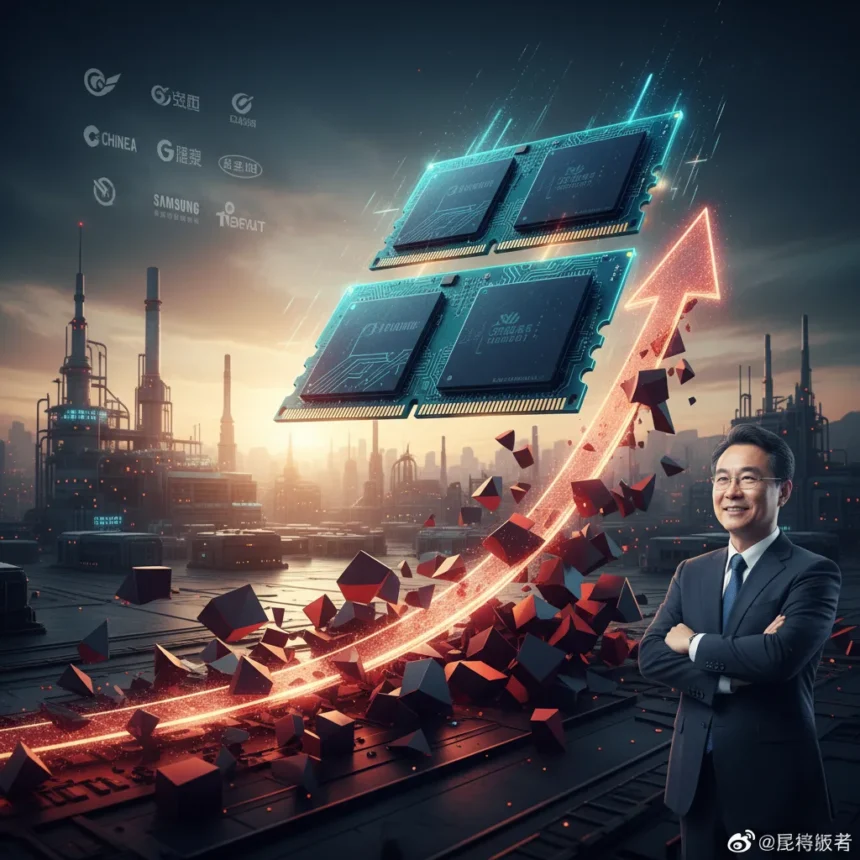
The RAM crisis relief may be closer than many PC builders fear. According to Kyung-Hyeon Kye, former president of Samsung Electronics’ semiconductor division, the memory market could begin shifting in the second half of next year as Chinese manufacturers dramatically expand their production capacity.
Key Takeaways
- A former Samsung semiconductor chief predicts RAM crisis relief starting in the second half of next year.
- Chinese companies are aggressively expanding memory production capacity, which could ease global supply constraints.
- Pricing normalization may take a year or more even after supply begins increasing.
- If AI-related memory demand weakens, oversupply could follow a period of normalization.
- Major non-Chinese memory manufacturers are also increasing capacity, compounding the supply shift.
When RAM crisis relief could actually arrive
The timeline for RAM crisis relief depends heavily on Chinese manufacturing expansion. Kye stated the memory market could change “starting from the second half of next year,” suggesting that supply dynamics could shift noticeably within 12 to 18 months. However, this does not mean prices will immediately return to pre-crisis levels. Even as supply increases, the transition from shortage to normal availability will take time, and true price relief may lag behind supply improvements by several months.
The prediction carries weight because Kye speaks from decades inside Samsung’s semiconductor operations, one of the world’s largest memory manufacturers. His comments suggest that industry insiders see the current shortage as cyclical rather than permanent, driven by temporary demand spikes and capacity constraints that are actively being addressed across the globe.
Why Chinese capacity expansion matters for RAM crisis relief
China’s role in breaking the RAM crisis relief cycle is central to this forecast. Chinese memory manufacturers are investing heavily in production lines, which will add significant global supply when those facilities come online. This is not merely a Chinese story—it reflects broader industry dynamics where memory demand has outpaced supply, driving prices to levels that make new manufacturing investments profitable.


The global memory market has historically been dominated by Samsung, SK Hynix, and Micron. Chinese competitors entering or expanding in this space changes the competitive landscape. When multiple new suppliers flood the market simultaneously, the balance shifts from scarcity to abundance. This competitive pressure will likely force prices downward faster than if supply came from established players alone.
The risk of oversupply and what it means for buyers
If RAM crisis relief arrives as predicted, the market could swing from shortage to oversupply, depending on how AI-related memory demand evolves. Current high prices are partly driven by artificial intelligence workloads consuming vast amounts of memory. If AI spending cools or stabilizes, combined with the new Chinese capacity coming online, the market could face a glut rather than mere normalization.



This scenario is not hypothetical. Memory markets have historically swung between extremes—shortages that drive prices up, followed by oversupply that crashes them. Buyers caught in the wrong phase of the cycle pay the price. The takeaway for PC builders is that waiting another year may yield significantly better memory pricing, though the exact timing remains uncertain.
What this means for your next PC build
For anyone planning a PC upgrade or build, RAM crisis relief could reshape your budget timeline. If prices are likely to drop in the second half of next year, delaying a memory-heavy build might save hundreds of dollars. Current RAM costs are inflated by supply constraints, and those constraints appear temporary rather than structural. Conversely, if you need a system immediately, the pain of higher prices now must be weighed against the risk that prices drop sharply after you buy.
The RAM crisis relief prediction also matters for prebuilt PC manufacturers and system integrators, who typically absorb memory costs and pass them to consumers. As their input costs fall, retail prices should follow, though not always immediately or proportionally.
Is the RAM crisis actually ending in the second half of next year?
The prediction depends on Chinese manufacturers executing their capacity expansion on schedule and global demand not surging unexpectedly. Both are reasonable but not guaranteed. Semiconductor manufacturing faces supply chain delays, geopolitical risks, and technical hurdles. If Chinese expansion slips by six months, so does RAM crisis relief. Conversely, if AI demand explodes beyond current expectations, even expanded capacity might not be enough to ease prices.



Will RAM prices drop immediately once the crisis ends?
No. Even as supply increases, prices typically lag. The transition from shortage to normal market conditions is gradual. Expect RAM crisis relief to unfold over several quarters, with prices falling in steps rather than all at once. A year or more may pass between when supply begins improving and when pricing returns to historical norms.
Could the memory market swing to oversupply?
Yes, if AI-related demand weakens while Chinese capacity comes online. Memory markets are cyclical, and the combination of new supply and stable or declining demand could create a glut. This would push prices below normal levels, rewarding buyers who wait but potentially hurting memory manufacturers’ margins.
The RAM crisis relief timeline offered by a former Samsung semiconductor chief should be taken seriously, but not as gospel. Market predictions always carry uncertainty, and semiconductor cycles are notoriously difficult to time. What matters now is that industry insiders see the current crisis as temporary and solvable through expanded capacity—a signal that relief is likely, even if the exact timing shifts. For PC builders and system integrators, that forecast should influence upgrade decisions over the next 12 to 18 months.
Edited by the All Things Geek team.
Source: TechRadar