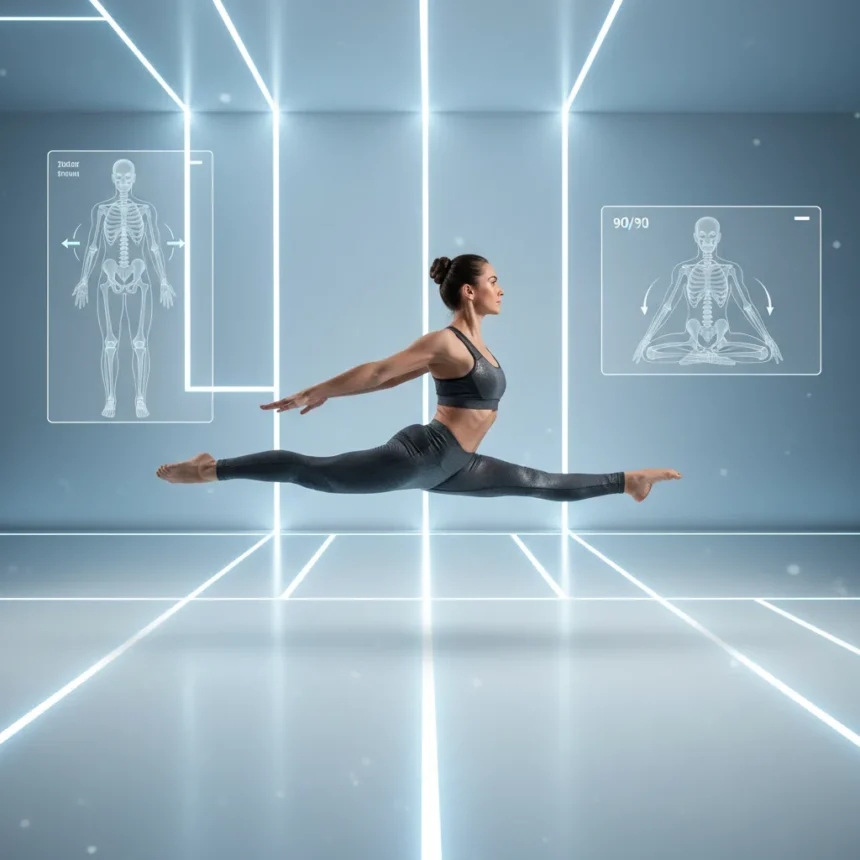
The floating pigeon pose is a yoga-inspired hip-opening stretch that releases tension in the hips and glutes while engaging the core. Unlike the traditional 90/90 stretch, the floating pigeon pose elevates the body off the ground, creating a more dynamic and challenging variation that targets deeper hip muscles and improves overall mobility.
Key Takeaways
- Floating pigeon pose offers a more intense hip and glute release than the standard 90/90 stretch.
- The elevated position engages the core while stretching the hip muscles simultaneously.
- This variation is suitable for intermediate to advanced practitioners seeking deeper mobility work.
- The pose combines stretching and strengthening benefits in a single movement.
- Proper form and controlled breathing are essential for maximizing benefits and avoiding strain.
Why Floating Pigeon Pose Outperforms the 90/90 Stretch
The floating pigeon pose delivers superior hip and glute engagement compared to the 90/90 stretch because it requires the body to support itself while the hips are in a deep external rotation. This creates a compound effect: your glutes and hip flexors stretch while your core stabilizes the position. The 90/90 stretch, by contrast, is performed seated with ground support, limiting the intensity and core activation.
The key difference lies in the floating pigeon pose’s demand for active stabilization. As you hover above the ground, your abdominal muscles, obliques, and lower back work to maintain balance and control. This transforms what could be a passive stretch into a dynamic mobility and strength hybrid. Readers seeking to improve hip flexibility while building functional core strength find this approach more rewarding than static stretching alone.
How to Perform the Floating Pigeon Pose
To perform the floating pigeon pose safely, begin in a high plank position with your hands beneath your shoulders and your body in a straight line. Bring one knee forward toward the same-side arm, positioning your shin parallel to your torso. Keep your hips level and your core engaged throughout the movement. Hold this position for 20 to 30 seconds, breathing steadily, then return to plank and repeat on the opposite side.

The critical cue is to avoid letting your hips collapse or rotate. Your shoulders should remain stacked over your wrists, and your neck should stay neutral. If maintaining the full floating position feels too demanding, modify by dropping your back knee to the ground while keeping your front shin in the pigeon position. This reduces the intensity while preserving the hip-opening benefits. Beginners should consult a qualified yoga instructor or physical therapist before attempting this pose, especially if they have existing hip, knee, or lower back issues, are returning from injury, or are pregnant or postpartum.
Benefits Beyond Hip Mobility
While hip and glute tension relief is the primary draw, the floating pigeon pose delivers secondary benefits that extend throughout your kinetic chain. Your core stabilizers—the transverse abdominis, rectus abdominis, and obliques—activate intensely to prevent rotation and collapse. Over time, this strengthens your midsection in a functional, movement-based way rather than through isolated crunches or planks.



Additionally, the floating pigeon pose improves proprioception and balance. Your nervous system learns to coordinate multiple muscle groups simultaneously, enhancing your ability to move confidently in everyday life. Runners, cyclists, and desk workers who suffer from tight hips often report that consistent floating pigeon practice reduces lower back pain and improves movement quality in their primary activities.
Floating Pigeon Pose vs. 90/90 Stretch: A Direct Comparison
The 90/90 stretch positions both your hips and knees at 90-degree angles while seated, targeting the external rotators of the hip. It is accessible, beginner-friendly, and requires no balance or core engagement. However, this simplicity is also its limitation: the ground-based position means your core muscles remain passive, and the intensity depends largely on how far you can fold forward.
The floating pigeon pose, by contrast, demands active participation from your entire body. You cannot relax into the stretch; you must maintain constant tension to stay elevated. This makes it more challenging but also more rewarding for intermediate practitioners who have already built baseline hip flexibility and core strength. If you are new to hip mobility work, the 90/90 stretch remains the better starting point. Once you have developed sufficient flexibility and strength, floating pigeon becomes the natural progression.
Frequently Asked Questions
Can beginners attempt the floating pigeon pose?
Beginners can modify the floating pigeon pose by dropping the back knee to the ground, which reduces the demand on core stability while preserving the hip-opening benefits. Start with the 90/90 stretch or a standard pigeon pose first, then progress to the floating variation once your hips and core feel stronger.



How often should I practice floating pigeon pose?
Practicing floating pigeon pose 3 to 4 times per week allows your hips and core to adapt while giving your body adequate recovery time. Consistency matters more than daily repetition; regular practice yields better long-term mobility gains than sporadic intense sessions.
What should I do if floating pigeon pose causes knee or hip pain?
Stop immediately and revert to a gentler stretch like the 90/90 or standard pigeon pose. Pain signals that your tissues are not ready for that intensity. Work with a physical therapist or certified yoga instructor to identify which variation suits your body best.
The floating pigeon pose represents a meaningful upgrade for anyone who has plateaued with traditional hip stretches. It bridges the gap between mobility work and functional strength, delivering real improvements in how your hips, core, and glutes feel and perform. If you have already mastered the basics, this variation deserves a place in your regular routine.
Edited by the All Things Geek team.
Source: Tom's Guide