





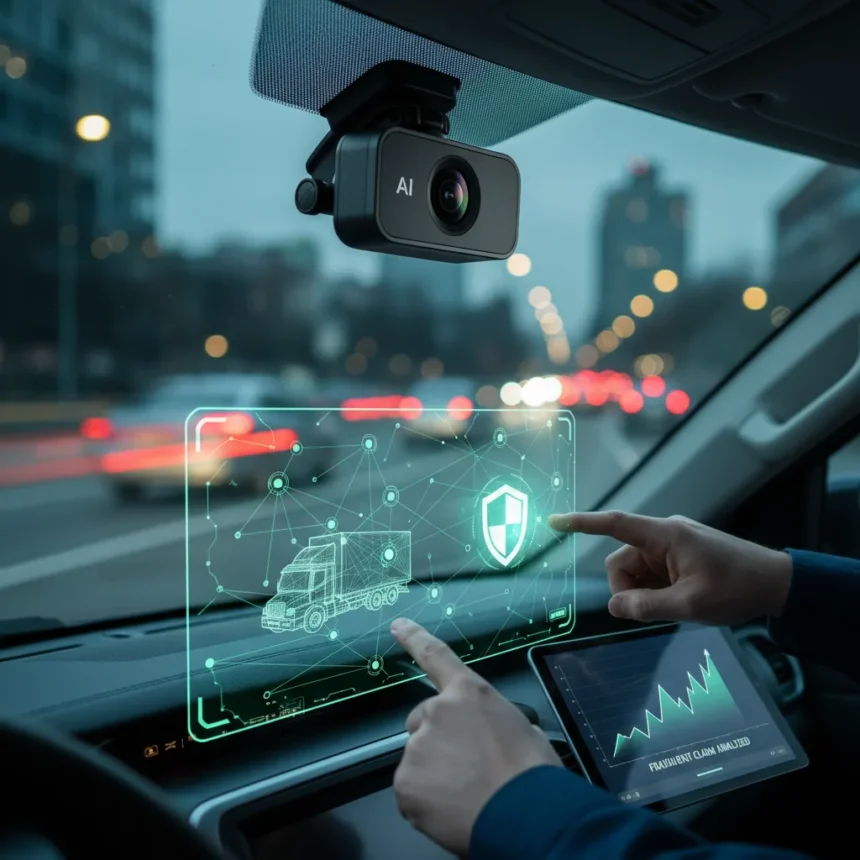
AI-powered dash cams are reshaping how fleets approach legal risk. These systems do far more than passively record collisions—they actively help businesses exonerate drivers, fight fraudulent claims, and potentially reduce insurance costs before litigation even begins.
Key Takeaways
- AI dash cams capture speed, time, and date data to strengthen driver defense in disputes.
- Video evidence can prove a driver was not at fault in collisions or insurance disputes.
- Dash cams with parking mode monitor unmanned vehicles for theft or vandalism.
- Footage stored in cloud systems provides remote access and backup for legal proceedings.
- Dash cams are legal in both the UK and US, though they do not automatically guarantee lower insurance premiums.
From Passive Recording to Active Legal Defense
Traditional dash cams record accidents. AI-powered dash cams do something different: they build defensible evidence. The shift matters because it changes when and how businesses can intervene in disputes. Instead of waiting for a claim to arrive, fleets can use AI analysis to identify risk patterns, validate driver actions, and preempt false accusations with timestamped, speed-verified footage.
The legal advantage is straightforward. When a collision occurs, dash cam footage that includes speed, time, and date metadata becomes immediately actionable evidence. A driver accused of speeding or recklessness can be exonerated before the claim reaches an adjuster. This early intervention—proving innocence before formal litigation—is where AI-powered systems create genuine value for fleet operators managing dozens or hundreds of vehicles.
How AI-powered dash cams combat fraud and reduce exposure
Insurance fraud targeting commercial fleets is endemic. A driver hits a parked car or is involved in a low-speed collision, and a fraudster claims injury or inflates damage costs. Without video evidence, the fleet’s word stands against a third party’s claim. With dash cam footage, the narrative changes instantly.



AI-powered dash cams amplify this advantage by automating threat detection. The systems can flag risky driving moments, validate driver behavior claims, and provide courts and insurers with objective visual proof rather than conflicting statements. Parking mode monitoring extends this protection to unmanned vehicles, capturing footage of hit-and-runs or vandalism that would otherwise go unrecorded.
Some AI dash cam systems also include emergency response integration, automatically alerting emergency services if a crash is detected and sharing location data if the driver cannot respond. This capability reduces response time and creates an additional layer of documentation for serious incidents.



Storage, legality, and the insurance premium question
Dash cam footage traditionally lives on microSD cards, which are portable but vulnerable to loss or damage. Modern AI-powered systems increasingly shift to cloud storage, providing remote backup and ensuring that critical footage survives hardware failure or device theft.
Legally, dash cams are permitted in both the UK and the US, removing a major barrier to fleet adoption. However, one common misconception deserves correction: owning a dash cam does not automatically lower insurance premiums. While the footage can substantially assist in claims handling and investigations, insurers do not uniformly offer premium reductions simply for having cameras installed. The real savings come from winning disputed claims and preventing fraudulent payouts—a financial benefit that compounds across a fleet but may not appear as a line-item discount on a policy.
Why fleets are adopting AI-powered systems now
The economics are compelling. A single fraudulent claim can cost a fleet thousands in settlement, legal fees, and increased premiums. Multiply that across a year and a medium-sized fleet faces six-figure exposure to false accusations alone. AI-powered dash cams address this risk at a fraction of the cost.
The technology also appeals to fleet managers who want to protect drivers. Exonerating an innocent driver quickly—before a claim balloons into a lawsuit—improves retention and morale while reducing legal burden. This dual benefit—protecting both the business and its workforce—explains why companies like Nexar market AI-powered dash cams specifically for fleet safety, efficiency, and insurance-cost savings.



What about competing approaches?
Older dash cam models offer basic video recording and proof-of-innocence functionality, but lack AI-powered analysis and cloud integration. They require manual review of footage and do not automatically flag risky driving or integrate with fleet management systems. AI-powered alternatives streamline this workflow, turning raw video into actionable intelligence without human intervention.
Can AI-powered dash cams actually save millions in legal fees?
The headline promise—millions in savings—depends on fleet size and claims frequency. A 50-vehicle fleet avoiding even three fraudulent claims per year could save $30,000 to $50,000 in legal and settlement costs. Larger fleets with hundreds of vehicles and higher claim volumes could see substantially larger returns. However, these savings emerge over time through prevented claims and reduced litigation, not through immediate premium discounts.
Are AI-powered dash cams worth the investment for small businesses?
For small fleets with minimal collision exposure, the return on investment may take longer. For delivery services, rideshare operators, or commercial fleets with high accident frequency, AI-powered dash cams typically pay for themselves within 12-24 months through claims avoidance and legal cost reduction.
Do dash cams work in all weather conditions?
Most dash cam systems record in rain, fog, and low light, though video quality degrades in severe conditions. Cloud backup ensures that even if a device is damaged or stolen, footage is preserved for legal proceedings.
AI-powered dash cams represent a genuine evolution in fleet risk management. They shift the burden of proof away from the driver’s word and toward objective video evidence, reducing legal exposure and fraud vulnerability. For businesses managing vehicles, the case for adoption is increasingly difficult to ignore.
Edited by the All Things Geek team.
Source: TechRadar