






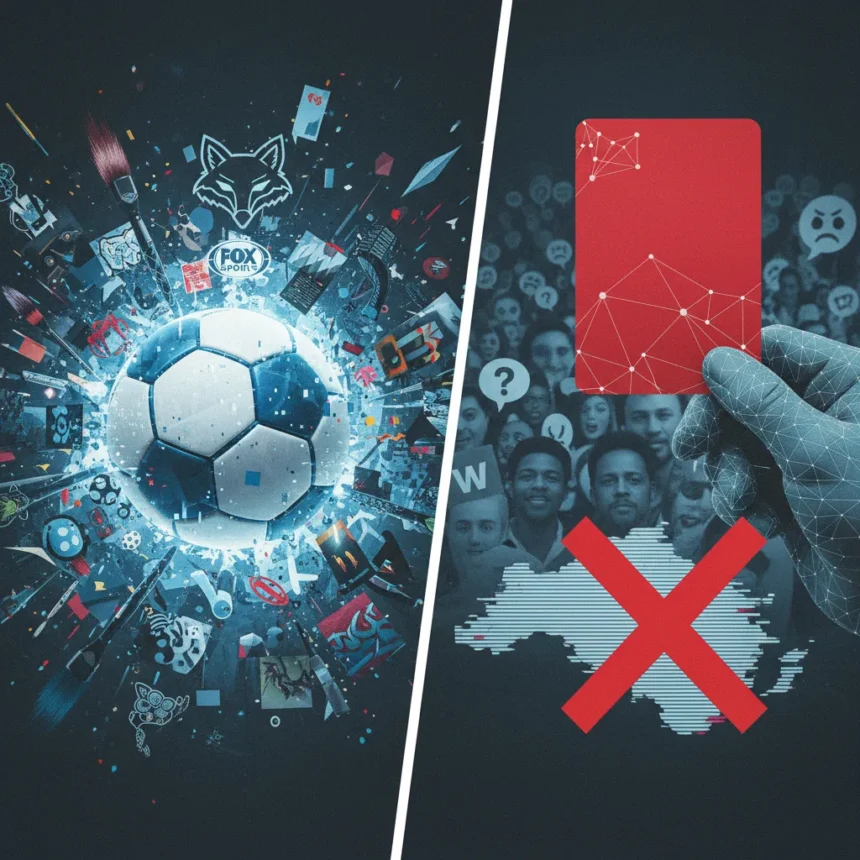
Fox Sports’ World Cup of artists campaign has already become a flashpoint for debate over representation, fairness, and cultural inclusion in sports marketing. The concept frames global artists in a tournament-style competition, but the early backlash reveals deeper tensions about which countries and creative voices get visibility on the world’s biggest sporting platform.
Key Takeaways
- Fox Sports launched a World Cup of artists concept that immediately generated public controversy.
- The campaign’s structure has drawn criticism over country representation and selection fairness.
- Early reaction suggests fundamental disagreements about inclusion in high-profile sports partnerships.
- The controversy highlights how sports marketing campaigns can inadvertently amplify representation gaps.
- The debate centers on whether certain nations deserve exclusion or reconsideration.
Why the World Cup of artists matters right now
Sports marketing campaigns typically celebrate universal values—unity, excellence, global participation. Yet Fox Sports’ World Cup of artists has exposed how quickly those ideals can fracture when actual curation happens. The campaign launched into immediate criticism, suggesting the selection process did not account for the sensitivities audiences bring to global competitions. In an era where every brand decision faces scrutiny for inclusivity, a tournament-style ranking of artists across nations was always going to invite debate about who got left out and why.
The timing is significant. Major broadcasters are increasingly investing in cultural partnerships alongside sports coverage, blurring the line between entertainment and competition. When Fox tied artist representation to World Cup branding—one of the most nationalist, country-versus-country frameworks in sports—the friction became inevitable. The question is not whether the campaign is controversial, but whether the controversy reveals a mismatch between how global brands think about inclusion and how audiences actually experience it.
The representation question at the heart of the debate
The core criticism centers on fairness and visibility. A World Cup of artists framed as a global tournament implies equal or merit-based selection, yet the early backlash suggests certain countries feel underrepresented or unfairly judged. This touches on a fundamental tension in sports marketing: when you invite the whole world to participate in a competition, you are implicitly making statements about whose art, culture, and talent matter most. Some nations apparently felt those statements were unfair.



The red card framing in the original headline hints at the stakes—this is not just about rankings or preferences, but about exclusion. In World Cup terms, a red card means ejection, disqualification, removal from play. Applied to artists and countries, that language carries weight. It suggests not just that some nations ranked lower, but that some might not belong in the competition at all. That kind of judgment, applied globally and publicly, was always going to provoke defensiveness and backlash.
What this reveals about sports marketing in 2025
Fox Sports’ World Cup of artists campaign is a case study in how traditional sports frameworks can misfire when applied to creative partnerships. Sports competitions thrive on clear winners and losers, hierarchy, and national pride. Those same elements can feel exclusionary and even offensive when applied to art, culture, and human expression. The controversy suggests that broadcasters and brands are still learning how to leverage sports’ global reach without importing sports’ zero-sum logic into spaces where it does not belong.



The broader lesson is that visibility on a global platform comes with responsibility. Fox’s investment in the campaign shows the broadcaster understands that artists and cultural content matter to audiences. But the backlash indicates that visibility without thoughtfulness about inclusion can backfire faster than the campaign can gain traction. Other major sports broadcasters watching this unfold are likely taking notes on what not to do in their own artist partnerships and cultural initiatives.
Is Fox Sports backing down from the World Cup of artists concept?
The research available does not specify whether Fox Sports has responded to the controversy with changes, apologies, or clarifications about the campaign’s selection process. The controversy is confirmed as immediate and ongoing, but the broadcaster’s official response remains unverified.
What makes a fair global artist representation campaign?
A genuinely inclusive global campaign would likely prioritize transparency about selection criteria, ensure diverse geographic and cultural representation, and avoid tournament-style hierarchies that inherently create winners and losers. Framing artists as competitors rather than collaborators may have been the core misstep—audiences increasingly expect brands to celebrate creative diversity rather than rank it.
Why did Fox Sports choose a World Cup format for an artist campaign?
The World Cup is Fox’s primary sports property and cultural touchstone, making it a natural reference point for the broadcaster’s marketing. However, applying sports competition logic to artistic representation created the controversy—the format itself embedded assumptions about merit, hierarchy, and national pride that do not translate cleanly to creative partnerships.


Fox Sports’ World Cup of artists campaign serves as a cautionary tale: global reach and good intentions are not enough. Representation matters, and so does the framework you choose to showcase it. The controversy is not about whether artists deserve visibility—they do. It is about whether a tournament-style ranking was ever the right vehicle to provide it. As sports broadcasters continue investing in cultural partnerships, this debate will likely shape how they approach similar initiatives going forward.
Edited by the All Things Geek team.
Source: Creativebloq