







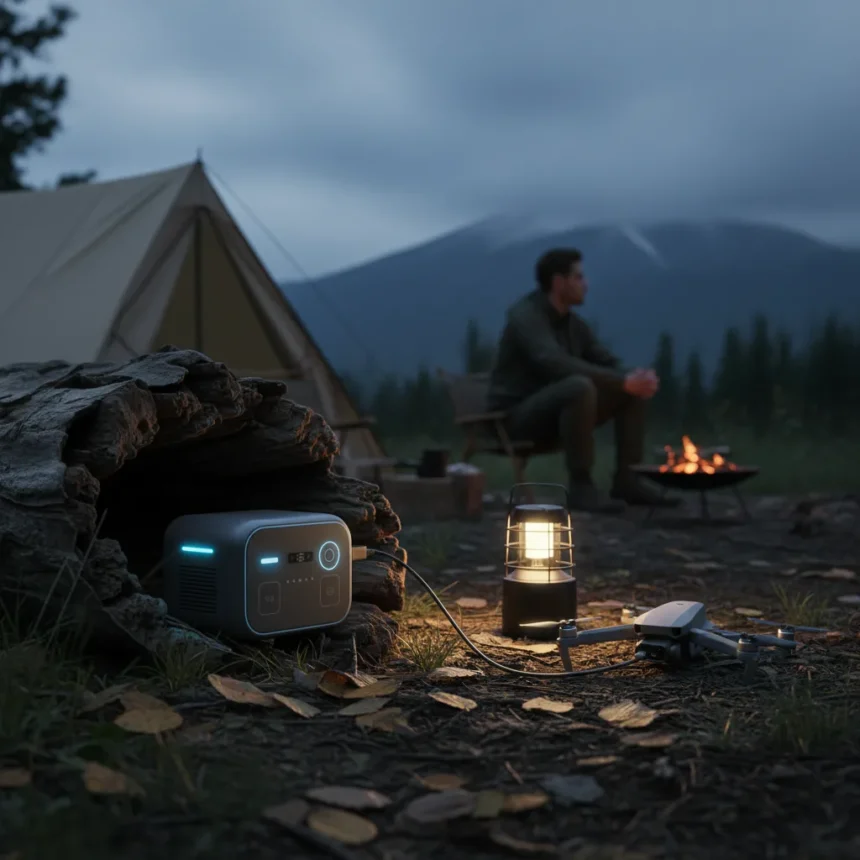
DJI’s vision for portable power stations extends far beyond drones—the company is betting that the next generation of portable power stations will be smarter, smaller, and almost invisible to users who want reliable energy without the bulk.
Key Takeaways
- DJI is refreshing its portable power lineup with upgraded models and higher-output charging accessories.
- The Power 1000 v2 delivers smarter, faster, and more reliable performance than earlier mid-size units.
- DJI’s 1.8kW Solar/Car Super Fast Charger supports up to 1,200W of solar input and recharges a Power 1000 in 40 minutes.
- The Power Expansion Battery 2000 adds 2,048Wh of capacity, allowing multi-unit expansion for off-grid setups.
- DJI is positioning portable power as essential for camping, RV travel, and emergency backup scenarios.
DJI’s Shift Into Portable Energy Beyond Drones
DJI’s move into portable power stations signals a deliberate expansion beyond its core drone business into consumer energy products. The company recognizes that portable power stations are no longer niche camping gear—they are becoming essential infrastructure for anyone seeking energy independence, whether for weekend outdoor trips, RV adventures, or home backup during outages. This shift reflects a broader market trend toward integrated hardware ecosystems where energy storage plays a central role in modern mobility and resilience.
The portable power category itself has matured significantly. What once meant lugging a heavy generator is now a sleeker proposition, though DJI believes the industry still has room to evolve. The company’s interview-driven approach to explaining its vision suggests that intelligence and integration—not just raw capacity—will define the next wave of portable power innovation.
What Makes Portable Power Stations Smarter
According to DJI’s strategic direction, smarter portable power stations will anticipate user needs rather than simply store energy. The Power 1000 v2, for instance, is described as smarter, faster, and more reliable than its predecessor, indicating that DJI is prioritizing responsive performance and adaptive behavior. This suggests features like real-time monitoring, intelligent charging prioritization, and seamless integration with multiple power sources—all designed to reduce friction for users who are managing power across devices, appliances, and charging accessories simultaneously.



The company’s accessory strategy reinforces this intelligence angle. The Power 1.8kW Solar/Car Super Fast Charger, for example, supports two-way charging, meaning it can both draw power from an RV alternator and keep the RV battery charged during extended trips. This kind of bidirectional logic—where the power station becomes part of a larger energy ecosystem—is what DJI means by smarter. Users no longer need to choose between powering their gear and maintaining their vehicle’s battery; the system handles both intelligently.
Shrinking Size Without Sacrificing Capacity
Making portable power stations smaller while maintaining usable capacity is an engineering challenge, but DJI is tackling it through modular design. The Power Expansion Battery 2000, which adds 2,048Wh of extra capacity, allows users to expand their setup across multiple units rather than buying one monolithic power station. This modular approach means you can scale capacity to match your actual trip—a weekend camping trip needs less than a month-long RV journey—without carrying unused bulk.


The compact Power 500 remains in DJI’s lineup, while the company is preparing upgraded versions of the Power 1000 v2 and Power 2000, skipping an update to the Power 500. This suggests DJI sees the sweet spot for portable power in the mid-to-large range, where capacity and portability reach practical equilibrium. The real innovation may be in how these units communicate and combine, allowing users to build custom power solutions that feel smaller and lighter than a single equivalent unit.
Off-Grid Charging: The Infrastructure Play
DJI’s charging accessories reveal a company thinking beyond the power station itself. The Power 1.8kW Solar/Car Super Fast Charger supports up to 1,200W of solar input and can deliver 600W from an RV alternator, fully recharging a Power 1000 in approximately 40 minutes. These aren’t modest numbers—they reflect a commitment to making portable power stations genuinely independent from wall outlets.
By optimizing these chargers for the Power 500 and Power 1000, DJI is building an ecosystem where the weakest link—charging speed—becomes a strength. Users can top up quickly during daylight hours using solar, or during a pit stop using an RV alternator, eliminating the anxiety of running low on power in remote areas. This infrastructure-first thinking is what separates DJI’s approach from competitors who treat portable power as a standalone product.
Why Invisibility Matters
The goal of making portable power stations almost invisible reflects a design philosophy: the best gear is the gear you stop thinking about. A power station that is smart enough to manage itself, small enough to fit smoothly into your setup, and reliable enough to never fail when you need it becomes transparent to the user experience. You focus on your trip, your work, your emergency, not on managing your power.


This invisibility also has aesthetic implications. Bulky power stations draw attention and clutter a campsite or RV interior. A smaller, modular system that hides in a storage compartment or integrates into your vehicle’s electrical system feels less like gear and more like infrastructure. DJI’s vision suggests the future of portable power is less about impressive specs on a spec sheet and more about disappearing into the background of how people actually live and travel.
How does the Power 1.8kW Solar/Car Super Fast Charger work?
The charger connects to solar panels to input up to 1,200W, or to an RV alternator to supply 600W of power. It features two-way charging, so the RV battery stays charged during extended road trips while the power station recharges simultaneously.
Can you expand DJI portable power station capacity?
Yes. The Power Expansion Battery 2000 adds 2,048Wh of extra capacity and allows capacity expansion across multiple units, letting you scale power to match your actual needs.
Which DJI portable power stations are getting updated?
DJI is preparing upgraded Power 1000 v2 and Power 2000 units, while skipping an update to the compact Power 500.
DJI’s interview-driven vision for portable power stations reflects a company betting that the future belongs to systems that are intelligent, modular, and designed to fade into the background. Rather than chasing raw capacity or lowest price, DJI is building an ecosystem where the power station, charger, and battery work together so smoothly that users stop thinking about power management altogether. For anyone who camps, travels off-grid, or needs reliable backup energy, that shift from visible gear to invisible infrastructure is the real innovation.
Where to Buy
Edited by the All Things Geek team.
Source: T3




