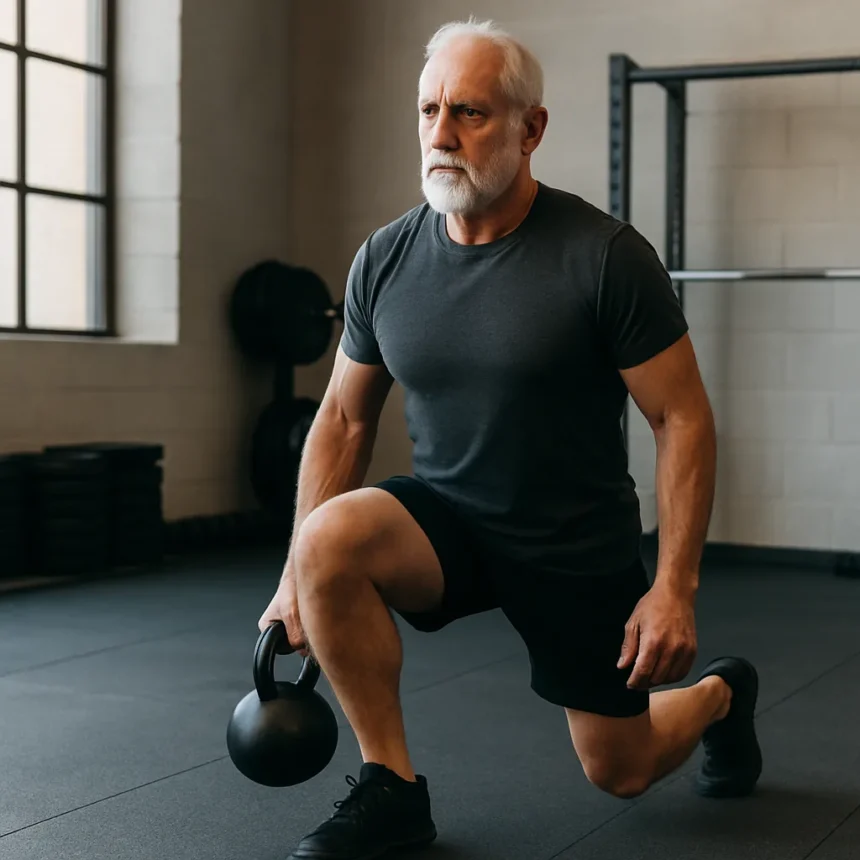
Functional exercises for full-body strength aren’t just for younger lifters. A 68-year-old competitive powerlifter demonstrates that compound movements—deadlifts, overhead presses, and front squats—remain the cornerstone of serious strength development at any age, challenging the assumption that competitive powerlifting is a young person’s game.
Key Takeaways
- Deadlifts build posterior chain strength essential for pulling power and foundational powerlifting performance.
- Overhead presses develop shoulder stability and pressing power critical for bench press carryover.
- Front squats enhance quad strength, core stability, and squat depth for competitive squatting.
- Compound functional movements mimic real-life actions like lifting and pushing, improving everyday functionality.
- Age 68 demonstrates that competitive powerlifting remains viable through proper functional training programming.
Why Functional Exercises Matter for Older Powerlifters
Functional exercises for full-body strength differ fundamentally from isolation work like bicep curls. These compound movements train multiple muscle groups simultaneously while mimicking real-world actions—lifting, pushing, pulling—that translate directly to daily life and competitive performance. For a 68-year-old competing in powerlifting, this efficiency matters. You cannot afford wasted volume; every rep must serve the sport.
The three exercises this powerlifter relies on—deadlift, overhead press, and front squat—form the backbone of strength sports globally. They are not trendy or novel. They work because they demand full-body coordination, force production through multiple joints, and mental toughness. Unlike isolation exercises, functional movements require core bracing, postural control, and integrated strength patterns that transfer to real performance.
The Deadlift: Building Posterior Chain Power
The deadlift targets the entire posterior chain—back, glutes, and hamstrings—and builds the foundational pulling strength that underpins competitive deadlifting. Proper form is non-negotiable, especially for older lifters where injury risk increases with technical breakdown. Here is the correct movement pattern: stand with feet hip-width apart, barbell positioned over your mid-foot. Hinge at the hips to grip the bar with a neutral spine, keeping your back flat throughout the movement. Drive through your heels to lift the bar along your shins while simultaneously extending your hips and knees. Stand tall at lockout with shoulders pulled back, then lower the weight under control to the ground.

This exercise demands respect. The deadlift is not a lower-back movement—it is a full-body pull that teaches you to generate force from the ground up. For a 68-year-old competitive powerlifter, mastering deadlift mechanics protects the spine while maximizing strength output. The posterior chain weakness is often the limiting factor in aging athletes, and deadlifts directly address this vulnerability.
Overhead Press: Shoulder Stability and Pressing Power
The overhead press develops shoulder, tricep, and upper chest strength while demanding serious core stability. Position your feet shoulder-width apart with the barbell racked at collarbone height. Press the bar directly overhead by extending your arms fully while maintaining a braced core—think of creating a rigid pillar from your feet through your shoulders. Lower the weight back to the starting position with control.



Why does this matter for a competitive powerlifter? The overhead press builds shoulder stability and pressing power that carries over to bench press performance. Many lifters neglect overhead strength, treating it as secondary. That is a mistake. Shoulder stability prevents injury and creates a stronger lockout position across all pressing movements. For someone at 68 competing seriously, shoulder health is non-negotiable, and overhead pressing directly strengthens the joint and surrounding musculature.
Front Squat: Quad Strength and Postural Control
The front squat is brutal and specific. Load the barbell on your front shoulders with elbows held high to maintain an upright torso. Squat by pushing your knees forward and hips back simultaneously, descending until your thighs reach parallel or below. Drive upward through your heels to return to standing.
This movement targets your quads, core, and upper back while demanding the postural control that defines competitive squatting. Unlike back squats, front squats force you to stay upright, reducing lower-back stress while maximizing quad engagement. For functional exercises for full-body strength, the front squat is particularly valuable because it improves squat depth and posture—critical for both competitive performance and everyday movement quality. A 68-year-old who can front squat with proper form demonstrates genuine functional strength, not just training sophistication.
How These Three Exercises Compare to Other Approaches
Some trainers push single-leg deadlifts or kettlebell swings as superior functional alternatives. These exercises have merit—single-leg deadlifts demand balance and unilateral strength, while kettlebell swings build explosive power through the posterior chain. However, they are supplemental tools, not replacements. A competitive powerlifter at 68 cannot sacrifice the specificity and load capacity of barbell deadlifts, presses, and squats for lighter variations. The barbell compounds remain the most direct path to competitive strength because they allow progressive overload and precise force measurement—essential for tracking improvement over time.



Bulgarian split squats and squat thrusters offer variation and metabolic demand, but they do not match the structural integrity and neuromuscular demand of front squats for someone pursuing competitive powerlifting. Functional does not mean easy or trendy. It means effective for the goal. For this 68-year-old, the goal is competitive strength, and these three exercises deliver.
Safety Considerations for Older Lifters
Before beginning any strength training program, especially if you are a beginner, returning from injury, or postpartum, consult a qualified fitness professional or physician to assess your readiness and ensure proper form. A coach familiar with powerlifting is invaluable—these lifts demand technical precision, and poor form at any age invites injury.
For lifters over 60, mobility work and adequate recovery become non-negotiable. Warm up thoroughly, prioritize sleep, and do not skip mobility drills. A 68-year-old competing in powerlifting likely has years of training experience, but that does not excuse sloppiness. In fact, experience should deepen respect for technical standards.
Can I build full-body strength with just these three exercises?
Yes. The deadlift, overhead press, and front squat address every major muscle group and movement pattern. These three compound movements, performed consistently with progressive overload, build comprehensive strength. Supplemental exercises add variety and address weak points, but the three core lifts remain sufficient for functional strength development.
Is functional exercises for full-body strength suitable for people over 65?
Absolutely. A 68-year-old competitive powerlifter proves that compound functional exercises remain not just suitable but optimal for older adults. The key is proper progression, technical mastery, and respecting recovery. Age is not a barrier—it is a context that demands smarter training, not weaker training.
How often should I perform these three exercises?
Competitive powerlifters typically train each lift 2-3 times per week, rotating intensity and volume to manage fatigue and prevent overuse injury. A beginner or older lifter might start with 1-2 sessions per lift weekly, building frequency as technique improves and recovery capacity increases. The research brief does not specify the exact programming this 68-year-old uses, so adjust based on your experience level and recovery capacity.
Functional exercises for full-body strength remain the gold standard for building real-world strength and competitive power. A 68-year-old competing in powerlifting is not an anomaly—they are proof that compound movements, practiced with precision and consistency, transcend age. The deadlift, overhead press, and front squat demand respect and deliver results. That is why they endure.
Edited by the All Things Geek team.
Source: Tom's Guide