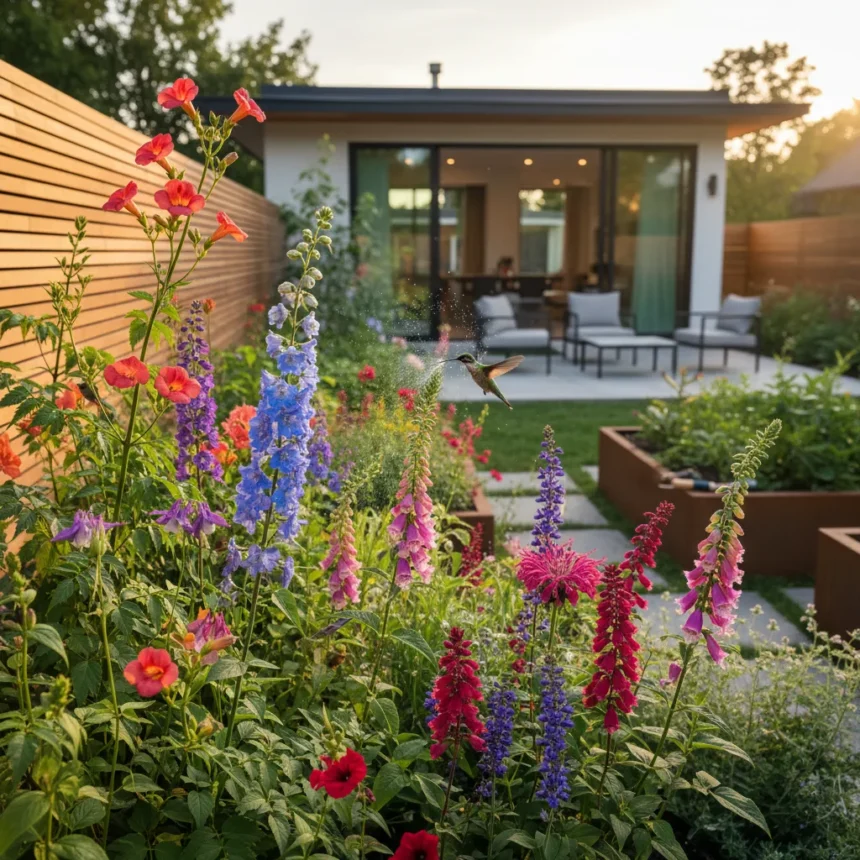
Hummingbird-attracting flowers are the fastest way to turn a bare backyard into a vibrant wildlife sanctuary. Plant these seven species in April and you will see hummingbirds zipping through your garden within weeks, drawn by the tubular blooms and nectar-rich flowers that fuel their high-speed flight.
Key Takeaways
- Cardinal Flower thrives in wet areas and produces deep red tube-shaped blooms hummingbirds cannot resist.
- Petunias offer annual color in red and purple varieties, perfect for containers and garden beds.
- Cuphea blooms continuously into fall with proper fertilization and watering, making it a top hummingbird choice.
- Cardinal Climber vines grow quickly from seed and display red star-shaped flowers on ferny foliage.
- Coral Bells provide vibrant foliage and tiny mid-summer flowers while tolerating shade.
Why April planting works for hummingbird-attracting flowers
April is the critical window for spring hummingbird attraction. As hummingbirds return from migration and establish territories, they search aggressively for nectar sources. Planting hummingbird-attracting flowers in April means your blooms will peak exactly when birds need them most, creating an immediate feeding station before competing gardens mature. This timing leverage is why early-spring plantings deliver faster visual results than mid-summer additions.
The color palette matters enormously. Hummingbirds have exceptional color vision and gravitate toward bright reds, purples, and oranges. Tubular flower shapes are evolutionary matches for hummingbird beaks, allowing them to feed efficiently. When you combine April timing with color-rich, nectar-dense varieties, you are not just planting flowers—you are broadcasting a dinner bell across your neighborhood.
The seven hummingbird-attracting flowers that deliver results
Cardinal Flower is a native perennial that thrives in USDA zones 3 through 10 and produces striking red, tube-shaped flowers. It prefers wet areas and moist soil, making it ideal for rain gardens or low-lying beds. Plant it in April and it will establish quickly, blooming through mid-summer with minimal fuss. Unlike annual varieties, Cardinal Flower returns year after year, building your hummingbird magnet effect over seasons.


Petunias are the workhorse annual, available in red, purple, and mixed varieties with tubular blooms perfect for hummingbird feeding. They thrive in containers, raised beds, and garden borders, offering flexibility if you are still deciding where to invest. Cuphea, a heat-loving annual, is another top performer that blooms continuously into fall when you fertilize and water regularly. Its small, tubular flowers deliver nectar that keeps hummingbirds returning throughout the season.
Cardinal Climber is an annual vine with red star-shaped flowers and ferny foliage that grows rapidly from seed on trellises and fences. Plant seeds directly in April soil and watch them race upward, creating vertical interest while feeding hummingbirds at multiple heights. Coral Bells (Heuchera) rounds out the list as a perennial option for shaded areas, offering vibrant foliage and tiny mid-summer flowers on delicate wands.



Hummingbird-attracting flowers versus other nectar plants
While hummingbird-attracting flowers dominate April plantings for speed, other options exist with different trade-offs. Bee Balm (Monarda) reaches up to 4 feet tall and blooms mid-summer in zones 4 through 9, but requires moist soil and excellent air circulation to prevent mildew—making it higher-maintenance than Petunias. Salvia varieties like Black & Blue offer drought tolerance and continuous blooms, but lack the tubular intensity that makes Cardinal Flower and Cuphea such instant hummingbird magnets. Columbine provides early spring color with crimson spurs, but blooms earlier than most hummingbird migration peaks, reducing its effectiveness in April plantings.
The advantage of the seven core hummingbird-attracting flowers is their combination of April availability, rapid growth, and sustained nectar production through peak hummingbird season. Annuals like Petunias and Cuphea bloom quickly from nursery transplants. Perennials like Cardinal Flower establish themselves for long-term returns. This mix gives you immediate gratification and lasting results in a single planting season.
Planting and care for maximum hummingbird attraction
Success with hummingbird-attracting flowers depends on matching each plant to its preferred conditions. Cardinal Flower demands consistently moist soil and partial shade—plant it near rain runoff or in boggy areas where other plants struggle. Petunias and Cuphea prefer full sun and well-draining soil; deadhead spent blooms weekly to encourage continuous flowering. Cardinal Climber needs sturdy vertical support and full sun to vine aggressively. Coral Bells tolerate shade but produce more vibrant foliage in dappled light.
Water deeply after planting in April and maintain consistent moisture through the establishment phase (typically four to six weeks). Once established, most varieties tolerate normal rainfall. Fertilize Cuphea every two weeks during the growing season to fuel continuous bloom production. Skip heavy nitrogen fertilizers, which promote leafy growth over flowers—use a balanced or bloom-focused formula instead. Hummingbirds care only about nectar, not foliage, so prioritize flower production over plant size.


Can I plant hummingbird-attracting flowers outside of April?
Yes, but April offers the best timing for immediate results. May and June plantings will still attract hummingbirds, but you miss the early-season feeding window when competition for nectar sources is lowest. Fall plantings (August through October) work for perennials establishing roots before winter, but annuals will not have time to mature before frost. If you missed April, start in May and plan a larger display for next spring.
How long before hummingbirds arrive after planting?
Nursery-grown annuals like Petunias and Cuphea bloom within two to three weeks of planting. Perennials like Cardinal Flower may take four to six weeks to establish and produce significant flowers. Once blooms appear, hummingbirds typically discover them within days if birds are active in your region. Local migration patterns matter—if hummingbirds are already passing through your area, blooms will attract them faster than if you are in an off-migration zone.
Do I need special soil or fertilizer for hummingbird-attracting flowers?
Standard garden soil amended with compost works for most hummingbird-attracting flowers. Cardinal Flower prefers consistently moist, rich soil near water features. Petunias and Cuphea thrive in well-draining soil with moderate fertility. Avoid heavy clay without amendment. A balanced slow-release fertilizer applied at planting and again mid-summer supports continuous bloom. Excess nitrogen delays flowering, so resist over-feeding—hummingbirds reward restraint.
April planting is not just about timing; it is about building momentum. Your first blooms attract scouts, which attract families, which establish your yard as a reliable feeding station. By mid-summer, you will have hummingbirds defending territories around your garden, returning daily to feed. The seven hummingbird-attracting flowers outlined above are the fastest route to that outcome, combining proven appeal, rapid growth, and sustained nectar production. Plant now, and your backyard will be buzzing before summer arrives.
Where to Buy
SEWANTA 2-Pack Hummingbird Feeder: | Brightech Ambience Pro | AMIR Upgraded Solar Powered String | Ring Solar Pathlights | Aootek 182 Led Solar outdoor motion
Edited by the All Things Geek team.
Source: Tom's Guide